
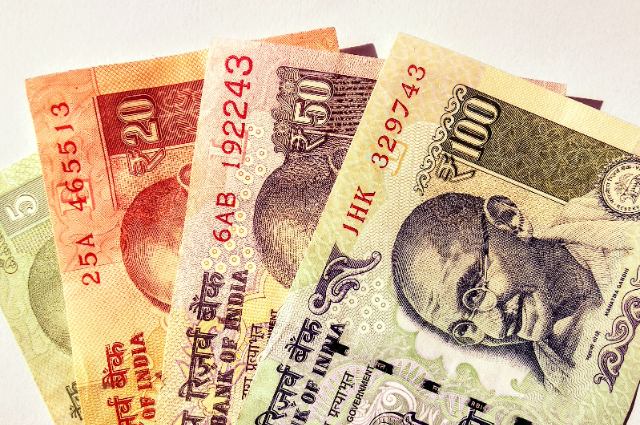
Mahatma Gandhi is one of the most historical figures of India. His principles on non-violence and his major contribution to India’s freedom from British rule became a significant factor in shaping Indian history. However, many people are unaware that Gandhi was not the first choice to appear on Indian Currency after independence. The story of how he became the face of Indian currency is interesting and historical.
Initially, after the independence of India in August 1947, the Reserve Bank of India (RBI) continued issuing the notes with King George VI’s picture. Instead of immediately adding Indian symbols, monuments or Historical figures to the currency, the depiction of Britain monarchy continued their display for two more years. Later, in 1949, the government of India introduced a new 1 rupee note, replacing King George VI’s picture with the representation of the Lion Capital of Ashoka Pillar. This change made not only a clear depiction of India but also made a statement for the ‘Independent India’. Gradually, more notes were released in 1950, like 2 Rupees, 5 Rupees, 10 Rupees and 100 Rupees, all featuring the Lion Capital of Ashoka watermark. With this, the Government of India continued featuring national symbols, monuments, agriculture and industry, which represented aspects of India.
A significant change occurred when he was featured in a special series which was created in memory of his 100th birth anniversary in 1969. This feature was not created to change existing currency but rather to honour his legacy and contribution in India’s freedom struggle. These notes, featuring Gandhi alongside the Sevagram Ashram, bore the signature of RBI governor LK Jha. Subsequently, in October 1987, a series of Rs 500 currency notes featuring Gandhi was introduced.
The real shift came in 1996 when the Reserve Bank of India (RBI) introduced the Mahatma Gandhi Series. By the 1990s, Gandhi was famous and known all around the world. His excellence regarding the freedom struggle in India and his principles about truth and non-violence were talked about in all parts of the world. Later, he was called The Father of the Nation. His picture wasn’t a painting or sketch but a cut-out from an original photograph in 1946 featuring him and a British politician named Lord Frederick William Pethick-Lawrence. Gandhi’s smile in the picture is considered a true portrayal of his personality as a leader. The photographer who took that picture is still unknown. These new notes featured his face as a symbol of a tribute to him, and it also represented the strength of united and independent India. Reserve Bank of India (RBI) took this major step to also increase security and to avoid counterfeiting. This consistent design helped to maintain originality and security.
The Mahatma Gandhi Series has undergone several changes in the past decade, including the Mahatma Gandhi New Series after the 2016 demonetization exercise. Despite changes in colour, size and design, Gandhi’s face has been a constant throughout these processes. This consistency represents his legacy and his role in shaping the country’s history.
These decisions, however, are not looked at without criticism. Over the years, there have been multiple questions regarding the exclusion of other freedom fighters and key figures who are not featured on Indian currency. These queries have highlighted different aspects such as underrepresentation, political bias, religious bias and Ambedkarites have their own perspectives. In recent years, these issues resurfaced in 2022. A few reports suggested that the Reserve Bank of India (RBI) had tested some sample notes featuring Dr B R Ambedkar and Rabindranath Tagore alongside Gandhi. These reports created queries among citizens about plural representations, or whether Gandhi may not be featured in every Indian currency. However, the Government of India immediately denied these changes. In October 2022, Former Delhi Chief Minister Arvind Kejriwal appealed to the Prime Minister and the Union government to include images of Lord Ganesha and Goddess Lakshmi on currency notes. It later created speculation among the citizens about how it would be fair when India is considered a secular country. However, the Reserve Bank of India (RBI) and other authorities have consistently upheld the decision to keep Gandhi as a face of Indian currency. However, if we look at global currencies, every country includes politicians, key historical or influential figures or monuments, wildlife or nature motifs, which represent inclusivity. India, in contrast, ensures uniformity but lacks representation.
The rupee is not just designs, colours, and ink on paper. It is a symbol of power. Featuring Gandhi represents India as a country that believes in truth, non-violence and simplicity. But India also believes in inclusivity, secularism and plural representations. While various discourses and opinions have been passed on about the representation on Indian currency, Gandhi’s legacy remains unshakable. The Indian currency has become a reminder of his journey from a regular person to the most historical figure in the world. Today, everyone who carries Indian currency not only holds monetary value but also a reminder of how Gandhi made freedom possible for India. From the Lion Capital of Ashoka to permanently being the face of Indian currency, this story demonstrates that even the most familiar national symbols often have an unexpected and fascinating history behind them.
REFERENCES
- “Why Only Gandhi on Indian Currency? A Historical and Contemporary Debate” https://www.linkedin.com
- “Story of Mahatma Gandhi’s Portrait on Indian Banknotes” https://www.civilsdaily.com
- “Mahatma Gandhi Series” https://en.wikipedia.org