
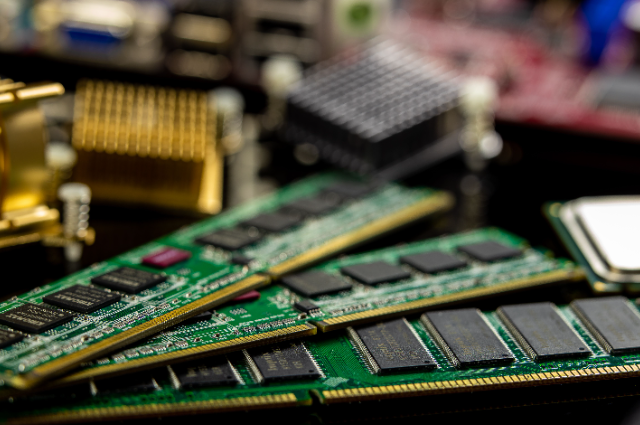
There is a tiny material being made inside a factory in Japan that most people have probably never heard of. It is made from glass and turned into extremely fine fibres. Yet this simple material is now connected to a much bigger problem that could affect the price of your next smartphone. The world is facing a new kind of chip shortage, one that has already been nicknamed "RAMmageddon" or "RAMpocalypse." Unlike the chip shortage between 2020 and 2023, this time the problem is not mainly about factories shutting down or supply chains being disrupted. The bigger issue is where chipmakers are choosing to put their limited production capacity.
During the pandemic, the world experienced a major shortage of semiconductors. Factories were affected, transportation was disrupted, and demand for electronics increased suddenly. It was essentially a supply chain traffic jam. Eventually, production recovered,d and the situation began to improve. The current shortage is different. Major memory chip manufacturers such as Samsung, SK Hynix and Micron are deliberately shifting some of their production away from the memory used in ordinary smartphones. They are doing this because another type of memory has become far more valuable.
That memory is called High Bandwidth Memory, or HBM. It is an advanced type of memory used in the powerful systems that support artificial intelligence. AI data centres need enormous amounts of computing power and memory, and companies such as Google, Meta, Microsoft and Amazon are investing heavily in this technology. These companies are also willing to pay premium prices and sign long-term contracts to secure their supplies. For memory manufacturers, this creates a strong financial incentive. Instead of producing as much phone-grade memory for smartphone companies, they can use more of their factory capacity to make HBM for the rapidly growing AI industry. For ordinary consumers, however, the consequences are beginning to appear. Phone memory prices are expected to rise by nearly 7% this year, while smartphone shipments could fall by around 13 to 14%. If these estimates hold, it would represent the steepest decline the smartphone industry has ever recorded. Not every phone company will feel the pressure equally. Budget brands such as Transsion and Xiaomi are expected to be hit harder because they operate with tighter margins and have less room to absorb higher component costs. Larger companies such as Apple and Samsung are in a stronger position. Their size, purchasing power and established relationships with suppliers can give them greater protection when components become more expensive or difficult to obtain. But behind this larger memory shortage is another story involving something far less exciting than artificial intelligence. It is the story of glass fibre.
A Japanese company called Nitto Boseki, commonly known as Nittobo, is one of the major producers of an extremely fine glass fibre material known as T-glass fibre cloth. This material is used in substrates, which can be thought of as the foundation or supporting layer on which advanced chips are built. The material is particularly important for advanced chips used in AI hardware. Because producing such fine glass fibre to the required quality is difficult, only a small number of companies can supply it. This means that even a relatively small change in production capacity or pricing can have consequences across the semiconductor industry. That may sound strange. How can a thin strand of glass in Japan have anything to do with the price of a smartphone thousands of kilometres away? The modern technology industry is built like a chain. A phone depends on memory chips. Those chips depend on semiconductor manufacturing and packaging. Advanced chips depend on specialised materials. When one important material becomes difficult to produce, the pressure can move through the entire chain. This is also a reminder that the technology we use every day is not made entirely of software. Behind every app, AI model and smartphone are physical materials that have to be mined, manufactured, transported and assembled. Silicon, copper, glass and countless other materials all play a role in making modern technology possible.
The bigger question is how long the current shortage will last. There is no clear answer yet. Some estimates suggest that conditions could begin improving around 2027. Others have warned that shortages could continue well beyond 2030. The problem is also spreading beyond smartphones. Cars, personal computers and other electronic devices depend on memory chips too. As AI continues to attract investment and manufacturing capacity, more industries could find themselves competing for the same limited resources. For consumers, this could mean more expensive phones, fewer affordable options and longer waits for new devices. What began as a decision inside semiconductor factories is slowly becoming something ordinary people may notice when they walk into a store or check the price of their next phone.
The story of RAMmageddon is therefore not simply about a shortage of chips. It is about what happens when the world's priorities change. As artificial intelligence demands more resources, manufacturers are following the money and producing what is most valuable to them. And somewhere underneath that massive global shift is a thread of glass, quietly connecting an ordinary smartphone to the extraordinary growth of AI.
References: