
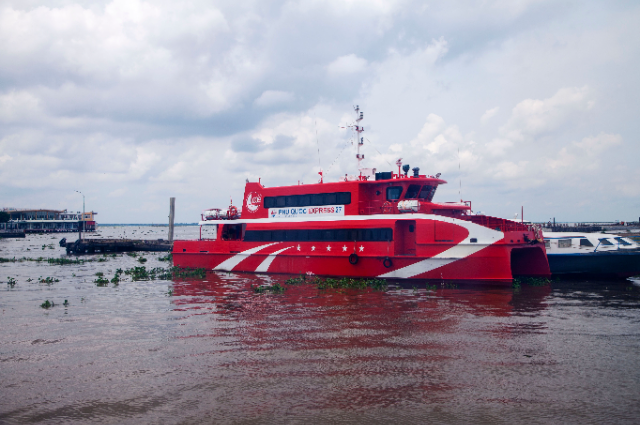
A holiday turned into a nightmare when a speedboat carrying Indian tourists capsized near Vietnam’s popular Phu Quoc Island. A total of 15 Indian tourists lost their lives, and several others were injured. The speedboat was carrying 32 Indian tourists and 4 crew members from Hon May Rut Islet to An Thoi Port. It overturned about 400 meters from the shore on 11 July. The boat was operated by Ocean Pear Island Company. A rescue team rushed to the scene soon after the accident, while the Indian Embassy in Vietnam began working with local authorities to help identify the victims, support the survivors and arrange for the bodies to be sent back to India.
The tourists were part of a larger group of around 100 Indians visiting Phu Quoc Island. They had travelled in three different boats. Most of the passengers on the boat that capsized were employees and distributors of Lava Mobiles. The boat ride was one of the last activities planned before the group was supposed to return to India on the morning of 12 July. According to the Indian Embassy, the victims include 10 people from Tamil Nadu, 3 people from Andhra Pradesh, and 2 people from Kerala. The embassy said they were in constant touch with the Vietnamese officials and providing help to the families affected by the tragedy. What caused the accident is still being investigated. Early reports claim that the boat crashed into rough sea waves near Hon May Rut Islet. There was no rain at the time, and other tourists’ boats were right around the area. However, large waves had made the sea rough. As the speedboat was moving toward An Thoi Port, it suddenly overturned and threw everyone into the water.
One of the survivors, Nirmal Kumar from Palani, Tamil Nadu, described the tragic incident. He said, “A big wave hit us. Twenty people came out of it, and the remaining members got stuck. It’s a closed boat. Since we were on the front, we managed to survive. Others who were behind got stuck”. His statement shows how, in a few moments, the accident happened. Passengers sitting at the front managed to escape, but many of them who were in the enclosed part of the boat got trapped. Kumar also mentioned that two of the passengers were in critical condition, while the other survivors were receiving treatment in the hospital. While rough waves could be the reason for the accident that caused the overturn of the boat, some survivors have raised concerns about possible safety failures. They said that not everyone had worn their life jackets properly before the journey began. Some also alleged that emergency medical treatment was delayed by nearly an hour after the accident occurred. These statements are being examined as part of the investigation.
Vietnamese authorities conducted a large search and rescue operation soon after the accident. Rescue teams, coast guard personnel, and local emergency workers searched the area for the missing passengers. At the same time, officials worked to identify the victims and keep their families informed. The investigation quickly shifted to legal action. The boat’s 57-year-old captain, identified as Loc, was arrested along with his crew members. They have been charged with violating maritime safety regulations. The investigators are trying to find out whether the boat could have continued its journey regardless of the rough waves and whether all required safety procedures were followed before the trip started.
The Vietnam speedboat tragedy has highlighted the importance of safety during sea travel, especially in popular travel destinations. Phu Quoc is Vietnam’s largest island and one of the most visited tourist spots, attracting thousands of visitors every year, including a growing number of Indian travellers. Hon May Rut Islet is famous for activities such as snorkelling, diving and boat tours. While these experiences attract tourists to visit these places from around the world, changing sea conditions can quickly become dangerous if proper safety measures are not being followed. Experts say that life jackets should not only be available but also be worn correctly by the passengers throughout the journey. Boat operators should carefully assess weather and sea conditions before starting their journey to avoid any discomfort or accidents. While crew members should explain safety instructions to the passengers and be prepared to respond quickly in an emergency. Efficient rescue operations and quick medical care can also play a crucial role in saving lives.
For the families who lost their loved ones, that agony cannot be erased through investigations. What was meant to be a pleasant holiday ended in an unimaginable tragedy. As the investigation continues, many people are hoping to see major improvement in safety regulations, better emergency response, and evident accountability. The tragedy reminds us that tourist safety should be the highest priority for every country to ensure that such accidents can be prevented in the future.
References:
- https://www.firstpost.com
- https://www.india.com
- https://www.bbc.com/news/articles/cwyd7x22lp1o
- https://www.telegraphindia.com
- https://www.indiatoday.in