
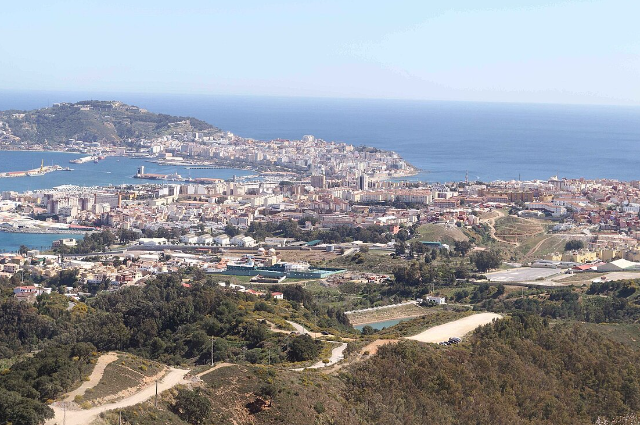
The Spanish enclave of Ceuta witnessed an extraordinary rush of migrants from Morocco last week, turning a heavily guarded border into the centre of a humanitarian crisis. Around 60,000 people were reported to have attempted to enter Spanish territory, while more than 70 people died during the journey. Many others were left without enough food or shelter. Within about a day, however, Spanish authorities said that almost all of those who crossed had returned to Morocco. Ceuta is unusual because it is Spanish territory located on the North African coast and surrounded by Morocco. Its border with Morocco stretches around five miles and is heavily protected. For migrants, however, it is one of the closest physical points from Africa to European territory. Ceuta, along with the Spanish enclave of Melilla and the Canary Islands, has therefore been an important route into Europe for years.
Migration through these routes is not brand new. People from different parts of Africa and other regions have travelled through Morocco hoping to reach Spain. Some are escaping conflicts or political problems, while others are searching for jobs and better living conditions. What made last week’s event different was its enormous scale and the fact that a large proportion of those attempting to cross were Moroccan citizens. The reason behind the sudden rush is not linked to one single event. Economic difficulties in Morocco appear to be one of the biggest factors. Many young people face unemployment, low wages and limited opportunities. At the same time, inequality has grown, leaving some people feeling that the country’s economic growth has not improved their daily lives. For someone who sees little chance of building a stable future at home, Europe can look like the only realistic option. There is also a growing frustration among some young Moroccans over unemployment, living conditions and political restrictions. This does not mean everyone who was protesting was against the Moroccan government. However. It definitely explains why so many people were prepared to take such a dangerous risk.
Another factor was the confusion over Spain’s migration policies and a recent Supreme Court ruling. Information about the ruling spread quickly online, with some people believing that migrants who reached Spanish territory could not be immediately returned. Social media helped turn this uncertainty into a much bigger story. Rumours suggested that there was a short opportunity to enter Spain before the rules were enforced again. Spain’s decision to legalize large number of migrants already living in the country may also have influenced this perception. For people watching events from Morocco, it could have created an impression that Spain was becoming more open to migrants. This may not have reflected the actual rules, but when people are already desperate, even the belief that a border has become easier to cross can encourage action. Reports also suggested that Moroccan border controls were temporarily reduced. Some migrants said that they had been told that crossing was possible, while messages on social media described the border as temporarily open. Thousands then moved towards Ceuta, apparently trying to take advantage of what they believed was a brief opportunity.
The situation quickly became serious. Border forces used water cannons, tear gas and warning shots to stop further crossing. People who reached Ceuta struggled to find food and places to sleep. The journey itself was deadly, with some people drowning and others being crushed during the chaotic attempt to cross. Different reports put the death toll at more than 70, with some estimates later going higher. The Spanish government blamed misinformation and human-smuggling networks for encouraging migrants to believe that entering Spain would be easier than it actually was. Opposition parties took a different position, arguing that Spain’s relatively open migration policies had created an incentive for irregular entry. Morocco’s role also became the subject of speculation. Some theories claimed thatthe Moroccan government deliberately allowed the mass movement to pressure Spain. However, there is no strong evidence proving this. It is possible that the situation developed rapidly after rumors spread, making it difficult for authorities to control once thousands of people began moving across the border.
The Ceuta crisis has revived tensions between Spain and Morocco over migration. In 2021, around 10,000 migrants entered Ceuta after Morocco relaxed border controls during a diplomatic dispute with Spain. The latest incident has raised fears that migration could again become part of political tensions between two countries. The impact is also felt across Europe. Several governments have criticised Spain’s migration policies and called for stronger border controls. This crisis could further strengthen political groups pushing for tougher immigration measures. However, stronger borders alone cannot address the reasons people risk their lives to reach Europe. Unemployment, political frustration, inequality and misinformation continue to push people towards dangerous journeys. Most migrants have now returned to Morocco, but the pressure behind the mass crossing remains. If economic opportunities stay limited, similar attempts could happen again. The Ceuta crisis shows how quickly desperation and misinformation can turn a border into a humanitarian crisis.
References:
- https://carnegieendowment.org
- https://www.bbc.com/news/articles/c0ejdj22zq9o
- https://www.democracynow.org