
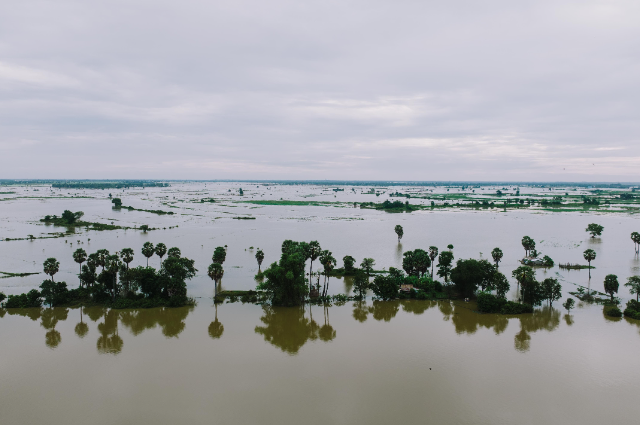
Every year, Assam prepares for floods. The Brahmaputra River often overflows during the monsoon, and people living near its banks have learnt to expect rising water. Over the past four decades, thousands of kilometres of embankments have been built to reduce the damage. However, this year’s floods have shown that even these structures cannot stop every kind of disaster. The latest floods have caused huge destruction across the state. According to official figures, 95 lives have been lost, while more than 1.6 lakh people have been affected across 14 districts. Hundreds of villages have been flooded, families have been forced to leave their homes, and roads, bridges, crops, and public infrastructure have suffered heavy damage. The disaster has once again raised questions about whether embankments alone are enough to protect Assam from changing flood patterns.
Sivasagar has been the worst-hit district. More than 57,000 people have been affected there, and the district has recorded the highest number of deaths. Golaghat and Jorhat have also suffered damage, with around 34,000 and 25,000 affected people respectively. Other districts, including Charaideo, Biswanath, Dhemaji, Darrang, Kamrup Metropolitan, Karbi Anglong, Lakhimpur, Nagaon, Sonitpur, Tinsukia, and Udalgiri, have also faced serious flooding. The floods have submerged more than 563 villages, damaging homes, schools, roads, and bridges. Nearly 16,952 hectares of agricultural land remain underwater, creating worries for farmers who depend on the crops for their income. Many families have not only lost their homes but also their livestock and sources of livelihood. The state government has been carrying out relief and rescue operations in the affected districts. Authorities have set up relief camps where thousands of displaced people are staying temporarily. Relief distribution centres have also been opened to provide essential supplies such as rice, lentils, salt and cattle feed. These measures have helped many families meet their immediate needs, but rebuilding their lives will take much longer.
The floods have also drawn the attention of the Central Government. Union Health Minister Jagat Prakash Nadda has visited some of the worst-hit areas, including Nepalikhuti in Sivasagar district along the Assam-Nagaland border. He reviewed the damages with the Assam Chief Minister Himanta Biswa Sarma and senior officials before assuring that the Centre would provide all possible assistance for relief, rehabilitation and compensation. After visiting the affected areas, Nadda said the scale of destruction was very large and that it would take time for normal life to return. He also said that the Central Government would continue working with the Assam Government to support flood-affected families. Chief Minister Sarma thanked the Centre for its support and said that the State Government was working closely to ensure help reached to those who are in need. The State has also requested the Centre to relax the rules under the national disaster response fund so that more affected families can receive financial assistance. Even as the rescue operations continue, the situation remains serious in several places. Waterlogging has been reported in parts of Guwahati, while authorities continue to monitor river levels across the state. The India Meteorological Department has warned of more rainfall in the catchment areas, raising concerns that the situation could get worse if heavy rain continues.
Although embankments have helped reduce flooding in many parts of Assam over the years, this disaster shows that they cannot prevent every flood. Heavy rainfall and rising water levels can still damage embankments, roads, and bridges, making rescue operations more difficult. The recent floods have highlighted the need to look beyond embankments as the only solution. Experts have pointed out that the extreme weather events are becoming more frequent. Intense rainfall over a short period can overwhelm rivers and drainage systems, leading to severe flooding. This means Assam needs a broader flood management strategy that includes stronger infrastructure, better drainage, accurate weather forecasts and timely evacuation plans, along with maintaining embankments.
For the people of Assam, floods continue to bring loss of life, damaged homes, destroyed crops and disrupted livelihoods. At the same time, rescue workers, volunteers and local communities have worked tirelessly to help those affected. As the floodwaters slowly recede, the immediate focus will shift from rescue operations to rebuilding homes, repairing damaged roads and bridges, and helping families to return to their normal lives. However, recovery will take time, as thousands of people have lost their homes, loved ones, crops and livelihoods. Assam will need stronger disaster preparedness, better drainage systems, improved weather forecasting, timely evacuation plans and more resilient infrastructure. Long-term planning and coordinated efforts will be essential to reduce the impact of future floods and protect vulnerable communities. The disaster also highlights the importance of investing in sustainable flood strategies and ensuring that relief, rehabilitation and future planning work together to better prepare the state for similar challenges in the years ahead, while protecting lives and livelihoods more effectively in the future.
References: