
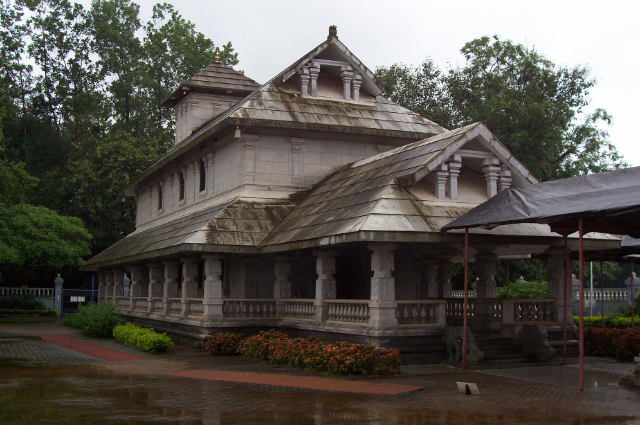
In 2025, Karnataka’s temple town of Dharmasthala found itself at the centre of one of the state’s most shocking controversies. A former sanitation worker claimed that he had been forced to bury and burn the bodies of women and girls who had allegedly been raped and murdered over nearly two decades. His claims led to widespread public outrage, demands for justice, and the formation of a Special Investigation Team (SIT). Months later, the case took a dramatic turn when the SIT concluded that the allegations of mass burial had been fabricated and filed a chargesheet against six people, including the complainant. Despite this, the legal proceedings continue, with separate petitions seeking fresh investigations into several suspicious deaths linked to the region.
The controversy escalated when former sanitation worker C.N Chinnaiah, who worked for the Dharmasthala administration between 1995 and 2014, registered a complaint with the police. He alleged that during his years of service at Dharmasthala, he was repeatedly forced to dispose of the bodies of women and minors who showed signs of sexual assault and violent deaths. According to his complaints, he had buried over 100 victims while acting under threats from powerful individuals. He claimed that refusing to cooperate and not obeying their orders would have cost him his own life.
Among these disturbing incidents, he also described an alleged burial of a schoolgirl, believed to be between 12 and 15 years old, whose body showed signs of assault. He also claimed that another young woman’s face had been burned with acid before her body was disposed of. Chinnaiah said he secretly photographed skeletal remains before leaving Dharmasthala in 2014. Years later, he returned and submitted the photographs, along with his employee identification and Aadhaar card, to the police. He also offered to identify more burial sites if granted protection under the Witness Protection Act. His allegation sent a shockwave among the public because Dharmasthala is one of the most important pilgrimage centres, attracting thousands of devotees each year. The temple is administered by the influential Heggade family, and Chinnaiah alleged that some individuals connected to the temple administration were involved in the crimes. However, the temple authorities directly denied involvement in any wrongdoing.
These claims also revived memories of the unresolved 2012 rape and murder case of 17-year-old Soujanya, a case that has long been surrounded by allegations of investigative lapses. Families of missing women finally hoped Chinnaiah’s testimony might provide answers. Among them was Sujatha Bhat, whose daughter Ananya, a first-year medical student, disappeared during a college trip to Dharmasthala in 2003. Believing her daughter could have been among the unidentified victims mentioned by Chinnaiah, she filed a new complaint and an independent investigation for her daughter. In response to growing public pressure, the Karnataka government formed a special investigation team (SIT). Investigators excavated locations identified by Chinnaiah, including sites near the Netravathi River, where skeletal remains were recovered for forensic examination. The investigation, however, reached a very different conclusion.
According to SIT, Chinnaiah gave a statement admitting that his earlier allegations of mass rape, murder and secret burials were false and had been made due to the insistence of certain individuals. Investigators also claimed that the skull presented as evidence by Chinnaiah belonged to a 32-year-old man rather than a female victim, as originally alleged. The SIT concluded that the evidence had been fabricated to create a false narrative of mass burials.
In late 2025, the SIT filed a nearly 3,900-page chargesheet against six individuals, including Chinnaiah and activists Mahesh Shetty Timarodi, Girish Mattannavar, Vittal Gowda, T. Jayanth and Sujatha Bhat. They were charged under provisions of the Bharatiya Nyaya Sanhita relating to fabricating false evidence, forgery and criminal conspiracy. The investigation also alleged that Chinnaiah had been coached to make false statements, while Sujatha Bha, was accused of filing a false missing-person complaint under pressure from the same group. These allegations are still a part of the ongoing legal proceedings. This case is still far from over. In January 2026, a magistrate observed that the SIT’s submission was only a preliminary report because key forensic laboratory reports were still pending. The courts asked SIT to submit a final report before proceeding for trial. At the same time, the Karnataka High Court is hearing a public interest litigation filed by Soujanya’s mother, Kusumavati. The petition calls for separate FIRS and independent investigations into 74 alleged unnatural deaths reported in and around Dharmasthala, arguing that each case deserves an individual probe.
What began as explosive allegations of mass rape, murder and secret burials has become a complex legal battle involving conflicting claims, forensic evidence and ongoing court proceedings. With the judiciary yet to conclude, the Dharmasthala case continues to raise difficult questions about accountability, justice and public trust, with the courts expected to determine the case’s outcome.
References:
- https://indianexpress.com
- https://www.hindustantimes.com
- https://www.timesnownews.com
- https://www.indiatoday.in
- https://www.pgurus.com
- https://en.wikipedia.org/wiki/Dharmasthala_mass_burial_case