
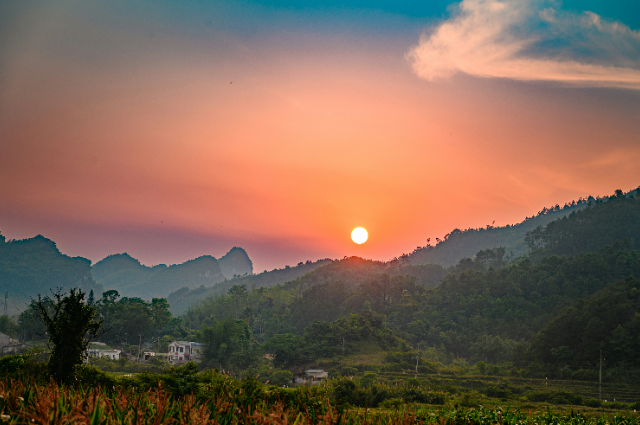
As 2026 approaches its final days, preparations will begin to welcome the New Year, 2027. There will be celebrations, lights, festivities, and new resolutions. But have we paused to reflect on what the passing year has taught us and what kind of world we are leaving behind for future generations?
Does changing the calendar automatically change our circumstances? Does a new year bring hope on its own, or must we change our thinking, behaviour, and priorities to create a better future?
Perhaps the time has come to welcome the New Year not only with celebrations but also with introspection. We must ask ourselves whether the development we take pride in is genuinely improving human life or whether, in the blind race for progress, we are weakening the very foundations on which life depends.
Nature’s Warnings and Human Responsibility
In recent years, different parts of the world have experienced earthquakes, floods, cloudbursts, landslides, storms, and other natural hazards. Such events have claimed lives, affected countless families, and disrupted normal life.
It would be incorrect to hold human beings directly responsible for every natural disaster. Earthquakes are primarily associated with geological processes, while cloudbursts and storms are meteorological phenomena. However, human activities can sometimes increase the risks or worsen the consequences of these events.
Unplanned mountain cutting, deforestation, construction in vulnerable areas without adequate assessment, encroachment on rivers and natural drainage channels, and disregard for environmental safeguards can increase the damage caused by floods and landslides.
Roads and tunnels are important for connectivity, particularly in mountainous and remote regions. They can improve access to education, healthcare, employment, and other essential services. However, development projects must take proper account of geological conditions, environmental balance, and local circumstances.
The question is not whether roads and tunnels should be built. The real question is whether scientific studies, environmental assessments, and long-term risks receive the attention they deserve before construction begins.
Development that ignores nature may create problems that are difficult and expensive to address later. We should therefore learn from disasters, identify vulnerable areas, and take responsible measures to reduce future risks.
Clean Air, Pure Water, and a Healthy Earth — Our Real Wealth
Clean air, safe drinking water, and a healthy environment are essential for life. If we continue to exploit natural resources recklessly in the name of progress, sustaining life on this planet may become increasingly difficult.
Whether rich or poor, powerful or ordinary, everyone needs air to breathe, water to drink, and a healthy environment in which to live. Nature does not distinguish between people on the basis of wealth, status, or position.
If the air becomes polluted, water contaminated, and land increasingly unsuitable for life, what meaning will our wealth and achievements hold?
We can construct magnificent buildings, carve roads through mountains, build bridges over rivers, and achieve remarkable scientific breakthroughs. But if progress comes at the expense of nature, human health, and the well-being of future generations, can it truly be called responsible development?
We may rebuild buildings, earn money, and develop new technologies, but restoring severely damaged natural systems can be difficult and, in some cases, impossible.
Nature is not merely a resource to be consumed; it is the foundation of our existence. We need a model of development that meets present needs without compromising the ability of future generations to live healthy and dignified lives.
The Race for Development and the Future of Coming Generations
Today, progress is often measured by wider roads, taller buildings, modern machinery, economic growth, and technological achievements. There is no denying that science and technology have made life more convenient. Advances in medicine, communication, education, and transportation have brought significant benefits to humanity.
However, development cannot be measured solely by material comforts. If cities expand while green spaces disappear, industries grow without adequate pollution control, and water consumption increases without sufficient attention to conservation, we must reconsider our priorities.
Do we want to leave future generations only buildings, roads, and machines, or do we also want to leave them an Earth where they can breathe clean air, access safe drinking water, and live in a healthy environment?
Our decisions today will shape the conditions of tomorrow. Natural resources are not unlimited, and using them wisely is a shared responsibility.
Human beings are not separate from nature; we are part of it. Lasting prosperity cannot be achieved by neglecting the environment on which our lives depend.
True development should not be judged only by what we build today, but also by what we preserve for tomorrow.
Wars, Conflicts, and Humanity in Crisis
While the world continues to advance in science, technology, and modern weaponry, wars, violence, and displacement remain serious challenges to humanity.
The suffering of ordinary people in conflict-affected regions such as Gaza and Sudan reminds us of the devastating human consequences of prolonged conflict. The heaviest burden is often borne by those who have little influence over the decisions that lead to it, including children, women, older people, and ordinary families.
Homes are destroyed, families are separated, education and healthcare services are disrupted, and people struggle to obtain food, water, and safe shelter.
War is not merely a question of borders or political interests. Its consequences can extend to the environment, the economy, social life, and future generations. When resources are directed towards conflict and destruction, we must also consider whether greater efforts could be made to promote peace, education, healthcare, and poverty reduction.
Every country has its own interests and challenges, and differences of opinion are inevitable. Yet violence should not become the automatic response to every disagreement. Dialogue, diplomacy, and peaceful solutions deserve every reasonable opportunity.
Technological advancement alone cannot be considered complete human progress if compassion and respect for human life are neglected.
Hunger, Displacement, and the Need for Greater Sensitivity
Today, technology allows messages to travel across the world in seconds. Medical science continues to open new possibilities, while artificial intelligence is transforming many aspects of our lives.
Yet millions of people around the world continue to face challenges in accessing adequate food, clean water, safe housing, education, and healthcare.
This contradiction demands reflection. If humanity has achieved so much in science and technology, why do basic needs remain beyond the reach of so many people?
The reasons are complex and may include poverty, conflict, unequal access to resources, inadequate public services, and weaknesses in policies and their implementation. Technological progress alone cannot resolve these challenges without effective institutions and social responsibility.
For a hungry person, grand claims of development remain incomplete until basic needs are met. For a displaced family, the achievements of the modern world offer little comfort without safe shelter and the opportunity to live with dignity.
The progress of a society should therefore be judged not only by its wealth and infrastructure but also by how effectively it protects vulnerable people and creates opportunities for everyone to live a dignified life.
Are We Truly Progressing?
This question is not intended to oppose development. It is an invitation to examine its direction, consequences, and long-term value.
We need roads, but they should be planned with due regard for public safety and environmental conditions. We need industries, but they must take effective measures to control pollution. We need modern cities, but they should also preserve green spaces and protect essential water resources.
We need economic prosperity, but development should not leave vulnerable sections of society behind. We need scientific innovation, but it must go hand in hand with ethics, accountability, and responsibility.
True progress is progress that improves people's lives, promotes fairness, protects the environment, and helps secure a better future for coming generations.
If today's achievements create tomorrow's environmental and social crises, we must reconsider how we define success. Development should improve the quality of life, not merely increase the quantity of material possessions.
2027 — A Time for Introspection and Resolve
The New Year should not be limited to exchanging greetings and celebrating. It should also be an opportunity to recognise our mistakes and make meaningful commitments towards a better future.
We can begin with small but important steps:
- Avoid wasting water and electricity.
- Protect existing trees and plant species suited to local conditions.
- Reduce unnecessary plastic use and dispose of waste responsibly.
- Help keep rivers, water sources, and public places clean.
- Encourage scientific assessment and environmental safeguards in development projects.
- Support dialogue, peace, and humanitarian values rather than violence.
- Speak responsibly against discrimination, injustice, and social insensitivity.
These actions will not solve every problem overnight, but they can help build a culture of shared responsibility.
Governments, institutions, industries, and citizens all have important roles to play. Individual efforts alone cannot address every large-scale challenge, but meaningful change is difficult without responsible individual behaviour and effective collective action.
Environmental protection must not be restricted to a particular day or occasion. It should become an integral part of our everyday lives, public policies, and development plans.
Similarly, peace and social justice should not remain mere slogans. They must be reflected in our decisions, conduct, and treatment of others.
Finally, Which Direction Are We Heading In?
The year 2027 offers us another opportunity—not merely to make new plans, but to decide what kind of future we want to create.
Do we want a world in which nature continues to suffer in the name of development, wealth increases while sensitivity declines, and technology advances while hunger, conflict, and displacement remain unresolved?
Or should we strive for a world where development goes hand in hand with environmental protection, prosperity with social justice, and individual success with collective responsibility?
The answers will not be found in speeches and resolutions alone. They must become visible in our policies, choices, and everyday behaviour.
Nature is not only our inheritance; it is also our responsibility. Providing future generations with clean air, safe water, and a healthy environment is not a favour. It is a duty.
Progress is essential, but not at the cost of life.
Celebration is important, but it becomes more meaningful when accompanied by introspection.
Dreams are necessary, but they must include humanity, nature, and the future of coming generations.
Let us welcome 2027 not merely with lights, fireworks, and greetings, but with a renewed way of thinking, responsible behaviour, and a sincere commitment to positive change.
Ultimately, the question is not simply how much progress we have achieved, but how much safer, more humane, and better our progress has made life.
Disclaimer:
This article expresses the author's personal views and social reflections. Its purpose is to encourage awareness of environmental protection, sustainable development, human sensitivity, and our responsibilities towards future generations. References to natural disasters, environmental risks, and humanitarian crises are intended for general discussion and do not constitute allegations against any individual, community, institution, government, or country. Specific factual claims should be independently verified. The article is intended to promote constructive dialogue and does not claim to provide a complete scientific, political, or legal assessment of the issues discussed.