
In most societies, wealth has been the most visible form of privilege. But the Chinese had established a social structure that essentially marginalised the merchant as the lowest of the respectable social classes. The farmer was above, the artisan was above, and the scholar-bureaucrat, the only asset of which was knowledge, was above. This inverted order, called the Four Occupations (Si Min) or the Four Citizens, lasted about two thousand years and still rings true in China to this day.
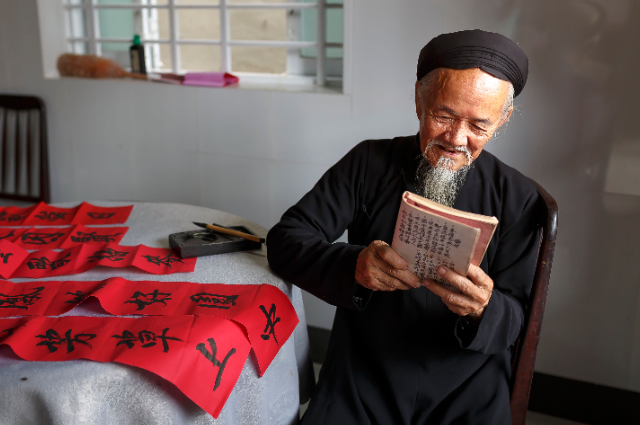
The ranking of the Four Occupations is inspired by this logic. The development of the framework took place during the Zhou Dynasty (1046-256 BCE) and was formalised in the Confucian framework of thought. The scholars (shi, 士) were ranked first as they took care of government and transmitted moral virtue. Farmers (nong, 農) ranked second, as they provided food for the empire, and during the Han Dynasty's peak, China's population was more than 60 million, making it a matter of life and death. Artisans came next, who made use of raw material (gong, 工). The merchants (shang, 商) were last, as in Confucian thinking they did not produce anything. They were just translating and taking what others created and were successful with it. The state enforced this idea, as did the philosopher Xunzi, who referred to traders of his time as parasites on the productive classes. Han law forbade merchants from wearing silk or riding horses, or holding office. Their children were not allowed to register for civil-service exams.
The top rank, though, was not hereditary; that was what made the system so remarkable. The Imperial Examination System, called keju (科举), was formally inaugurated around 605 CE during the Sui Dynasty and continued until 1905. The exams were open to any male citizen, no matter their family background. Genuine and, if sometimes imperfect, social mobility is apparent in the fact that a proportion of successful candidates were from non-elite families during the Song dynasty (960-1279 CE), as revealed by the work of historian Benjamin Elman. Along with this, Europe at this era retained power mainly in the hands of hereditary noblemen. China had a meritocracy system of governance almost a millennium ago.
The merchant's role yielded one of history's keenest class ironies. A salt trader for the Qing Dynasty in Yangzhou could have a fortune that surpassed the income of a magistrate, but still be lower in the social hierarchy than the scholars whom he supported. In the eighteenth century, China's Yongzhou city was constructed by the salt merchants without formal political positions, who commissioned poets,
painters and garden architects to create the entire cultural scene of the city, just by providing funds. Their usual method was to spend a lot of money educating their sons with the hope that they would gain an educational scholarship as a result of financial investment. Respect was earned only after money was subjected to an examination.
Throughout the late nineteenth and early twentieth centuries, the formal hierarchy was toppled by imperialism, industrialisation, and ultimately by communist revolution. During the Cultural Revolution (1966-1976), the scholar class was actively persecuted. However, the DNA of the structure has been preserved. Since the market reforms launched by Deng in the 1980s, the merchants now known as entrepreneurs have emerged as the leaders. Jack Ma (Alibaba), the billionaire, turned into a national icon. Meanwhile, the farmers went down to the bottom. Since 1958, China has had a system of household registration that limits the access rural residents have to urban education, medical care and social services. The Chinese Academy of Social Sciences (CASS) report in 2023 indicated that rural migrants working in urban cities made about 40 per cent less than registered urban workers in similar positions. The old order has been overturned at the top, and entrenched at the bottom.
The most obvious connection between imperial China and today is the National College Entrance Examination (NCEE), also known as the gaokao, which China's Ministry of Education reports was taken by around 13 million students in 2023. Just as in the old keju, it is a single, all-encompassing exam and the main and most preferred means to social promotion. It is faulted for favouring memorisation over creativity, much like its predecessor. It's as legitimate as its predecessor because it's quite fair. After 2000 years, that's still the top spot in China's view.
References:
- Finnane, A. (2004). Talk about the Chinese city of Yangzhou, 1550-1850. Harvard University Asia Centre. https://www.hup.harvard.edu
- Chinese Academy of Social Sciences (CASS). (2023). An annual report on the urban-rural income gap. CASS Press. http://casseng.cssn.cn
- China's Ministry of Education. (2023). National College Entrance Examination Statistics: http://www.moe.gov.cn