
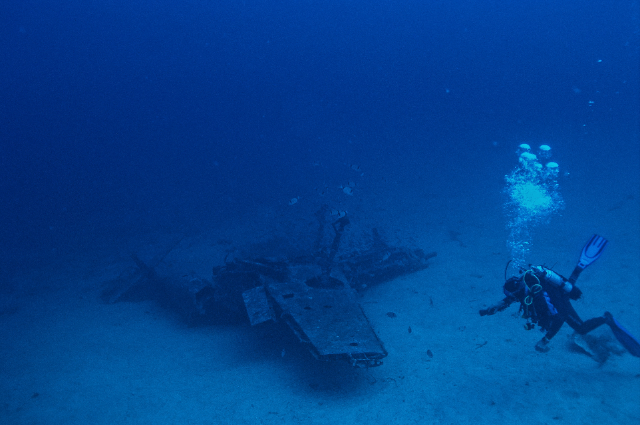
People generally look up at the stars to think about undiscovered worlds, but the biggest mystery we face on Earth lies far beneath the waves of the ocean floor. The deep sea constitutes the single largest habitat on the planet. Yet, according to the National Oceanic and Atmospheric Administration, we've only visually examined an infinitesimal fraction, less than 0.001% of the deep seafloor, a landmass the size of Rhode Island. Even with advanced digital mapping technology, only about 28.7% of the global seabed has been accurately sonically surveyed by high-resolution sonar systems. The vast majority of this ecosystem is in complete darkness and under intense pressure. For centuries, textbooks characterised these deep regions as barren deserts devoid of life because they lacked sunlight. Modern ocean exploration, however, is quickly dispelling that notion, revealing a world teeming with strange life powered by chemical energy.
Life in the deep ocean fundamentally challenges what we thought possible in terms of biology. Life on the surface typically relies on photosynthesis, where plants convert sunlight into energy to sustain virtually all life. But light cannot
penetrate the ocean's surface beyond 200 meters. Instead, in the dark, ecosystems survive on chemosynthesis, an alternative form of sustenance. An exemplary case of this process can be seen from a research expedition jointly sponsored by the U.S. Geological Survey and the Bureau of Ocean Energy Management along Alaska's Aleutian Arc. In their research sub, the human-occupied vehicle Alvin, scientists discovered large communities of giant tubeworms, clams, and specialised crabs situated right around bubbling methane seeps and hot hydrothermal vents. These deep-sea organisms subsist on the products of chemosynthetic bacteria that use noxious chemical compounds and methane gas to fuel the ecosystem.
The water column that spans between the sunlit surface layer of the ocean and its seafloor is termed the midwater, or pelagic, environment, the largest ecosystem on Earth. Up until recently, it was virtually inaccessible to humans.
Conventional oceanography required the use of extremely heavy nets to bring specimens to the surface, crushing delicate gelatinous organisms. A transition to clean, non-invasive exploration occurred on a recent expedition known as Designing the Future 3, aboard the Schmidt Ocean Institute's research vessel, Falkor (too). Over two weeks, a group of international researchers utilised a remote underwater robot called the SuBastian to survey 31 previously unobserved species off the Brazilian coast. The scientists employed novel laser-scanning technology developed by the Monterey Bay Aquarium Research Institute, which beamed sheet light through the water to create detailed 3D images of the see-through creatures as they swam.
Among the more striking forms of life observed on these midwater expeditions were those which utilize bioluminescence to navigate, locate food, and communicate. Siphonophores, for instance, are complex colonies of multiple cloned individuals called zooids that are adapted to perform a certain function, like locomotion or capture.
Other fascinating creatures include glass squids, deep-sea octopuses, and the gossamer worm, Tomopteris, known for its bright yellow luminous paddles that propel it through the dark water. The discovery of these ephemeral, radiant beings serves as vivid proof that the deep sea is an active world of shifting light and shadow inhabited by creatures that have adapted complex physical structures to survive unimaginable pressure.
Through advancements in genetics and computer science, identifying and categorising deep-sea life is becoming much faster. Water samples collected on the Aleutian Arc expedition by specialised containers called Niskin bottles trapped environmental DNA, or eDNA, enabling scientists to pinpoint the genetic signature of the elusive giant squid or deep-sea corals, without the necessity of physical specimens.
Alongside these discoveries, underwater microscopes are observing living microbial cell cultures on the ocean floor, and due to the sheer volume of video footage captured, scientists are appealing for the public's help to sort the animals. Through the FathomVerse mobile application, civilians can view actual expedition footage to aid in training artificial intelligence to recognise the myriad marine organisms found in the abyss.
Each submarine voyage to the bottom of the ocean underscores our collective ignorance of the living things inhabiting our planet. Biologists estimate that up
to two-thirds of the world's one million ocean species remain undiscovered and unclassified, rendering the deep sea a vast, living library of evolution. Chemicals collected from bacteria inhabiting deep-sea vent systems are already leading to the development of life-saving drugs, while the pressure-resistant bodies of deep-sea animals inspire engineers designing advanced materials and more sophisticated underwater vehicles. As global collaborations continue to chart the ocean floor, it becomes ever more critical to protect this dark, pressurised environment- the ultimate home of bizarre and wondrous creatures and a vital component of the Earth's biosphere.
References:
- https://oceanexplorer.noaa.gov
- https://oceanexplorer.noaa.gov/
- https://www.usgs.gov
- https://www.bigelow.org
- https://www.iflscience.com