
It was not an option that was easily available to many women in the 1950s in India to go into business. For Sharayu Daftary, it was a means of fighting the notion that talent could not be found in women. Daftary was born in Mumbai in 1933 to the influential Hirachand-Walchand family. Her father, Lalchand Hirachand, was an industrialist; her uncle, Walchand Hirachand, was one of the pioneers of Indian industry. However, it didn't automatically give her a seat in its business world to be born into a family that was also in business. The family business was a male domain, and she was dismissed due to tradition. Rather than accept that restriction, she chose to create something that was all her own.
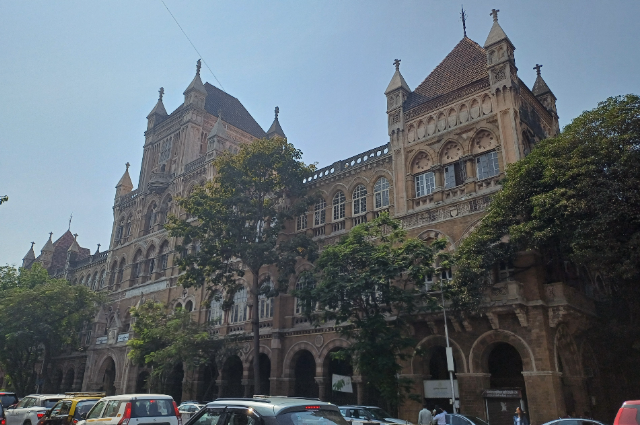
She had an academic base from her education at Elphinstone College, Mumbai, where she studied economics, and her education was gained from the challenges of a manufacturing business. In 1958, at the age of 25, she founded Bharat Radiators. It started modestly with approximately ₹2 lakh in capital and five workers. She didn't have the large industrial firms around her that did serious work, but Daftary did. According to the company's records, Bharat Radiators was incorporated in Mumbai in January 1958, and Daftary was a director from the beginning of the company's life.
Her story is interesting in that she was not just a business owner because of her family. She was forced to prove herself in a male-dominated field. For women leaders, this was a new field in the automobile and engineering industry, where Bharat Radiators worked. Daftary spoke of a “trust-based approach” to management in a report for the Jain Samaj. Instead of relying on entirely independent quality control inspectors, she cultivated among workers an awareness of the quality criteria and responsibility for the quality of their own work. It's an unusual case of worker-management relations that the same account states the company managed to avoid a strike, go-slow or loss of manpower for 32 years.
This is also why her legacy isn't just about the size or survival of a company. Her colleagues affectionately referred to her as "Tai", a Marathi word meaning older sister. That is another aspect of her "human" side to her industrial career. Daftary felt relationships with employees were very important in a workplace that is often the domain of machines, production targets and profit. Her leadership implied that the respect of workers is not an add-on to the business; it is an integral part of the business' success.
Her impact soon eclipsed Bharat Radiators. In 1971, Daftary was elected as the first female president of the Automotive Component Manufacturers Association of India (ACMA). Her own presidency was also recorded in ACMA's history, during 1971 - 1972. Ten years later, in 1981,
she was elected the first female president of the Indian Merchants' Chamber (IMC). Later, she was elected to the leadership of the organisation, which proved her contribution was far more than symbolic. The business history archives also reveal that she was the first woman to become a member of the executive committee of FICCI.
In 2004, her achievements were accorded national recognition when she was awarded the Padma Shri in the field of Trade and Industry. Sharayu Daftary is mentioned in the list of the 2004 Padma awardees from Maharashtra under the Government of India's Padma Awards. The importance of the award put her industrial career into the larger perspective of economic development in India.
Yet another aspect of Daftary's life was significant to her. She was a devoted Jain and was involved with the Dakshin Bharat Jain Sabha. She also edited the Jain publication, Jain Bodhak. During one of her statements of her beliefs, she stated that the equality of men and women, or their respect, was not a modern belief that was thrown in after her time but was already there within the Jain faith itself. She interpreted her religious beliefs closely in relation to leadership, responsibility, and social life.
Daftary was also a believer that ambition and family life don't have to go together. Married with Arvind Gaurishankar Daftary, who encouraged her goals, and they had three daughters. She therefore defied more than one stereotype: that a woman could run a manufacturing business, be involved in larger business institutions, and still have strong ties to family and community.
Daftary died in May 2025 at the age of 91. As a philanthropist and Jain leader, she was remembered by the Institute of Jain Studies and the Jain community as well. Corporate records show that she had been working with Bharat Radiators since 1958, an unusually prolonged relationship with the company.
Perhaps the most important takeaway message from Sharayu Daftary's tale is that nothing may actually be the first. What she really accomplished was to make exclusion become independence. When she wasn't accepted into an established family business, she built her own. She joined a male-dominated manufacturing business that had five employees and ₹2 lakh and worked her way up to being a prominent personality in India's business institutions. Leadership is not merely a matter of holding significant positions, as her story demonstrates. It is also a process of building trust, creating opportunities, and building institutional capacity more robust than before.
REFERENCES
- Automotive Component Manufacturers Association of India Past Presidents
- Jain Samaj Sharayu Daftary: Founder, Bharat Radiators Ltd.
- Institute of Jain Studies Obituary for Sharayu Daftary
- Bharat Radiators Company records