
India’s environmental record looks bad on paper. In the 2026 Environmental Performance Index (EPI), India's score is 22.46 out of 100, and the rank is 176th among 177 countries. Laos was the only other country to be ranked lower. India was also the last in the list of South Asian nations that were included in the index. In a nation that is betting big on renewable energy and that claims to be playing a consequential role in the international climate debate, it's uncomfortable. However, the other side to it is that. The situation in India is very weak, but in fact, it has improved over the last decade.
This can be seen when compared to 2022. India's ranking was at the bottom of the list, at 180th place with a score of only 18.90, four years ago. The Indian government was very critical of that ranking, arguing over the methodology and the measures employed by EPI. In 2026, however, the score has risen to 22.46. It's not radical, but it is real, and it's the kind of thing that needs to be enhanced. The EPI scores a 7.47-point improvement over the decade, which indicates India's environmental performance has improved even as it continues to be among the least performing nations in the world.
So, how is it that something is going wrong?
Pollution of the air is an obvious one. The problem is vividly highlighted by the immense cities of India every day. This is probably the most common example: Delhi's winter smog, but it is not limited to the capital. Pollution transcends borders and regions; a city can only solve a problem if it can help others. The World Bank calls the Indo-Gangetic Plains and the foothills of the Himalayas a high-priority regional pollution zone that poses a health and productivity risk due to air pollution. In 2026, the World Bank also supported a $300 million clean-air program in Haryana that included strengthening pollution monitoring and energy and transport projects.
This is evident in the EPI. India's rank was still low at 175th position with a score of just 7.89 in the air quality category. This is one reason why it has been possible for a country to make strides in renewable energy and only end up with a poor overall environmental ranking. Cleaner electricity is essential, but it doesn't necessarily imply cleaner air in every city or region.
Energy is the one aspect where India's environmental dilemma becomes more apparent. As the economy grows, industries expand, and millions of homes are increasingly receiving modern services, the country requires more electricity. Coal has thus been a tougher challenge to replace. The International Energy Agency reported that India's electricity generation in 2025 was split 71% between coal. This represents a significant improvement from 74% and 76% in 2024 and 2015, respectively, and the coal power system still dominates.
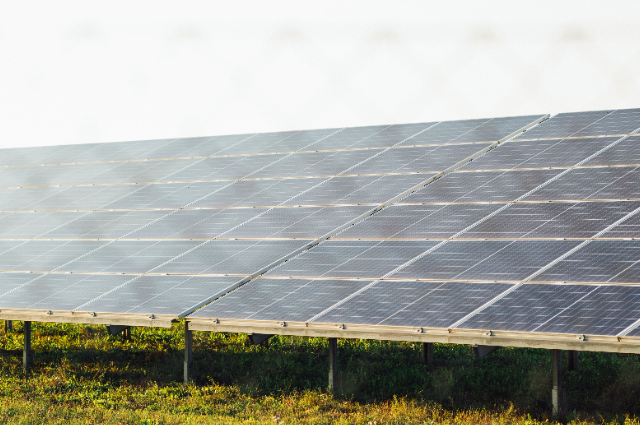
But India is not blind to renewable energy. Solar and other low-emission sources are growing rapidly. In India, on the contrary, coal-based generation actually fell in 2025 due to the increase in renewable energy and slower growth of electricity demand, the IEA said. At least one of the other more positive shifts under the EPI ranking is this one. India strives for a cleaner energy future, but electricity demand is only increasing faster, and so coal has not gone away.
A real-life example is also present in Surat, Gujarat. The city implemented an emissions-trading program to limit PM2.5 emissions from power plants. The city has implemented an industrial PM2.5 emissions-trading program. The program brought down the particulate emissions by 24%, according to the World Bank. It is a small-scale success in comparison to the size of India, but the results, when monitoring, regulation, and economic incentives are combined, prove that environmental policy can make a measurable difference.
The situation is less favourable if ecosystems and biodiversity are taken into account. Though India has massive forests, rivers, wetlands, and wildlife habitats, development poses a continuous threat to them. The 2026 EPI will not only track climate change but also environmental health and ecosystem vitality, which is why poor results in these categories have a heavy impact on the overall score. This is significant, given that environmental improvements cannot take place if the forests, habitats, and clean water are under pressure while the production of solar panels is increasing.
This is why the India 2026 ranking should be taken with a pinch of salt. It would be untrue to say that India has “failed” altogether, as the country’s ten-year EPI trend shows improvement, and the growth of cleaner energy is swift. That said, it would also be hard to justify labelling it a success when it is in last place on the planet for air pollution and still has many coal power plants.
The most significant shift from 2022 is then perhaps that India isn't sitting at the table, but is the reason for the number. The nation has moved up but not quickly enough to move into the middle of the rankings. Now it is up to it to make these changes to the environment tangible: cleaner air in cities, less reliance on coal, improved protection of ecosystems, and better pollution control.
The 2026 EPI result for India is a discouraging one, yet not all the way down. It's a tale of a nation on the right path but with a very heavy environmental footprint. Only the coming years will tell if India can make that move quickly enough.
References:
- Yale Centre for Environmental Law & Policy, Environmental Performance Index 2026.
- Yale Centre for Environmental Law & Policy, India – 2022 EPI Results. India 2022 EPI
- International Energy Agency, Global Energy Review 2026 – Electricity Supply. IEA
- World Bank, World Bank Support to Address India’s Air Pollution. World Bank India