
A war thousands of kilometres across lands far away may influence the cost of travelling to and from work, the cost of goods being transported, or the price a family pays at the supermarket. That relationship is overlooked when international headlines focus on military operations and diplomatic statements. However, the clash between the U.S. and Iran is a reminder that geopolitical wars are rarely limited to only two nations. The consequences can spread along shipping lanes, energy markets and supply chains, and eventually reach people who have little say in how the conflict unfolds.
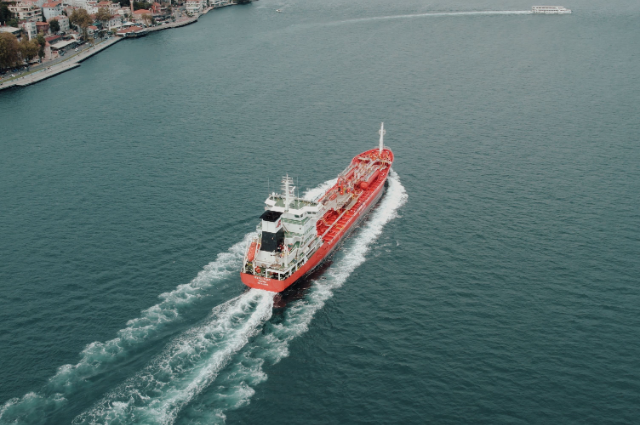
The narrow Strait of Hormuz between the Persian Gulf and the Gulf of Oman is one of the most significant locations in this conflict. The strait was previously transporting about 20% of the world's oil before the war started in February 2026. It's not about the size but about what flows through it. If it is not safe or reliable to send through such a route, the consequences can be felt far beyond the immediate area.
The recent events demonstrate the rapid growth of such risks. Reuters reported on 11 October that the United States military had seized a Panama-flagged commercial ship that it says had been trying to cross the U.S. blockade of the Iranian oil straits in the Gulf of Oman after it ignored the warnings. Propulsion was lost on the ship, and no one was injured, US Central Command said. The attack was made as commercial traffic in the Strait of Hormuz continues to drop and attacks on vessels have been escalating.
Shippers are not only concerned about whether a ship can make it; they are also concerned about the route the ship will take. Operators also need to take insurance, security measures, fuel costs and delays into consideration. When ships are uncertain, a route that was once commercially attractive can turn out to be far more expensive. Some companies may delay trips or find other options, while others may run at a higher cost. These decisions, in turn, influence the cost and supply of commodities flowing in the international market.
The results are more apparent in oil. If traders begin to worry about having their supplies cut off, either before or when the product is scarce for consumers, prices can react. Oil prices jumped about 4% on October 8 on renewed worries about the Middle East conflict, shipping disruptions and other factors that affected the market, Reuters reported.
This distinction matters. However, not all the hikes in fuel prices can be blamed on the US-Iran confrontation. Oil markets are reacting to a number of events simultaneously, such as production volumes, transport costs, weather factors and forecasts of future supply. But there's another source of pressure, as businesses cannot have confidence in how much it will cost them to transport energy from point A to point B.
These impacts aren't limited to petrol stations. The higher transport and energy costs may lead to higher food production and manufacturing costs and higher transport costs between countries. It might be absorbed by businesses, but others may be passed on to customers. This can backfire in a domino effect and lead to economic pressure in areas distant from the conflict.
Countries with a high level of reliance on imported fuel are particularly vulnerable. The impact of international energy prices, for instance, is felt in Pakistan, where petroleum imports are part of its energy bills and foreign exchange needs. Continued high oil prices could put pressure on the country's import bill and transport and operating costs for households and businesses. The exact effect will depend on exchange rates, government price setting, local taxes and how long the disruption lasts.
There is a much closer example of the impact of conflict-related shipping problems on a national economy in Iraq. The Associated Press reported on October 7 that Iraq devalued its official currency against the US dollar due to economic pressure in part triggered by disruptions in oil exports. Given Iraq's reliance on oil income, the problems with transport of oil from Iraq through the country's traditional pipelines have implications that extend beyond the energy sector.
Washington and Tehran are battling for military security, political leverage, and competing strategic goals. But in nations that depend on certain trade, the worry is additionally functional: how much can businesses and governments endure uncertainty before it starts to influence economic choices? Even nations not involved in the war can have to make budget cuts, rethink trade routes, or brace for increased import expenses.
There is also a broader question of what happens when the pressure is economic, and it becomes a part of the struggle. While blockades and restrictions may be employed to hinder an opponent's access to trade and revenue, they often have effects that go beyond those of political leaders. The whole shipping, labour, import and consumer community are affected. Meanwhile, the decision to permit free trade along a perilous maritime route also poses reasonable security concerns and raises a question about the safety of the crews. It is easier to explain why it is harder to have a permanent settlement than to reopen a route due to these competing concerns.
None of this means that it is guaranteed that a specific result will be inevitable. Global supply lines may shift, other supplies may be available, and diplomacy may help minimise uncertainty. Likewise, a temporary increase in traffic does not ensure that commercial operators will be able to resume the normal schedule. Business decisions are based on current events as well as future events that businesses expect to see.
The true meaning of the U.S.-Iran conflict, therefore, is not just one of military and diplomatic rivalry. It illustrates the vulnerability of the current global economy to the relatively limited number of critical pathways, and the impact of insecurity on one route can easily affect a decision made on another.
The Strait of Hormuz might sound far away to a watcher from the news from Karachi, London or Singapore. The ships that go through it, however, bring resources that are vital to everyday life everywhere. Once that action gets rocky, the results can be seen in areas that are never highlighted in the news.
The conflict may be fought over security, sovereignty and political influence, but its economic reach is much wider. Understanding that connection is essential to understanding why developments between Washington and Tehran matter far beyond their borders.
References:
- Reuters. (October 11, 2026). US military says it disabled cargo vessel trying to run Iran blockade.
- Reuters. (October 8, 2026). Oil rises 4% on revived Middle East worries, Hurricane Isaias supply disruption.
- Associated Press. (October 7, 2026). Iraq devalues its currency as US-Iran war disrupts oil shipping routes
- Council on Foreign Relations. (August 27, 2026). The Iran War at Six Months: A Region and Its Relationship With the U.S.Transformed.