
When a former sanitation worker walked into a Bengaluru lawyer's office in June 2025 and said he was ready to point police to the bodies he had buried, the story that followed had the shape of a reckoning. C.N. Chinnaiah's account of bodies of women and minors, many bearing marks of sexual assault, interred in secret along the Netravathi River between 1995 and 2014, under threat of death, read like the ending Dharmasthala's decades of whispered suspicion had been waiting for. Eight months later, the story has a different shape. A Special Investigation Team has concluded that the "mass burial" narrative was staged, that the whistleblower confessed to being coached, and that the skull he presented in court as belonging to a murdered woman belonged, forensically, to a 32-year-old man. And yet a Karnataka High Court bench is still asking the state government, as recently as March 2026, to account for 74 unnatural deaths in and around the temple town. Both of those sentences are currently true. That is the uncomfortable, unresolved place this story now occupies.
How the allegation arrived
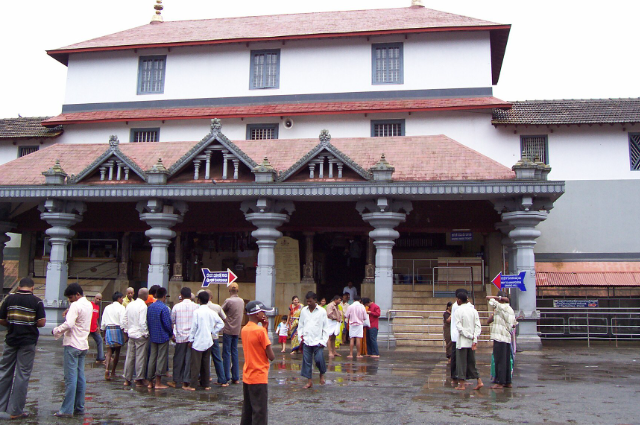
Dharmasthala is not an ordinary town. It is run, religiously and administratively, by the Heggade family, whose temple trust also controls hospitals, colleges and rural development programmes across the region. A concentration of soft and hard power rare even by the standards of India's institutionally entangled pilgrimage economies. The town did not have its own police station until 2016. Its most infamous prior case, the 2012 rape and murder of a 17-year-old student named Sowjanya, ended in a 2023 acquittal after CBI and CID probes that critics said were undermined by missing CCTV footage from a temple-owned building and other lapses. That acquittal, not a conviction, is what Dharmasthala's name evoked before Chinnaiah ever spoke.
So when he came forward first to police, then, when nothing moved, directly to a magistrate with 13 identified burial sites and a claim that some 70 to 80 bodies lay buried in the forests along the river, it landed in fertile ground. Families of long-missing women, including that of Ananya Bhat, who vanished on a college trip to Dharmasthala in 2003, wondered if their answers were finally at hand. Activists who had spent years pressing the Sowjanya case, several of them already facing defamation suits from the temple trust, rallied around him. A gag order removing over 800 online links, issued by a judge later found to have studied at Dharmasthala-run institutions, only sharpened the sense that something was being suppressed. The Karnataka government, under public pressure, formed an SIT led by DGP Pronab Mohanty.
What the SIT found
Excavations began at the sites Chinnaiah named. Skeletal remains turned up at only a few of them, and one dig produced not a body but a PAN card and debit card, belonging, investigators discovered, to a man who had died of jaundice and been cremated in his home village, nowhere near Dharmasthala. In August 2025, Chinnaiah presented a skull before a magistrate, asserting it was a woman's. Forensic analysis said otherwise. He was arrested for perjury, and under questioning allegedly told the SIT he had been pressured by a group of activists, among them a founder of a Hindu nationalist organisation and a former police officer, into filing a false complaint, with one of them allegedly supplying the skull himself. A second complainant, Sujatha Bhat, is accused of filing a false missing-person report about her daughter under the same pressure. In November 2025, the SIT filed a nearly 3,900-page charge sheet naming Chinnaiah and four activists as accused of fabricating evidence. Chinnaiah was granted bail in late November, on condition that he not speak to any media about the case.
If the story stopped there, it would be a cautionary tale about coached witnesses and manufactured evidence, a real institution wrongly accused, its name dragged through a manufactured scandal. But the story hasn't stopped there.
The part that hasn't gone away
In January 2026, the magistrate's court in Belthangady declined to close the matter on the SIT's report alone, noting it was still technically preliminary pending forensic results. That same month, a separate public interest litigation reached the Karnataka High Court, alleging 74 unnatural deaths in Dharmasthala village over the years, a claim distinct from Chinnaiah's specific burial narrative, and one the court has not dismissed. By March, a Division Bench was pressing the state government to file a detailed account of what police investigation, if any, had actually been done into those deaths, and pulling up the government in May for failing to do so on schedule. The same month, the High Court also ordered the takedown of AI-generated, morphed content targeting the Heggade family, a reminder that misinformation has cut in more than one direction in this saga.
What this leaves us with is not a tidy verdict but a genuine split-screen. One frame shows a specific, sensational allegation that investigators believe was invented, coordinated, and staged with props, a serious crime in itself, since false claims of this kind cost real investigative resources and can permanently discredit legitimate grievances. The other frame shows a court that is still not satisfied that the underlying pattern- dozens of unexplained deaths, a town that resisted having its own police station for years, a documented history of acquittals shadowed by missing evidence- has actually been accounted for.
Why both things can be true
It is tempting, in a case this politically charged, to pick a side: either Dharmasthala is a fortress of impunity that manufactured its own defence, or it is the victim of a coordinated smear campaign dressed up as whistleblowing. The evidence assembled so far does not support either clean narrative. A false complaint does not retroactively clear every death the region has never adequately explained, any more than a town's troubling history entitles any complainant to invent evidence. The SIT's fabrication finding deserves to be taken seriously, precisely because taking it seriously is what protects the credibility of every future complainant with a real grievance. The High Court's continuing scrutiny of the 74 deaths deserves equal seriousness, precisely because a discredited witness is not the same thing as a discredited question.
Institutional power in India does not usually protect itself through some singular, dramatic cover-up. More often it protects itself through exhaustion, through cases that acquit for want of evidence, through gag orders that outlast news cycles, through the sheer difficulty of separating a genuine victim's fear from a bad-faith actor's opportunism. Dharmasthala's story, as it stands in mid-2026, is a test of whether due process can do that separating work in public, under pressure, without either side getting to declare victory before the forensic reports are actually in. That test isn't over. Neither, it turns out, is the story.
References:
- Dharmasthala mass burial case, Wikipedia https://en.wikipedia.org/wiki/Dharmasthala_mass_burial_case
- Dharmasthala mass burials: Court grants complainant bail, bars him from talking about case, The News Minute https://www.thenewsminute.com
- https://thecommunemag.com
- What is the Latest in the Dharmasthala Controversy?, PGurus https://www.pgurus.com
- Karnataka High Court Directs State To File Report On Police Investigations In Dharmasthala 'Mass Burial' Cases, LiveLaw https://www.livelaw.in
- https://www.livelawbiz.com
- Dharmasthala Case: Court Directs SIT to File Final Report, Deccan Herald https://www.deccanherald.com
- Mass Graves, Missing Women, and a Whistleblower: The Dharmasthala Horror Unfolds, Deshabhimani https://www.deshabhimani.com