
In ancient China, merchants, no matter how wealthy, could not afford to wear silk. They traded it, sold it to nobles, the emperor’s family, and perhaps even the emperor himself. But they themselves wore none. Silk was a fabric of prestige and the merchants, for all their wealth, ranked at the bottom of ancient China’s class stratification.
The Sui dynasty established the four occupational classes in 605 CE: Shi (scholars), Nong (farmers), Gong (artisans), Shang (merchants). While stratification has been a key feature of human society across history and geographies, what distinguishes ancient China’s social hierarchy from (for instance), the English is that it was neither based on money nor was it hereditary. The philosophy behind Shi (scholars) leading the stratification was the recognition that governance requires education and cannot be based on birth. The stratification itself was based on Confucian teachings recognising the productive value of the occupation. The wealthy merchants, who did not produce but merely traded luxury goods, ranked at the bottom. This philosophy did not operate in the social subconscious but was solidified and integrated into society through law. The sumptuary laws of the Han dynasty, elaborated upon during the Ming dynasty, specified the appropriate attire, housing, and mode of travel for each class. Jin Wen’s article reveals that a hallmark of the economic policies of the Qin and Han dynasties was emphasis on agriculture and restricting commerce. Wealthy merchants profited from the labour of others and in a society, which valued social contribution above personal gain, they occupied the bottom rank. But they did not have to remain there. A child born to a merchant was not bound to his father’s occupation. Silk could be his future.
The selection of scholars (which formed the Shi class) was conducted through the Imperial exam, Keju, open to all classes, administered once a year at the county level and three times at the provincial level and in the capital. It opened the highest strata of society, Shi, to young men across the imperial land to improve their circumstances and gain upward mobility.
Established during the Sui and Tang dynasties and peaking during the Ming and Qing dynasties, Keju exam was not merely structured on Confucian teachings, testing a candidate’s knowledge of the Five Classics. Once candidates had qualified and became scholars, guiding the emperor in matters of governance, they were expected to embody the teachings of Confucius throughout their lives, rejecting the accumulation of wealth and ascribing to a rural lifestyle. The highest strata of society, an aspiration, adhered to a lifestyle of simplicity. The aspirations of a society are not merely its desires. They reveal what the society rewards. Ancient China rewarded virtue and education. Ancient China believed that virtue was not an accident of birth but inculcated through rigorous education.
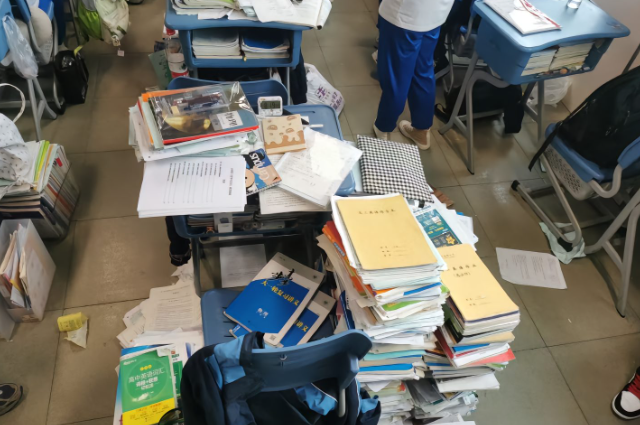
The Keju system of selecting bureaucrats continued for 1,300 years until it was abolished in 1905. The fall of the Qing dynasty in 1912 and the communist revolution of 1949 dismantled the formal hierarchy; however, the traditional focus on learning continues to play a prominent role in modern China. The entrance exam for university education called Gaokao was created in 1952. Suspended in 1966 when Mao Zedong declared academic testing elitist, it was reinstated by Deng Xiaoping in 1977 when 5.7 million people sat for it and less than 5 percent were enrolled.
Among the second cohort to sit the reinstated Gaokao was Sun Pishu, who enrolled in university in 1978 and worked in an electronics plant after graduation. A decade later, he developed the country’s first small server. Today, he is the chairman of Inspur, a cloud computing and big data provider, supplying IT products and services to 108 countries and regions. Documented stories reveal the potential of the exam to change the trajectory of people’s lives. The spirit of Keju lives on in the Gaokao in the opportunity to alter one’s status in society. However, a crucial difference between the Keju and the Gaokao rests in their relationship to wealth and the wealthy. In ancient China, the Keju marked the difference between prestige and wealth. The two were antagonistic. Wealth reduced status and the those who qualified the exam were required to forego it. In present-day China, the Gaokao is the path to wealth. The prestige and honour associated with higher education is not on account of virtue but due to the opportunities for wealth it opens. In present day China, the Gaokao may offer upward mobility but the wealthy billionaires constitute the aspirational class.
The correlation between test scores and financial opportunities inevitably raises concerns about those who do not qualify or score low. Research shows that income and wealth inequality in China has been widening steadily since the late 1970’s. Li Qiang’s study on the new trends in social stratification in China reveals an immense and widening gap between the rich and the poor, with the Gini coefficient rising from 0.382 in 1988 to 0.434 in 1994 and 0.4577 in 1996-1997. The share of China’s national income earned by the top 10% of the population increased from 27% in 1978 to 41% in 2015. On the other hand, the share of the bottom 50% of the population dropped from 27% to 15%. While the emergence of the People’s Republic of China (1949) dismantled the hierarchy of the four classes, it simultaneously created one of the sharpest inequalities in the world.
The Shi Nong Gong Shang no longer occupy social nomenclature in China, but the occupations of bureaucrats, farmers, craftsmen, and merchants continue, albeit within an inverted hierarchy. The merchant is at the top; learning is not a marker of virtue anymore, but an opportunity to acquire wealth. However, Jack Ma’s retreat from public life following a speech criticising state regulations proves that the wealth (and freedom) of merchants is strictly dictated by the state, and the role of the national exam in determining the trajectory of one’s life has not changed at all.
References:
- China: History of Dress. Encyclopedia.com. https://www.encyclopedia.com
- Loewe, Michael & Shaughnessy, Edward. "Introduction to Archaeological Discoveries and Their Influence on Qin and Han Historiography." Journal of Chinese Humanities, Volume 12, Issue 1, 2026. Brill. https://brill.com
- Pujazon Patron, Ernesto Carlos & Elias Arcelles, Jose Domingo. "The Chinese Imperial Examination System's Historical Significance: Why was it administered?" Athens Journal of History, Volume 12, Issue 1, January 2026, pp. 93–108. https://doi.org
- Social Classes — Ancient China. Library Guides, Norwood Secondary College. https://library.norwood.vic.edu.au
- Davey, Gareth et al. "The University Entrance Examination System in China." ResearchGate, 2007. https://www.researchgate.net
- China's Gaokao Powers 40 Years of Progress." State Council Information Office of the People's Republic of China, June 7, 2017. http://english.scio.gov.cn
- The Rise of Wealth, Private Property, and Income Inequality in China." Stanford Center on China's Economy and Institutions, Freeman Spogli Institute for International Studies, Stanford University. https://sccei.fsi.stanford.edu
- China's gaokao powers 40 years of progress | english.scio.gov.cn
- The Rise of Wealth, Private Property, and Income Inequality in China | FSI
- The Gini coefficient is a value between 0 to 1 used to measure the difference between the rich and the poor. The value of 0 indicates that there is no difference at all. The society is perfectly equal (a practical impossibility). On the other hand, the value of 1 indicates maximum difference, with one person holding all the wealth and fortune and the others possessing none (also an extreme impossibility). A Gini coefficient close to 1 indicates greater inequality while a Gini coefficient close to 0 indicates greater equality.
- The Rise of Wealth, Private Property, and Income Inequality in China | FSI
- The Rise of Wealth, Private Property, and Income Inequality in China | FSI
- The Rise of Wealth, Private Property, and Income Inequality in China | FSI