
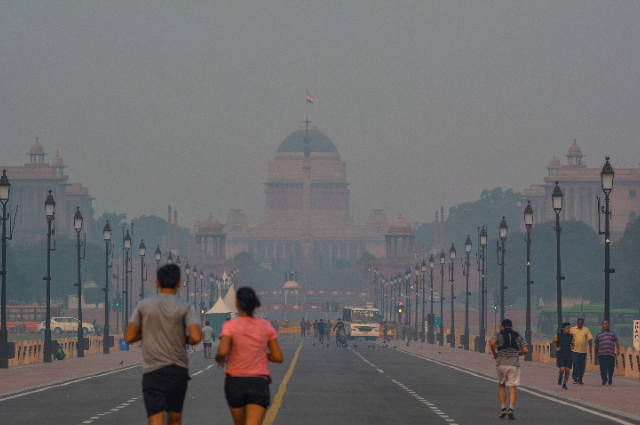
India is the second-worst country with respect to sustainability according to the Environmental Performance Index (EPI) 2026. The Indian Ministry of Environment, Forest and Climate Change (MEFCC) has rejected the framing of this index. This article explores both perspectives of this tension, shedding light on India’s position in the sustainability landscape.
Released biennially by the Yale Centre for Environmental Law and Policy, the 2026 rankings were published on 11th July, 2026, with India ranked 176th out of 177 countries, scoring 22.46 out of 100, followed by Laos. The index places India below all South Asian countries (Bhutan, Sri Lanka, Nepal, Pakistan, Maldives, Bangladesh). However, this is not India’s worst ranking on the index. Over the last decade, India has hovered among the last five rankings. In 2022, when India was ranked last (180th), the MEFCC rejected the metrics of this index, calling several indicators “extrapolated and based on surmises and unscientific methods”.
The EPI evaluates and ranks countries on their state of sustainability by converting complex, multi-dimensional data into a single score from 0-100. This score measures how close countries are to established global environment targets. Organising 47 indicators into 12 issue categories, it spans three core policy objectives, namely, Environmental Health, Ecosystem Vitality and Climate Change Mitigation. While the EPI is a rigorous, scientific tool for measuring the environmental health of a country, it has been critiqued for its bias towards wealthy nations. Its heavy weighting on air quality and emission trends accords severe penalties to developing nations which continue to rely on coal. Its metric does not take account of historical carbon emissions on the basis of which developed nations acquired their wealth. The authors of EPI have acknowledged this correlation between high scores and wealth owing to the industrial peak that developed nations have already attained. The EPI’s methodology also shifts between editions,s making comparisons across years difficult.
According to the index, India stands as the world’s third-largest greenhouse gas emitter after the United States and China. Due to rapid industrialisation and a grid that still relies heavily on coal, its total emissions have grown roughly 32% over the past decade. More than half of India’s installed capacity is non-fossil, il and India ranks third globally in installed solar power. The EPI, however, does not measure initiatives. It measures actual outcomes such as absolute emissions. Despite non-fossil installed capacity, India uses coal for the bulk of its electricity because it remains the only source stable enough to meet the country’s demand. Renewables cannot fully supply this demand due to a lack of adequate storage and transmission infrastructure. Therefore, from a policy perspective, India is prepared to move away from coal. However, the alternative is not affordable at population scale. Thus, the EPI, which measures absolute emissions, scores India low. Against the EPI’s ranking is another. India’s per capita emissions stand below the global average. This comparison highlights how the underlying metrics of indices function as perspectives to read countries through. Therefore, a comprehensive picture of India’s position requires the collation of India’s rankings across indices.
On the Climate Change Performance Index (CCPI), India’s rank fell by 13 places in 2026 to 23rd out of 66 countries and the European Union, dropping to a “medium performer”. While the share of renewables in the total energy mix has increased to 14%, Jan Burck (of Germanwatch, CCPI author) called out India’s absence of a plan to phase out coal.
On the UN Sustainable Development Goals (SDGs), India achieved its highest-ever ranking in 2026 (94th of 167 countries). However, on this index too, it remains behind Bhutan, Nepal, Sri Lanka, Maldives. It has also missed targets on hunger and biodiversity.
According to the Global Footprint Network (GFN), India’s per capita ecological footprint is among the lowest in the world. The index has traced this not to a sustainable lifestyle but rather to decreased consumption resulting from deprivation. India’s growth and development have tripled since 1961; however, the average individual’s consumption and footprint have declined by 12%.
The Global Green Growth Institute (GGGI) measures governance and infrastructural readiness, classified into four dimensions, namely efficient and sustainable resource use, natural capital protection, green economic opportunities, and social inclusion. The regional data of this index places COMESA and SAARC among the lowest-scoring economic blocs it tracked within the last decade.
These comparisons surface the reality that no single figure offers a comprehensive picture of India’s standing with respect to environmental and climate sustainability. While India fares poorly on the absolute emissions scale, it has also outpaced higher-ranking countries (such as Romania and the Dominican Republic) in the decade-long trajectory. However, on the other hand, a collated or comparative view of the rankings also reveals the overlap of what is working and what needs work to secure a sustainable future for India. India has progressed in terms of policy and initiative. However, there is a need to increase infrastructure and green investment, reduce poverty and undertake measures to reduce dependence on coal. Building renewable capacity and policy while simultaneously increasing coal usage will not lead to a sustainable future for India.
While the rankings may be rejected on account of the unfair playing field, changing metrics, and contextual differences not factored into calculations, the data (on India’s air quality or falling consumption) reflects the lived experience of people. It is these experiences in service of which governments exist.
References:
- Yale – Environmental Performance Index
- The Wire – At 176th Position India Ranks Second From Lowest in Latest Environment Performance Index.
- Press Release – Ministry of Environment, Forest & Climate Change
- Down To Earth – ‘Wake-up call’, say experts as India gets second lowest global ranking on Yale’s performance index; also raise questions on methodology
- Yale – Environmental Performance Index; Methodology
- Mongabay – Environmental Performance Index: An unscientific study or an opportunity to reflect and improve?
- https://india.mongabay.com
- https://worldpopulationreview.com
- Down To Earth – Can climate rankings tell us which country is a good performer?
- https://ccpi.org/country/ind/
- https://greengrowthindex.gggi.org/