
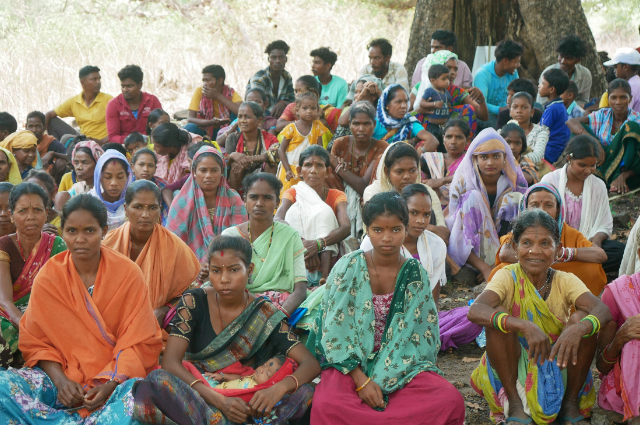
The video is nineteen seconds long. A woman stands in a crowd, sari draped over her head, face blurred, holding her ears. She bends down and licks the spit off the ground while the crowd watches. The place is a village in Bihar, Begusarai. While the video circulated on social media platforms in late July, the event took place in June. An FIR was filed while the video went viral, but it is evident that the act was intended to be some form of punishment.
What warranted such degradation and humiliation was rape.
According to the complaint eventually registered on 1st August, 2026, a neighbour broke into her house on the night of 2nd June, 2026, and raped her after issuing threats. The villagers, alerted by her cries, caught him as he tried to flee. However, it was not an arrest that followed. Instead, social humiliation. A panchayat, convened on the spot, decided that both the accused and the victim would be punished.
The incident has sparked separate investigations into the original assault and the panchayat’s conduct. This has led some locals to dispute the assault altogether, insisting that it was a consensual relationship the village stumbled upon rather than a rape. While this narrative pushes the accusation into doubt, it offers the jarring reality of how a society treats a woman who voices being raped.
This is not the first time that such a response to rape has been noted in Bihar. In November 2018, a woman in Khagaria district told the police that her landlord’s son had raped her and that, when she complained to his father about it, he locked her in a room, forced her to lick her own spit, and made her drink urine. Eight years later, the logic and burden of social degradation and punishment continue to fall on the victim. However, while that incident took place in the confines of a private house, this one unfolded on the street, leading to its circulation and actions being taken to deliver justice.
However, this pattern of shaming rape victims is not exclusive to Bihar. Rape victims have experienced humiliation on a national scale. In the two-finger tests that courts explicitly outlawed, doctors used a woman’s sexual history to assess her credibility. In police stations, complainants are commonly asked what they were wearing before the assault. Begusarai is not an exception to how India responds to a woman’s word against a man’s. It is a rare instance of this response on record.
Begusarai’s response could also be read as an aberration resulting from remoteness and illiteracy. However, the barbarity of the panchayat’s diktat itself is a separate matter altogether. The panchayat never had the authority to order or enforce punishment in the first place. In Shakti Vahini vs. Union of India (2018), the Supreme Court held that panchayats convened to enforce their own diktats do not possess legal authority. They cannot investigate, adjudicate or punish. Their only lawful function is to inform the police. The Begusarai panchayat did not merely fail to protect the complainant. It performed an act it had no legal authority to.
There is another responsibility the panchayat failed to uphold and perform. In Lalitha Kumari vs. Union of India (2014), the Court ruled that registering an FIR for a cognizable offence like rape is not discretionary. It must happen immediately, without a preliminary inquiry. The woman in Begusarai reported her assault on 2nd June, 2026. The FIR was filed on 2nd August, 2026, once her husband returned. He was away when the assault took place. The law does not require a husband’s presence to file a complaint. However, she couldn’t make her way to the police and in the interim two months, the panchayat failed to perform its lawful function of informing the police. This gap between the assault and the lodging of the formal complaint evidences how a right is mediated by society.
However, it is not merely social humiliation, degradation or ostracisation that is responsible for unreported rape cases or time lags. According to NCRB, the conviction rate in rape cases stands at roughly 27%, with close to 95% of cases pending trial in a given year. Formal justice is slow, uncertain and fraught with challenges, and rural women are aware of this reality. The panchayat stepped in to adjudicate because there was space for it to step in, and its instinctive response was to punish the victim. It is precisely this instinct which is driving the new narrative that this was consensual and only labelled rape once discovered.
It is also this instinct which is being challenged right now as a result of the video and its virality. In this particular case, outrage has cleared the way for a woman to seek justice (whether she receives it or not is yet to be seen). However, the impact of this outrage on the instinctive response to punish women and their ability to seek justice remains to be seen in future, remains to be seen.
References:
- Bihar Panchayat forces woman to lick spit; police launch probe after video goes viral
- Bihar Shocker: Rape Survivor Blamed, Allegedly Forced to Lick Spit by Village Panchayat | Asianet Newsable
- Shakti Vahini vs. Union of India (2018): case analysis - iPleaders
- Supreme Court On Mandatory Registration Of FIR For Cognizable Offence
- 10 years of Nirbhaya: Conviction rate in crimes against women just 26.5% in India
- ‘Two-finger test’ in Rape Cases: Supreme Court takes a firm stand and directs Meghalaya government to eradicate the evil practice - Legal News - Free Law