
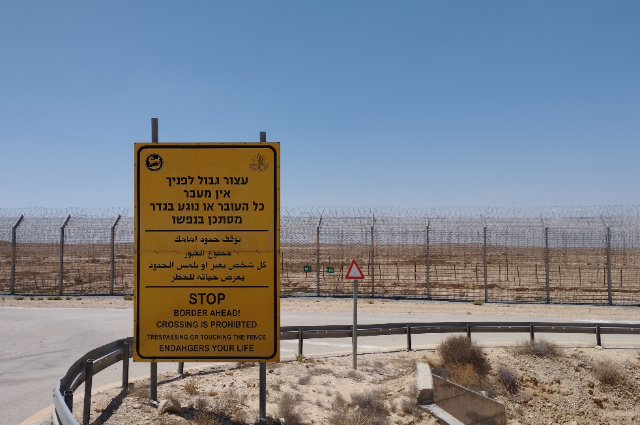
The small Spanish exclave of Ceuta on the northern African coast saw a surge of migrants from Morocco on the night of July 30th, 2026, increasing the population of Ceuta by more than half within 24 hours.
According to the Interior Ministry of Spain, the first day’s arrivals stood at 2,000 to 3,000, which then rose to 40,000 to 49,000 before being erased from the web page and revised to “around 50,000”. According to Ceuta’s mayor-president, Juan Jesus Vivas, total migration stood at 60,000, while Morocco’s Interior Minister cited 40,000. As the week progressed, the figures continued to change, with an estimated aggregate across reports at 80,000.
By 4th August, Spain reported that around 70,000 migrants had returned to Morocco, leaving 3,000 to 5,000 within the exclave. However, on 6th August, 2026, addressing the European Parliament, Mayor Vivas estimated remaining migrants at 6,000, which he later revised to “between 8,000 and 11,000”. At the European Parliament, he also announced a total of 100 deaths. Morocco had previously announced 11 on its side. The mayor-president said his total included the 11 on Morocco’s side. Reports on 7th August claimed that the number exceeded 140.
A widely acknowledged challenge in ascertaining accurate figures pertains to children. According to Euronews, while 1,500 unaccompanied minors have been brought within the protection system, Save the Children estimates over 4,000 are hiding or beyond the reach of child protection services in Ceuta out of fear of centres set up by authorities. This, in turn, has created challenges for institutions that are already overflowing to deploy resources in bringing them under care. On the other hand, the Spanish newspaper El Mundo reported that 4,860 migrant children had been registered by volunteer groups in Ceuta.
In his updates to the press, mMayorVivas acknowledged that a major challenge faced by Ceuta in ascertaining the precise number of deaths was insufficient resources. The conflicting figures can be attributed to a number of factors. First, the crisis concerns no single institution or actor but at least three on the surface, namely, Morocco, Ceuta and Spain. Each is limited by jurisdiction and prioritises its own interest.
In the face of severe backlash from the European Union, this interest also entails minimising one’s exposure. On 31st July, 2026, Italy announced the suspension of its Schengen arrangements with Spain. Denmark, Finland, France, Portugal andthe Czech Republic called for increased border security measures and consideration of suspension of Schengen arrangements. In the face of the EU’s severe response, the discrepancy between Spain and Ceuta’s figures on remaining migrants could also be read as a strategic downplay in order to alleviate the fears of the EU member countries. EU’s united response against Spain forms the second probable cause for the conflicting figures. Additionally, Ceuta revealed that it had conveyed its concerns about large-scale migration in the weeks after the Spanish Supreme Court’s judgement, which Spanish authorities ignored. It sheds a new perspective on the crisis as something that could have been avoided had adequate and timely measures been taken, adding further pressure on Spain before its Schengen co-members.
Third, while the management of this crisis is underway, the figures themselves keep changing and progressing for the worse, reflecting badly on all parties.
Fourth, according to Hespress English, Morocco’s figure is based on official surveillance and field data, revealing the number of people who attempted to enter Ceuta. Figures from the Spanish authorities refer to the number of migrants who have arrived in Ceuta.
The fifth is not exclusive to the 2026 migration crisis of Ceuta and Melilla. Measuring Irregular Migration Brief Number 3 evaluates the “fitness” of available data on irregular migration for policymaking. The authors note the potential for double counting in the prevalent methods of apprehending irregular migrants. Double-counting did take place in the 2015 migration and refugee crisis, of those entering through Greece and then through the Hungarian border, “inflating numbers at irregular intervals”. While this particular instance pertains to migration at the European scale, the scale of the migration in Ceuta relative to its preparedness and “lack of adequate resources” produces the same outcome as double counting. Inflated, unreliable numbers.
The conflicting figures have created ambiguity with respect to the allocation and deployment of resources to resolve the crisis, in addition to the existing uncertainty surrounding the cause of the crisis. Ambiguity is both a liability and a protection. As long as conflicting figures exist, all of them can be dismissed in preference for another, particularly when each figure corresponds to a different actor and a different narrative. The differing narratives range from the Spanish Supreme Court’s judgement that on-the-spot deportation could not apply to migrants who had swum into the Spanish exclaves, to the apparent absence of border control guards which enabled the mass migration of thousands over the course of a night. Thus, the crisis surfaces an underlying logic that the settled number, if ever arrived at, will reveal the narrative that survived.
References:
- HES Press English – How Official Figures on Ceuta’s migration crisis continue to differ
- BBC- Thousands of migrants still in Ceuta after border crisis, local leader says
- The New Arab – ‘We mourn lives lost’
- Commons Library - Ceuta: Migrant crossings and European reaction - House of Commons Library
- Measuring Irregular Migration: How fit is the available data on irregular migration for policymaking? MIRREM_Hendow et al-2024-How fit is the available data-v1.pdf