
The weight of a photograph
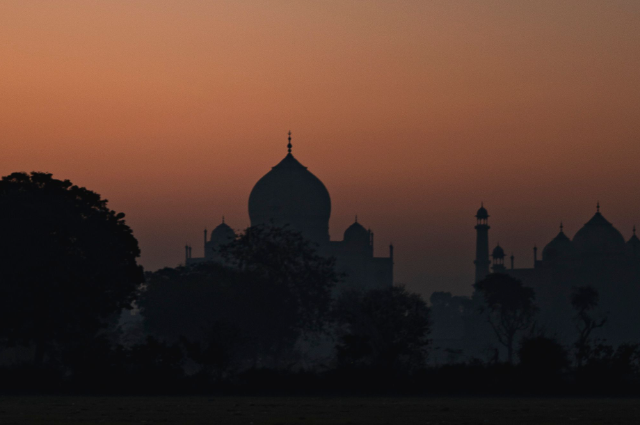
On 14th February, 1992, four-year-old Avanti Reddy performed the tribal Lambadi dance in honour of Prince Charles and Princess Diana during their visit to India. Youngest among the dancers, Princess Diana picked her up and sat her on her lap, saying, “I don’t have a daughter, so today, you are my daughter.” Numerous photographs from that visit survive today, including the widely recognised one of Diana seated alone before the Taj Mahal, which is, in hindsight, considered symbolic of the state of the Prince and Princess’s marriage. However, this subjective approach is not exclusive to Diana’s picture against the Taj Mahal. Susan Sontag has argued that a photograph is a fragment quoted out of a continuous reality and its meaning is never fixed by the moment it was taken. The meaning is subject to reinterpretation by whoever encounters it later, in whatever context they bring to it.
Today Avanti is thirty-six years old. The two kept up a correspondence by mail, but she did not meet the Princess of Wales ever again. In 1997, when she was ten, a second meeting between Diana and Avanti had been arranged. Avanti’s dance troupe was travelling to Leuven in Belgium, and Avanti’s family had arranged a reunion in the UK. However, Diana died in the car crash from Paris to London, days before the meeting. Accompanying Avanti’s memory is a framed, signed photograph Diana sent her.
Royal tours are a rigidly choreographed sequence of events. They are not casual travel but rather diplomatic productions. The schedules run tight on time and have clearly defined purposes even within the realm of soft-power diplomacy. The education coordinator of Lalapet Government High School later recalled that when Diana walked off stage and picked up four-year-old Avanti, “all my bosses were worried,” and officials offered to carry the child. However, Diana refused to let go, wiping her nose with her handkerchief when she noticed Avanti had a cold.
When Diana walked off stage and picked up Avanti into her arms, she not only broke protocol in that instant; she also opened the door to a new relationship, with a child. The 1992 photograph of four-year-old Avanti in Diana’s arms constitutes the Royal tour. However, that gesture led to a friendship, however brief, which could not have been choreographed; a friendship and correspondence beyond the public eye.
When we see the photograph of Avanti with Princess Diana, we see it in the context of the Royal tour and the single moment when the Princess broke protocol because something tugged her to the smallest dancer sitting on the floor. However, that same picture carries a completely different weight for Avanti and perhaps even for Diana’s children. The reality that succeeded that photograph was different for each of them than it was for the rest of us.
There is a separate, unrelated fact that often accompanies this story since 2013. In June 2013, geneticists at BritainsDNA and the University of Edinburgh traced Prince Willian’s mitochondrial DNA and confirmed that it matched that of Eliza Kewark. Kewark had long been recorded in family history as Armenian, but was in fact at least half-Indian. Kewark had lived, unmarried, with Theodore Forbes, a Scottish East India Company merchant, in the early nineteenth century. Her descendants carried her maternal line down to Diana and then to Prince William. Autosomal testing on two of Diana’s matrilineal cousins found that their genomes were roughly 0.3 and 0.8 per cent South Asian. This was observed within a haplogroup found almost nowhere outside the subcontinent. While this has nothing to do with the photograph of Diana and Avanti, it is an interesting supplementary fact that Diana is Eliza Kewark’s descendant (who was herself half Indian). The finding has been published and peer-reviewed in the sense that genealogical DNA testing permits.
Sontag’s observation on photographs sheds light on why these two unrelated facts often accompany each other. Among the many minute details added to the 1992 story of Diana and Avanti since the Princess’ death has been this study on Diana’s ancestry, which has linked her, however feebly, to India. It added a new context, a new chapter, to her remark on Avanti being her daughter for the day. She considered an Indian girl as her daughter for a day while herself being of distant Indian heritage, although unaware of it at that time.
Both events are significant in their own right and do not need another to be interesting. However, it must be noted that one is a scientific fact and one is the retelling of an event. A sentimental and affectionate remark must not be forced to align with a scientific fact, nor conflated with it. The two are independent events and should be accorded the respect due to each. This not only honours the truth but also prevents scientific effort from being reduced to tabloid gossip.
References:
- “Today, You Are My Daughter” - The Touching Bond Between Princess Diana and A Young Indian Dancer | Ulagam
- The Indian girl who Diana called 'my daughter' | The Daily Star
- Princess Diana's Hidden Ancestral Secret Revealed - ABC News
- On Photography Summary | SuperSummary