
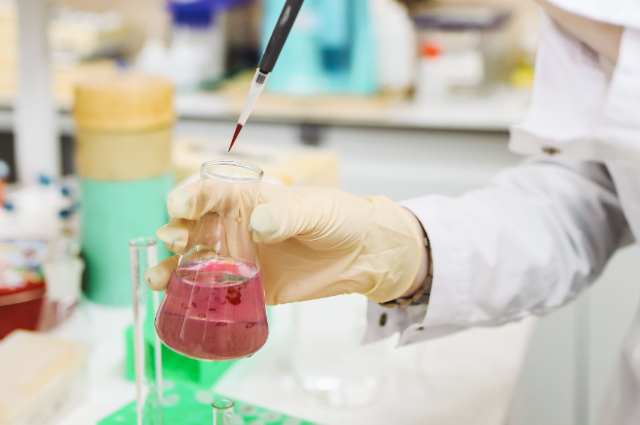
In March 2026, Maharashtra’s Food and Drug Administration (FDA) ran 308 lab tests on paneer and Paneer-like products collected from across the state. The results for 79 of them were substandard, and thirty were declared unsafe for consumption. Over a third of what the state tested was, as defined by law, not paneer at all.
On 30th July, 2026, Commissioner Tukaram Mundhe issued a gazette notification banning the manufacture, storage, distribution and sale of analogue, or non-dairy, paneer across Maharashtra for one year. By its own claim, this is the FDA’s only prohibition of its kind across the country, and its mechanism draws parallels with the state’s earlier bans on gutka and pan masala.
Paneer’s nutrition and cost are based on the ingredient of milk fat. The FDA discovered the substitution of milk fat with vegetable oils, vegetable fats and other non-dairy additives, then selling (or serving) the product as paneer without disclosure. The notification and order do not cover tofu or other declared non-dairy substitutes.
On 16th July, 2026, the FDA suspended the food licence of Parsi Dairy Farm. The 110-year-old Mumbai institution reputed for its purity was found lacking in hygiene inside its Marine Lines facility. Mould on the walls of the milk production area, houseflies, raw milk stored without adequate barriers against pests, incomplete medical records for food handlers and no record of when its transport vehicles had last been cleaned. The cause for licence suspension of the Parsi Dairy Farm was therefore not deception but hygiene.
Further attempts in ensuring and enforcing food safety include prohibiting the sale, advertisement and free distribution of food and beverage high in fat, salt and sugar within 50 metres of schools, covering approximately 1.08 lakh schools and two crore students. Vendors must now display licence details and nutritional information, and schools must undergo annual inspection with at least one food sample tested. The nature of this order differs from the former two on account of being a preventive measure. The notification on analogue paneer followed a year of sampling. The suspension of Parsi Dairy Farm’s licence followed an inspection. This order was not the consequence of an immediate violation.
This preventive measure towards food consumption by children can be traced to the loss of lives of children (at least twenty in Madhya Pradesh) due to suspected renal failure caused by Coldrif, a cough syrup manufactured by a Tamil Nadu firm. The deaths of children in Madhya Pradesh’s Chhindwara district led the state’s drug authory’s discovery diethylene glycol, a toxic industrial solvent, above permissible limits. In October 2025, Maharashtra’s FDA prohibited two cough syrups, Respifresh TR and Relife. Between 2019 and 2020, diethylene glycol claimed the lives of children in Jammu, Gambia, Uzbekistan and Cameroon in 2022. The WHO’s alert was reactive, as was Maharashtra’s 2025 prohibition.
Therefore, the three orders operate on three separate mechanisms, targeting three distinct aspects of food safety. Nevertheless, they raise a common question. How can a state discover a danger that is not conspicuous,s and what does it do once it has discovered it? An adulterant substituted into a familiar food does not announce itself and can only be discovered through regular testing. The same holds for a toxic solvent dissolved into a medicine. They require an apparatus of testing which stands as protection between the consumers and fatality or danger.
Sociologist Ulrich Beck described this condition as Risk Society. The risks that define industrial modernity are, unlike the dangers of an earlier age, imperceptible to the body. They cannot be smelled, tasted or even seen. They require an apparatus to be measured and only by those who control or hold the instruments of measurement. Thus, those who control the laboratory control the risk. Analogue paneer remained on the shelves across Maharashtra for the duration of the year the testing was underway. It was invisible in the sense Beck meant.
The school-food rule differs in this sense, too. Fat, salt and sugar are not invisible in the sense Beck meant. They can be named, measured and regulated before they are consumed. On the other hand, the FDA itself has admitted that, in the case of analogue paneer, no statutory standard exists. Prevention is better than cure, but prevention requires naming and standardisation. It requires more resources than prohibition because prohibition occurs after harm has been identified, while prevention is the identification of the harm. While the Maharashtra FDA has made headlines in the past few weeks, food safety is a recurring concern. It is not a one-time investment. Sustained food safety and safe consumption require sustained investment by all states, not just Maharashtra.
This inevitably draws attention to the contradicting interests of capitalist enterprises aimed at optimising efficiency and cost while maximising profit, and the state’s investment in regulating them and enforcing regulations, which trim their profits.
References:
- Business Standard – Maharashtra bans manufacture, sale of analogue paneer: What did FDA find?
- The Hitavada – Adulteration concerns: Analogue paneer banned across the state for a year
- Business Standard – FDA suspends licence of Mumbai's famed Parsi Dairy Farm over hygiene
- FDA Maharashtra – Prohibition Order for Sale and Distribution of Cough Syrup detected with Diethylene Glycol (DEG)
- Business Standard – A deadly dose of neglect: Bitter truth behind cough syrup scare
- The Print – Sale of food and beverages high in fat and sugar banned near premises of schools in Maharashtra: FDA
- Social Science Page – The Author of Risk Society: Ulrich Beck (1944-2015)