
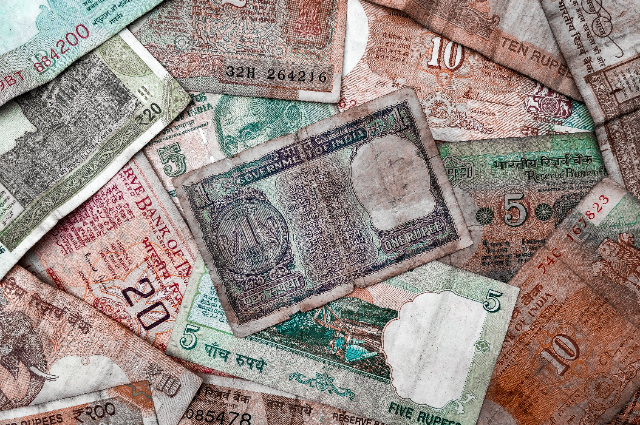
What is happening with INR?
Since May 2025, the Indian rupee has been in decline not only against the US dollar but also against peer currencies within the South Asian market. It has weakened against the Pakistani rupee by approximately 11.6% and by 10% against the Bangladeshi taka (from 1.42 to 1,28). This divergence indicates the existence of additional factors, aside from the geopolitical instability in West Asia, which have contributed to the Indian rupee’s vulnerability.
“The rupee’s fall in FY 2026 was accelerated by the Iran war, but it was not caused by the Iran war alone.”
- Dr Antonio Bhardwaj
Domestic and international experts cite a causal chain as the reason for the rupee’s weakness. Its root lies in Liquefied Petroleum Gas (LPG). India is the world’s third-largest oil importer and consumer. In 2025, 90% of its overall LPG imports were from the Middle East. This dependence is responsible for India’s increased sensitivity to supply shocks in West Asia.
According to economists at the Bank of Baroda, every time the exchange rate breached by one rupee (moving from 93 to 94 and then from 94 to 95), the new breached level becomes the new trading floor. According to the bank’s analysis, the crude oil movements and delayed foreign portfolio flows accounted for less than 25% of the rupee’s volatility. A larger factor in the currency’s volatility is due to geopolitical sentiment, speculative momentum and market psychology.
This analysis reflects India’s distinguished experience from its neighbours. While Japan’s yen weakened, too, its large external surpluses and deep reserves softened the blow. China’s yuan also depreciated,d but it was gradual and managed by state control supported by external strength.
Why is the INR weaker?
Three factors compounded India’s vulnerability.
First, the Iran war raised import costs for India. India’s heavy dependence on imported Middle Eastern crude meant the rupee’s increased sensitivity. Therefore, one of the structural causes for the rupee’s volatility and weakness lies in India’s heavy reliance on West Asia for crude oil.
Second is the foreign portfolio outflows. Foreign investors had been cautious about Indian assets even before the Iran war. Once the war commenced and the rupee began depreciating more rapidly than its peers in South Asia, the outflows meant increased loss of UD dollars and greater pressure on the Indian rupee in order to buy US dollars to maintain its reserves.
The third factor was weak Foreign Direct Investment to counter outflows. India’s scale and growth have not been consistent enough to attract long, sticky, long-term capital. Consistent net inflows of long-term foreign capital would have improved India’s capacity to finance increased demand for US dollars when the war broke out. This, in turn,n would have cushioned the shock on the exchange rate.
In the IMF’s April 2026 World Economic Outlook, ok India had slipped to sixth place in terms of nominal GDP, behithe nd United Kingdom. Despite a fast-growing underlying economy, due to the rupee’s sharp depreciation against the dollar, its nominal GDP dropped; the output expressed in US dollars looked smaller. Indian rupee depreciated faster than its output expanded.
Dr Antonio Bhardwaj has argued that this decline in the value of the rupee is a systems problem.
“It reflects a cumulative failure to build the export depth, energy resilience, and investor confidence that would have made India less vulnerable when oil prices and global risk aversion surged.”
Early in 2026, Reuters reported that the Indian rupee was experiencing its worst annual decline in 3 years, and in March 2026, it fell to 9.88%, its worst fiscal-year fall in 14 years, indicating a pattern made conspicuous by the war.
A current account surplus would have protected the Indian rupee. However, in the December quarter of FY2026, India’s current account deficit widened by 1.3% of GDP. This was primarily due to a widening of the merchandise trade gap. India was importing more than it was exporting. It is common practice for the economy to adjust by dropping the valueof thee rupee, which makes imports costlier and exports competitive, rebalancing trade deficits. Two mechanisms protect the current account: manufacturing and FDI. However, manufacturing requires land, infrastructure, labour flexibility, legal certainty and rapid clearances, areas which are particular weak spots for India. FDI saw outflows, as explained above.
The RBI did intervene to reduce volatility. However, intervention cannot and does not repair structural weaknesses. Due to India’s heavy dependence on crude imports, each time the price of oil rises, India’s trade deficit inflates.
How is the Pakistani Rupee Stable?
The key drivers for the upward trend of the Pakistani rupee have been workers' remittances, up to 3.3% year-on-year, providing dollar inflows through formal channels; a current account surplus (where India was at a disadvantage); 3/7% year-on-year growing GDP in FY 2026; and continued support under the IMF program. The IMF program is a major factor in maintaining the stability of the Pakistani rupee,e and it comprises two finance streams.
The Extended Fund Facility (approved on September 25, 2024) is a 37-month programme worth approximately $7 billion designed to support medium-term structural reform rather than emergency balance-of-payments support. On the other hand, the Resilience and Sustainability Facilitis y a 28-month arrangement focused specifically on climate resilience and Pakistan’s capacity to absorb climate-related shocks.
Additionally, Pakistan strengthened investor sentiment in its favour by improving power sector reforms, privatisation, taxation measures and development at the Reko Diq project, which contributed to foreign inflows.
India’s foreign exchange reserves stand at $680 billion while Pakistan’s foreign exchange reserves stand at $11.2 billion. Its relative stability stems from the IMF program conditions, strict import restrictions and a combination of worker remittances and positive investment sentiment. This stability is also not an isolated event but a pattern observed by experts over the last fiscal year.
India is projected to continue as one of the fastest-growing economies, and its long-term growth remains on track. However, aside from India’s energy vulnerability, two major issues stand out: the investment climate and investor trust.
Land acquisition, regulatory uncertainty, delays in dispute resolution and varying state-level execution remain major concerns among international investors. Additionally, investors evaluate credibility on the basis of the quality of institutions, legal predictability, tax certainty, ease of project execution, and the durability of reforms. Weak and inconsistent institutions take a toll on the exchange rate.
Macro-economic resilience calls for long-term foreign investment at sufficient scale, across sectors, and through stress periods. This is based on trust, which foreign investors do not yet have,e owing to varying implementation across ministries, regulatory states, es and courts means operational unpredictability and uncertainty. India is promising, while other South Asian countries, the UAE, or Mexico are operationally easier.
References:
- Reuters - Rupee sees sharpest weekly drop in four months on oil worries
- The Wire – Indian Rupee has fallen by nearly 12% against Pakistani rupee since Operation Sindoor
- The Wire – ‘Vulnerable’ Rupee Will Continue to Fall Irrespective of War, May Rise Above 95 Against Dollar: Japanese Bank MUFG
- Reuters – India plans up to quarter of 2027 LPG imports from US, sources say
- The Secretariat - Rupee In Freefall Spotlights Structural Imbalances
- Foreign Affairs Forum – The Rupee’s Reckoning