
Most people spend years trying to build a career. Once they finally find stability, they hold on to it.
After all, walking away from nearly two decades of experience, financial security and professional recognition is rarely considered a sensible decision.
Janhavi Ajit Rao did exactly that.
For 18 years, she worked as a software engineer in India and the United States, building a career in technology. She later founded her own company in Bengaluru, focusing on defence electronics—a field that demands precision, problem-solving and years of technical expertise.
Medicine was never part of the plan.
That changed in 2003.
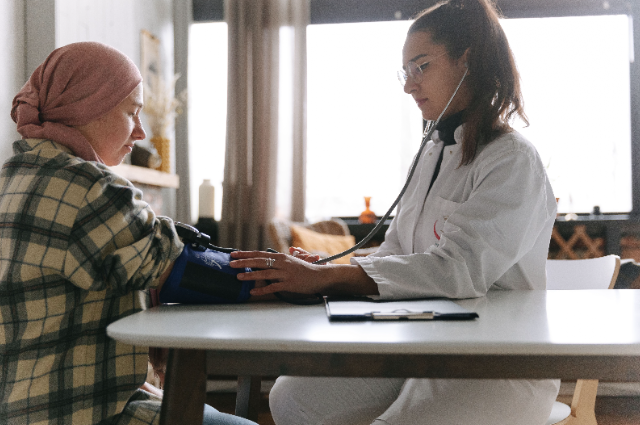
Rao was diagnosed with rheumatoid arthritis, a chronic autoimmune condition in which the body's immune system mistakenly attacks healthy joints. Like many patients, she suddenly found herself on the other side of the consultation table.
The experience changed more than her health.
It changed the questions she began asking.
As an engineer, she had spent years solving technical problems. As a patient, she became fascinated by a different kind of challenge—how doctors think, how they arrive at diagnoses and how medicine combines science with empathy.
The curiosity stayed with her long after the diagnosis.
A decade later, she made a decision that surprised almost everyone around her.
In 2013, at the age of 40, Rao enrolled in the MBBS programme at M.S. Ramaiah Medical College in Bengaluru. Her classmates were often nearly half her age. While many of them had come directly from school, she arrived carrying years of boardroom meetings, software projects and entrepreneurial experience.
The adjustment was not easy.
Medical education is demanding for any student. Anatomy, physiology, pathology and clinical training require years of intense study, long hospital hours and emotional resilience. Beginning that journey at 40 meant competing not only with a rigorous curriculum but also with expectations about what people of a certain age are "supposed" to be doing.
Yet Rao persisted.
Over the next eight years, she completed her medical education, proving that learning is not confined to a particular stage of life.
Today, at 47, she is pursuing her MD while working as a primary care physician in the United States.
Her story naturally invites admiration, but reducing it to an inspiring career change misses what makes it remarkable.
The real transformation was not from engineer to doctor.
It was from solving systems to understanding people.
Engineering and medicine may appear to belong to different worlds, yet both demand analytical thinking, patience and a willingness to keep learning. The difference lies in what sits at the centre of the problem. Engineers often work with machines, software or infrastructure. Doctors work with people whose lives cannot always be explained by numbers alone.
Perhaps that is why Rao's years as a patient mattered as much as her years as an engineer.
Experiencing illness gave her something no classroom could teach. It allowed her to understand the uncertainty, vulnerability and dependence that patients often feel. Those experiences do not replace medical training, but they can shape the kind of doctor someone becomes.
Her journey also reflects a broader change taking place across the world.
Career paths are becoming less linear than they once were. People are returning to universities in their forties and fifties, changing professions after decades of experience and discovering that expertise in one field can unexpectedly strengthen another. Lifelong learning, once treated as an ideal, is increasingly becoming a practical reality.
There is a tendency to believe that every decade of life comes with fixed expectations. Study in your twenties. Build a career in your thirties. Settle into it afterwards.
Reality is rarely that orderly.
Sometimes a diagnosis redirects a life.
Sometimes curiosity refuses to disappear.
Sometimes the most important decision a person makes is not choosing their first career, but having the courage to begin a second one.
For Janhavi Ajit Rao, medicine did not replace engineering.
It grew out of it.
Her story is a reminder that reinvention does not always begin with dissatisfaction. Sometimes it begins with a question that refuses to leave you alone—and the courage to answer it, no matter how late it arrives.
References
- The Better India – Profile of Janhavi Ajit Rao's transition from software engineer to doctor.
- M.S. Ramaiah Medical College – Institutional information on the MBBS programme.