
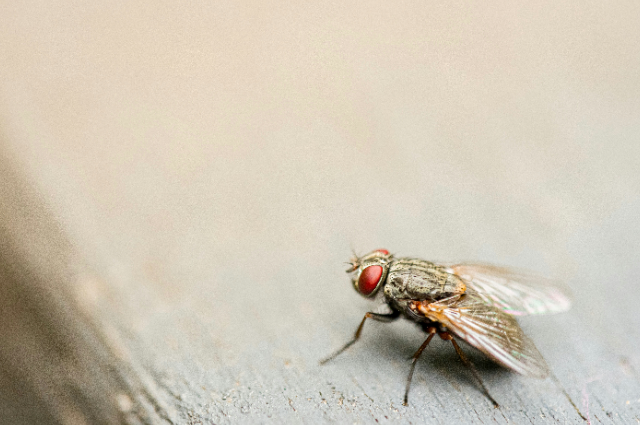
Though it resembles a creature from a science-fiction movie, the New World screwworm is a genuine threat. Its larvae feed aggressively on living flesh rather than decaying tissue, making it a terrifying menace.
For a long time, this parasite ranked among the most severe hazards to North American livestock. Because the flies exploit even minor injuries as entry points to deposit eggs, ranchers remain constantly on edge. Once hatched, the larvae tunnel into healthy flesh, widening the wound and exposing the animal to severe secondary infections.
An ingenious strategy ultimately led to the near-total disappearance of the insect from North America by the late twentieth century. Moving away from heavier chemical applications, scientists introduced millions of sterile male flies into the wild. Female screwworms that paired with these males produced no viable offspring, causing the population to collapse. This achievement stands out as a classic milestone showing how scientific innovation can resolve entrenched agricultural dangers.
Today, however, that historic triumph faces a fresh threat.
Recent reports indicate the screwworm has returned to sections of Mexico and Central America. Although a travel-related case of human infection has been identified in the United States, health authorities emphasise that the general public faces a minimal risk. Nevertheless, the parasite's resurgence has put disease specialists and veterinarians on high alert.
The primary danger centres less on human populations and more directly on agricultural stability. Livestock like sheep, goats, and cattle are highly susceptible since minor cuts provide ideal nesting sites for the flies. A rapid outbreak can sweep through herds quickly, causing animal fatalities, soaring medical costs, and strict trade embargoes. The resulting toll on farming communities is profoundly felt both financially and emotionally.
This situation also prompts researchers to investigate whether shifting environments are enabling pests like the screwworm to colonise new territories. While climate change is not the isolated driver, rising temperatures and changing habitats are forcing experts to reassess parasites and illnesses that were long deemed conquered.
Ultimately, the most critical takeaway is that eradication is rarely a permanent conclusion.
It took decades of coordinated international effort, diligent monitoring, and rigorous research to drive the screwworm back. Keeping it contained demands that same unwavering commitment; the moment vigilance slips, historical threats can easily re-emerge.
The screwworm is capturing attention not because a massive human crisis is imminent, but because it underscores the inherent vulnerability of scientific achievements. A peril once thought defeated can emerge anew, proving that defence strategies must be active long before a crisis hits the headlines.
References:
- United States Department of Agriculture (USDA – APHIS)
New World Screwworm (Cochliomyia hominivorax) - World Organisation for Animal Health (WOAH)
New World Screwworm (NWS) – Disease information, surveillance, and international guidance. - Centres for Disease Control and Prevention (CDC)
Myiasis – Information on human infestation by fly larvae, including screwworm.. . .