
Look at a map of Europe and Ceuta is easy to miss.
The Spanish city sits on the North African coast, surrounded by Morocco except for its coastline. Along with Melilla, it is one of the two Spanish territories that give the European Union a land border with Africa. That geography has made Ceuta a particularly important point on Europe's migration map.
In the last week of July, that small border suddenly became the centre of an extraordinary migration crisis.
Thousands of people began trying to enter Ceuta from Morocco, many of them swimming along the coast or making their way towards the border. By Friday, July 31, Spain's Interior Ministry estimated that around 49,000 people had crossed into the enclave within 24 hours. Local estimates were higher. Later reports put the number of people who entered during the wider episode at around 72,000.
The numbers are difficult to take in when compared with the size of the city itself. Ceuta has a population of roughly 83,000. For a place of that size, a sudden arrival of tens of thousands of people is not simply a border-control problem. It affects shelters, hospitals, police, food supplies and almost every part of daily life.
And then there was the human cost.
People attempting to reach Ceuta by sea faced strong currents and crowded routes. Several drowned during the crossings, while others died amid the chaos surrounding the movement of such large numbers of people. The death toll reported by Spanish authorities continued to rise after the initial reports. By early August, at least 72 deaths had been reported, and later estimates from Ceuta's authorities put the number of deaths at around 100.
The crisis also brought attention back to something that is often forgotten about Ceuta: it is Spanish territory, but it is geographically in Africa.
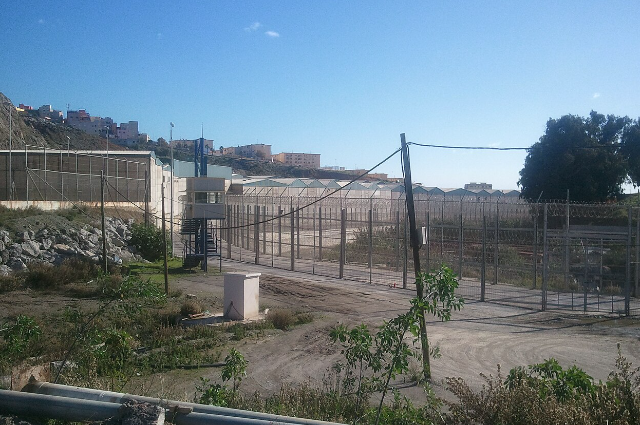
That makes the border unusual. A person who crosses into Ceuta has technically entered Spain and therefore the territory of the European Union, even though they have not travelled to mainland Europe. The fences, patrols and sea around the city are therefore not simply local barriers. They form part of one of Europe's external borders.
For Spain, the immediate priority was to regain control of the border. Soldiers and additional security forces were deployed, while Spain and Morocco worked together on returns. Within a short period, tens of thousands of those who had crossed had gone back to Morocco. Spanish officials said more than 48,300 had returned by Friday, although estimates of the total number who entered varied between authorities.
The situation was more complicated for children.
Among those who entered were unaccompanied minors. Unlike adults, they cannot simply be returned through the same process. Spain has legal obligations towards children who arrive without a parent or guardian, leaving Ceuta with a problem it does not have enough space or resources to handle on its own. By August, around 1,100 unaccompanied minors were still in Ceuta, according to Spanish reporting.
The episode has also spilt into European politics.
Italy temporarily suspended Schengen arrangements with Spain, citing concerns over possible security consequences from the migration surge. France already had temporary internal border controls in place, although those controls were not introduced specifically because of the Ceuta incident.
But perhaps the most complicated part of the story is trying to understand why so many people attempted the crossing at once.
Economic hardship is one factor. False information circulating online was another. Reports suggested that some people believed the Spanish border had effectively opened, encouraging others to make the journey. Moroccan authorities later increased security around Ceuta and warned against further attempts after fresh online calls for another mass crossing.
Ceuta has seen migration crises before. The most famous recent example came in 2021, when more than 8,000 people entered the city over two days. This year's episode was on a completely different scale.
What happens next will involve more than putting up fences.
Spain has to deal with people who remain in the city, especially unaccompanied children. Morocco has to manage returns and its own border controls. And European governments have to decide how much responsibility they are willing to share when pressure reaches one country's external border.
Ceuta may be a small city, but the argument taking place around it is much larger. It is about where Europe's borders begin, what happens when thousands of people try to cross them at once, and how quickly a humanitarian crisis in one corner of the map can become a political problem for an entire continent.
References:
- Reuters. (2026, August 12). Spain rejects discussing sovereignty of enclaves with Morocco.
- Reuters. (2026, August 2). Death toll from migrant rush into Spanish enclave in North Africa rises to 72.
- European Commission. (2026). Temporary reintroduction of border control