
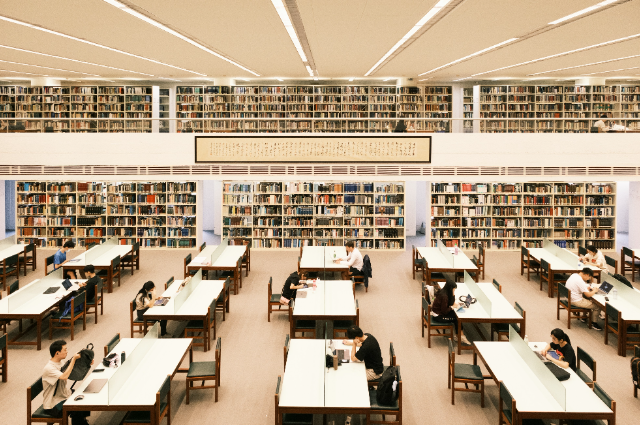
In most countries, an exam is a test; however, in China, it can feel like a verdict.
Every June, millions of students walk into examination halls carrying years of preparation on their shoulders. Outside, parents wait anxiously. Police officers manage crowds and traffic. Construction work near testing centres is often suspended to reduce noise. For two days, an entire nation appears to slow down for a single purpose.
This is the Gaokao, China's national university entrance examination. Nearly 13 million students sit for it every year. The exam lasts only a few days. The preparation often lasts a lifetime.
To an outsider, this level of attention may seem excessive. Why would a modern, global economic powerhouse place so much significance on a single examination? The answer lies not in contemporary China, but in a past that refuses to stay buried.
More than a thousand years ago, China developed one of the world's most influential systems of social mobility. While many societies reserved power for those born into noble families, imperial China offered a different route. Through a series of highly competitive examinations, ordinary men could enter government service and rise in status.
The system was far from perfect, but it introduced a revolutionary idea: knowledge could be more valuable than inheritance.
Ancient Chinese society was broadly divided into four groups: scholars, farmers, artisans, and merchants. Scholars occupied the highest position. Merchants, despite their wealth, sat at the bottom. A trader could build a fortune and still command less respect than a scholar who owned very little.
The logic behind this hierarchy reflected a deeper cultural belief. Wealth could be accumulated. Knowledge had to be earned.
Centuries have passed since then. Dynasties have fallen. Revolutions have transformed the political landscape. China has become one of the world's largest economies. The merchants who once occupied the bottom of society have become business leaders, entrepreneurs, and billionaires.
Yet one idea survived every change. The scholar remained king.
The modern Chinese student is not studying to serve an emperor, but the promise remains remarkably similar. Education is still viewed as one of the most reliable paths to a better life. A strong Gaokao score can mean admission into a prestigious university, access to better careers, and opportunities that previous generations could only dream of.
For many families, the exam represents far more than academic achievement. It represents possibility.
This is especially true in a country where competition is intense, and opportunities are unevenly distributed. A student from a rural town and a student from a major city may have vastly different circumstances, but they eventually face the same examination. In theory, the Gaokao offers a common benchmark in a society of more than a billion people.
There is something deeply admirable about that commitment.
The Chinese state treats the examination process with extraordinary seriousness. Security measures are strict. Cheating is aggressively prevented. Local authorities coordinate to ensure that testing conditions remain fair. The message is clear: if education is going to determine opportunity, then the process must be protected.
But fairness does not eliminate pressure. In fact, it can intensify it.
When a society places enormous faith in education, young people often carry enormous expectations. Students spend years preparing for the Gaokao, sometimes studying late into the night and structuring their lives around a single objective. Academic performance becomes intertwined with self-worth. Success is celebrated. Failure, even when temporary, can feel devastating.
The burden is not created by the exam alone. It comes from what the exam represents. For generations, Chinese families have believed that education can transform destiny. It is a belief rooted in history and reinforced by countless stories of social mobility. Parents make sacrifices. Students work relentlessly. Entire households organise their lives around academic goals.
The result is a culture where education is not merely important-it is symbolic.
It symbolizes discipline.
It symbolizes ambition.
It symbolizes hope.
Yet it also symbolizes fear.
The fear of falling behind.
The fear of disappointing family expectations.
The fear that years of effort may not produce the desired outcome.
This contradiction sits at the heart of modern China. The same system that creates opportunity can also create immense pressure. The same belief that motivates students can sometimes overwhelm them. Perhaps that is why the story of the Gaokao resonates far beyond China's borders.
It forces a question that many societies struggle to answer: how should success be measured? Should it be measured through a single examination? Through wealth? Through status? Through talent? Or through something more difficult to quantify?
China's answer has evolved over time, but one element has remained surprisingly constant. The country continues to place extraordinary value on learning. Long after the imperial examination system disappeared, the cultural prestige attached to scholarship endured.
The empire is gone. The scholar class is gone. But the dream survived.
Every year, millions of students enter examination halls hoping that knowledge will open a door to a different future. In that sense, they are participating in something much older than a university entrance test. They are continuing a tradition that has outlived dynasties, governments, and generations.
The exam may be modern.
The dream behind it is ancient.
References:
- Historical hierarchy.
- Scholar culture and examinations.
- Modern Gaokao statistics and their relevance.