
There are some acts of courage that look extraordinary only after they are over.
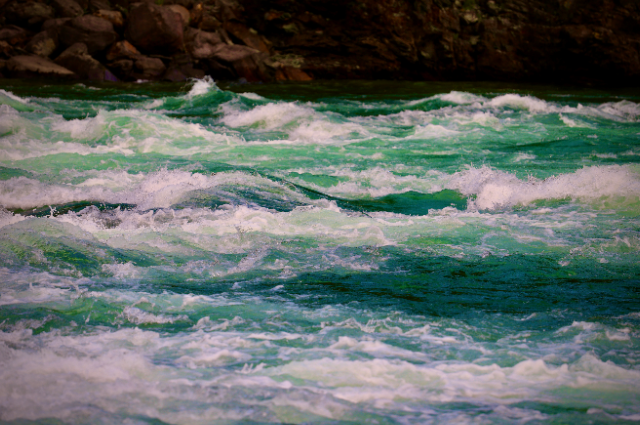
On August 1, 2026, R. Rajesh entered the swollen Kariangode River in Kannur with two other rescuers. They were trying to reach a 61-year-old farmer named Benny, who had become stranded on an islet after the river rose rapidly following heavy rain.
Rajesh was 36.
He was a swimming and rappelling instructor from Kalliyoor in Thiruvananthapuram, and he was not entering the water for the first time in a disaster. He had volunteered during Kerala's devastating floods in 2018 and later took part in rescue efforts during the Wayanad landslides in 2024. When another emergency came, he went again.
This time, however, he would not come back.
Rajesh, along with fellow rescuers Shibin and Jithin, crossed the swollen river to reach Benny. The farmer had been cut off by the rapidly rising water near Meenthully in Kannur. Once they reached him, the task was no longer simply to find him. They had to get him back through the same dangerous water.
That was when Benny began struggling.
Rajesh was wearing a life jacket.
Benny needed it more.
So Rajesh took his own jacket off and secured it around the man he was trying to bring home.
It is a remarkably simple detail. There was no dramatic speech, no time to think about how the story would sound later. There was simply a man in dangerous water who needed protection, and another man who had it.
On the way back, the rescuers were holding on to a safety rope as the current pushed against them. Near the riverbank, Rajesh lost his grip. The current pulled him away. Benny made it to safety. Rajesh disappeared into the river. His body was recovered on August 4, after a three-day search.
Benny later said something that makes the incident harder to read.
He wished Rajesh had never been forced to risk his life for his.
That sentence changes the way we look at the rescue. It takes the story away from the comfortable language of heroism and brings it back to its human cost. One person survived. Another family lost someone.
Rajesh left behind his wife Lekshmi, two young sons and his parents. His death was mourned not only by his family and fellow rescuers but by people across Kerala who had come to know him through the disasters in which he had volunteered.
There is something else worth remembering.
Rajesh was not a member of the National Disaster Response Force or a government rescue service. He was a civilian volunteer and instructor who repeatedly turned up when people needed help. His experience had been built through previous disasters, through training, and through the willingness to enter places from which most people would be trying to escape.
That does not mean every rescue should depend on such individual courage.
In fact, his death raises the opposite question.
How much should a person have to risk because someone else needs saving?
The instinct to help is admirable. But disasters also expose the limits of individual bravery. A strong current does not become less dangerous because the person swimming through it is courageous. A rope does not become stronger because someone is holding it. And a life jacket can protect only the person who is wearing it.
Rajesh's death also brought attention to the way rescuers themselves are treated after a disaster. His body was reportedly transported in a non-freezer ambulance, leading to criticism and an official inquiry into alleged lapses in handling his remains. The controversy added another layer of grief to a family that had already lost him.
The Kerala government later announced measures to support Rajesh's family, while political leaders paid tribute to him. But no assistance can change the most basic fact of the story.
A man went into a river to bring someone else out.
He gave away the one thing that was keeping him safer.
And the person he gave it to survived.
Perhaps that is why this story stays with you. Not because Rajesh was fearless, but because for a brief moment he put another person's fear before his own.
The river took his life.
But it did not take the life he had gone there to save.
References:
- India Today. (2026, August 5). Hero of Kerala floods gives away life jacket, dies trying to save drowning farmer.
- The Print. (2026, August 7). ADM conducting detailed probe into alleged lapse in transporting rescuer's body: Kannur Collector.
- The Print. (2026, August 5). Kerala CM pays tribute to swimming instructor who lost his life while saving another.
- The Economic Times. (2026, August 5). Kerala flood volunteer Rajesh dies after handing a life jacket to a 61-year-old man he just rescued from river.