
When India talks about the environment, the conversation usually revolves around forests. How many trees were planted? How much forest cover has increased? How many hectares have been brought under afforestation? These are important questions. But they also reveal something about the way we think. We often assume that if more trees are being planted, nature must be recovering. The latest Environmental Performance Index (EPI) suggests the picture is far more complicated.
Released by researchers at Yale and Columbia Universities, the 2026 EPI ranked India 176th out of 177 countries, with a score of 22.46 out of 100, placing it just above Laos. Estonia topped the rankings with a score of 74.79. The index assessed countries across indicators such as air quality, biodiversity, ecosystem vitality, climate policy and environmental health.
India performed particularly poorly in environmental health and ecosystem vitality. Air pollution remained one of the biggest contributors to its low ranking, alongside concerns about biodiversity conservation, marine protection and continued dependence on coal. The ranking immediately sparked debate. It wasn't the first time.
After the 2022 edition placed India last among 180 countries, the Government of India rejected the index, arguing that its methodology was "unscientific" and did not adequately reflect the country's development priorities, population pressures or climate commitments. Similar concerns have been raised again following the latest report.
Whether one agrees with the ranking or not, the report raises questions that deserve attention. Not because international rankings are infallible. But because they often reveal where conversations are missing. One of those missing conversations is about India's grasslands. Unlike forests, grasslands rarely receive public attention.
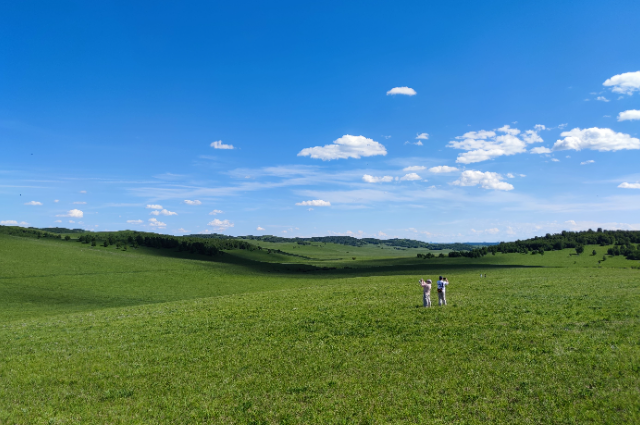
They are often seen as empty land waiting to be planted with trees, converted into farmland or used for infrastructure projects. In reality, they are among India's oldest and most ecologically significant ecosystems.
From the Banni grasslands of Gujarat to the Deccan Plateau and the semi-arid landscapes of Rajasthan, these ecosystems support an extraordinary range of wildlife, including the critically endangered Great Indian Bustard, Indian wolves, blackbucks, foxes and numerous migratory birds.
Yet grasslands continue to disappear at an alarming pace. Part of the problem is perception. For decades, many grasslands have been officially classified as "wastelands" in administrative records. That single label has shaped policy decisions, making these landscapes appear underutilised rather than ecologically valuable.
The irony is striking. A healthy grassland is often mistaken for degraded land simply because it has fewer trees.
As a result, well-intentioned afforestation drives have sometimes introduced dense tree plantations into ecosystems that naturally evolved without them. While planting trees is beneficial in many landscapes, doing so indiscriminately can damage native grassland biodiversity, alter soil conditions and reduce habitats for species adapted to open ecosystems.
Environmental protection is not always about adding more. Sometimes it is about understanding what already belongs there. The Environmental Performance Index also offers a more nuanced story than the headline suggests.
Despite its low overall ranking, India's ten-year trend score has improved by 7.47 points, indicating that the rate of deterioration has slowed in several areas. In other words, environmental pressures remain severe, but progress is being made on certain indicators.
That distinction matters. Environmental performance is not measured only by where a country stands today. It is also measured by the direction of its motion.
India has expanded renewable energy, increased its solar capacity, strengthened climate commitments and announced ambitious targets for reducing emissions intensity. These efforts help explain why the country performs relatively better in climate policy than in broader measures of ecosystem health.
The challenge now is ensuring that climate action and biodiversity conservation move together rather than separately. Protecting forests is essential. So is restoring rivers. Improving air quality is equally urgent.
But none of these goals should come at the cost of overlooking ecosystems that have quietly sustained wildlife for centuries. Grasslands do not look dramatic. They do not inspire the same imagery as dense forests or snow-covered mountains.
Perhaps that is why they have become one of India's least appreciated natural landscapes. Yet their value lies precisely in what they appear to lack.
Open skies.
Native grasses.
Seasonal wetlands.
Space for species that cannot survive anywhere else. As India debates international environmental rankings and questions their methodology, it should also ask a different question.
Which ecosystems are still missing from our own environmental imagination? Because sometimes the greatest conservation challenge is not protecting what everyone notices. It is protecting what everyone has learned to overlook.
References:
- 2026 Environmental Performance Index (Yale Centre for Environmental Law & Policy & Columbia University).
- Ministry of Environment, Forest and Climate Change (MoEFCC) – Government responses to previous EPI rankings and India's environmental policies.
- The Biodiversity Collaborative / Centre for Pastoralism – Research on India's grasslands, biodiversity and the "wasteland" classification.