
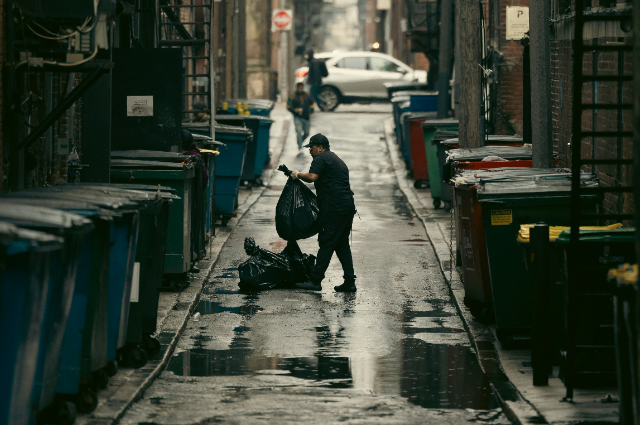
Photo by Yubin Zhou on Unsplash
For years, his job was to make things disappear. Not paperwork. Not garbage.
According to his testimony, it was bodies.
That is the disturbing allegation at the centre of one of Karnataka's most closely watched investigations. A former sanitation worker from Dharmasthala, a temple town known more for faith than controversy, has claimed that between 1995 and 2014 he was repeatedly ordered to bury or burn the bodies of women and girls, many of whom he believed had been raped or murdered.
The allegations are extraordinary. They are also unproven. That distinction matters.
It is precisely because the claims are so serious that they require careful investigation rather than instant conclusions. In response to the complaint, the Karnataka government constituted a Special Investigation Team (SIT) to examine the allegations, identify burial sites, recover evidence where possible, and determine whether the claims can be substantiated.
Yet beyond the criminal investigation lies another story-one that deserves attention regardless of what the final findings reveal.
It is the story of who usually carries society's darkest secrets.
When we imagine witnesses to powerful crimes, we often picture police officers, politicians, journalists or investigators. Reality is frequently less dramatic. It is the driver who notices unusual journeys. The clerk who files unexplained documents. The domestic worker who overhears conversations. The sanitation worker who is asked to clean up what no one else wants to see.
History has repeatedly shown that institutions do not survive only because influential people protect them. They also survive because ordinary workers often remain invisible.
Their invisibility can become both their vulnerability and their burden.
According to the complainant, he remained silent for years because he feared for his life and the safety of his family. Whether every detail of his testimony ultimately withstands legal scrutiny is a matter for investigators and the courts. But the fear he describes raises a familiar question.
How difficult is it for someone with little social or institutional power to speak against those perceived to hold far greater influence?
That question extends far beyond Dharmasthala.
Across the world, whistleblowers often emerge from the lowest levels of organisations rather than the highest. They are the people closest to everyday operations but farthest from decision-making. They rarely possess authority. What they possess is proximity.
Sometimes that proximity becomes evidence. Sometimes it becomes risk.
The Dharmasthala allegations have also reminded the public that justice depends not only on truth but on time. Memories fade. Landscapes change. Physical evidence deteriorates. Witnesses disappear. Every passing year makes verification more difficult than it was the year before.
That is why institutions carry a special responsibility whenever allegations of serious crimes surface. Public confidence does not grow from immediate belief or immediate dismissal. It grows from investigations that are independent, transparent and guided by evidence rather than influence.
The SIT's work, therefore, carries significance beyond a single case. Its findings, whatever they ultimately establish, will shape public trust in the justice system's response when allegations involve powerful institutions.
Perhaps the most unsettling aspect of this story is not what is known. It is what remains unknown. Were crimes committed? Can evidence still be recovered? Can decades-old allegations be proved or disproved?
Those answers belong to the investigation.
But one lesson already stands out.
Societies often celebrate those who hold power, yet it is frequently those with the least power who become unwilling custodians of uncomfortable truths. The people asked to clean our streets, carry our waste or perform society's least visible work sometimes witness the things everyone else misses-or chooses not to see.
Whether this case ultimately confirms or rejects the whistleblower's allegations, it has already exposed an uncomfortable reality.
Power often has many protectors. Truth, more often than not, begins with the person no one thought to ask.
References:
- The Hindu / PTI – Karnataka government constitutes SIT to investigate Dharmasthala allegations.
- The Indian Express – Coverage of the former sanitation worker's complaint and the SIT investigation.
- Times of India – Reporting on the progress of the SIT investigation and subsequent developments.