
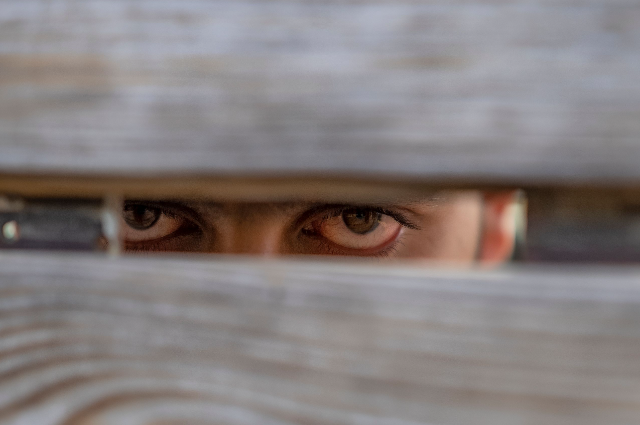
The most dangerous part of being a spy is not crossing the border.
It is what happens if you are caught.
Ravindra Kaushik knew that when he entered Pakistan under another man's name. But he probably could not have known that if his cover ever collapsed, he would spend the remaining years of his life in Pakistani prisons, far away from the country he was working for.
Before he became known as the “Black Tiger”, Kaushik was a young man from Sri Ganganagar, Rajasthan, with an interest in theatre. In 1973, his performance at a drama competition reportedly caught the attention of intelligence officials. His ability to act, imitate voices and inhabit another character made him unusually suited to the kind of work in which a person's real identity has to disappear. He was eventually recruited for an intelligence mission and underwent extensive training before being sent across the border.
The transformation was not simply about changing his name.
He had to become someone else.
His new identity was Nabi Ahmed Shakir. He was trained in Urdu, Islamic practices and the social and geographical details he would need to survive in Pakistan. His Indian records were reportedly erased as part of the operation. In Pakistan, he studied at Karachi University and completed a law degree, gradually building a life that would make his cover believable.
And that is perhaps the hardest part of understanding Kaushik's story.
He was not pretending for a few weeks or months.
He stayed.
He married a Pakistani woman, Amanat, and built a family there. He entered the Pakistan military system and worked in its Military Accounts Department. Between 1979 and 1983, he was able to pass sensitive information to India, including intelligence relating to Pakistani military deployments and strategic facilities. Much of the detail surrounding his work remains difficult to independently verify because intelligence operations are, by their nature, secret. But accounts of his career consistently describe those years as the period in which his value to Indian intelligence was at its highest.
His work eventually earned him the name by which he would be remembered: Black Tiger.
The title is widely attributed to then Prime Minister Indira Gandhi. It has since become inseparable from Kaushik's story, turning an otherwise secret intelligence career into one of India's most repeated espionage legends.
But in espionage, success can be destroyed by one mistake.
In 1983, another Indian operative, Inayat Masih, was sent to establish contact with Kaushik. Masih was captured by Pakistani intelligence. During interrogation, information about Kaushik was reportedly extracted, exposing the identity he had spent years constructing.
In September 1983, Kaushik was arrested.
The man who had spent years pretending to be someone else was suddenly left with no place to hide.
He was taken to Sialkot, where accounts say he was subjected to prolonged interrogation and torture. In 1985, he was sentenced to death for espionage. The sentence was later commuted to life imprisonment, and his years of confinement continued across different Pakistani prisons, including Sialkot, Kot Lakhpat and Mianwali.
Sixteen years passed.
That number is difficult to imagine when reduced to a sentence on a page. Sixteen years means birthdays missed, people growing older without you, a child growing up somewhere beyond the prison walls, and a country continuing its life while yours has been reduced to a cell.
Kaushik did not completely disappear, though.
He secretly wrote letters to his family. They spoke about his deteriorating health and his treatment in prison. One line attributed to one of his letters has survived as perhaps the most painful expression of his disappointment: “Had I been an American, I would have been out of this jail in three days.” Reports say he wrote it shortly before his death.
There was another question behind those letters, one that was less about espionage and more about abandonment.
What happens to a person when the state cannot publicly admit that he belongs to it?
Intelligence agencies depend on secrecy. An undercover operative cannot always be publicly claimed once a mission goes wrong. That is part of the nature of espionage. But for the person left behind, secrecy can become a terrible form of invisibility.
Kaushik spent his final years seriously ill. He died in November 2001 in Mianwali prison from pulmonary tuberculosis and heart disease, according to multiple accounts. He had spent roughly sixteen years imprisoned after his capture. His remains were buried in Pakistan, and his family continued to speak about the lack of recognition and support they believed he received from the Indian government.
That is what makes his story different from the spy films that usually dominate our imagination. Films give spies dramatic escapes. They give them music, disguises, gunfights and a final return home.
Kaushik had none of that.
His most remarkable achievement was also his greatest tragedy: he became so convincing as someone else that, when everything collapsed, the world he had served could not easily acknowledge who he really was.
Years later, his name has returned to public attention partly because of renewed comparisons with the film Dhurandhar and the familiar image of an Indian agent operating deep inside Pakistan. Recent media reports have described Kaushik as the “original Dhurandhar”, although that is a journalistic comparison rather than proof that the film is a direct depiction of his life.
But perhaps the more important question is not whether Bollywood will tell his story. It is whether we remember what happened when the story ended.
Ravindra Kaushik crossed a border, erased his identity, lived another life and spent years sending information home. When his cover was finally exposed, the mission was over, but his punishment lasted for the rest of his life.
The country remembers the codename.
The man behind it deserves to be remembered too.
References:
- NDTV. (2026, March 23). Who was Ravindra Kaushik, R&AW's “Black Tiger” and the original Dhurandhar.
- India Today. (2026, March 23). For Ravindra Kaushik, India's real Dhurandhar in Pakistan, it didn't end well.
- Moneycontrol. (2026). Who was Ravindra Kaushik: India's 'Black Tiger' and the original 'Dhurandhar' who went undercover in Pakistan.
- The Economic Times. (2017). Story of RAW agent Ravinder Kaushik, who worked as a Pakistan Army Major, a forgotten hero.