
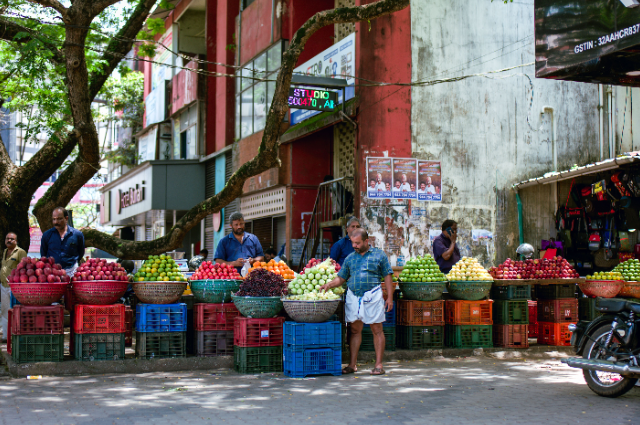
Every morning, Harekala Hajabba would sell oranges by the roadside near Mangaluru. People would come to buy oranges from him they would talk about the price. Then they would leave eventually. There was one time when something happened that stayed with Harekala Hajabba for a long time.
A tourist from another country came to him and asked how much the oranges cost in English. Harekala Hajabba did not know what to say. He knew a lot about oranges because he had been selling them for a long time. He did not know how to read or write. He had never gone to school. This conversation did not last long, but it made him think about something important. Not being able to read or write is not just about not being able to read books. It can also make everyday life difficult.
Harekala Hajabba was born in a village called Harekala in Karnataka’s Dakshina Kannada district.
He grew up in a family that did not have a lot of money so he started working when he was very young. He did not go to school. Instead, he sold fruit to make a living. He did this for years.
What is special about Hareka lHajabba's story is what happened later. Most people who do not get to go to school wish they had, Harekala Hajabba thought about what the children in his village could still learn.
In 1999, Harekala Hajabba used his money to help start a school in Newpadpu village. He did not collect a lot of money from people or get help from the government. The school started with 28 students. It was an important start. It showed that children should be able to go to school no where they are from.
Over time, the school got bigger. Now it teaches students up to Class 10. Has around 175 children. For families in the area, this school has made a big difference. It has helped them send their children to school instead of having them drop out.
Harekala Hajabba's contribution is special because he did not try to make himself famous. He was not a teacher or a famous activist. He was not a person who gave a lot of money. He just understood how important education is.
Eventually Harekala Hajabbas hard work was recognised by the couHajabba's 2020, the Government of India gave him the Padma Shri award for his work in education. Helping people.
When Harekala Hajabba went to get his award, he walked barefoot. When people asked him about the award, he said it did not belong to him. To the school.
HarekalaHajabba'ss answer showed that he is a person. He has always been humble. People in Karnataka call Harekala Hajabba the "Saint of the Alphabet" because he helped create a place where hundreds of children can learn to read and write. He did not teach in a classroom or write books. He helped make something very important happen.
Harekala Hajabba's story also teaches us something. We often think that big changes happen because of organisations or a lot of money. Harekala Hajabba's story shows that sometimes change can start with just one person. Sometimes it starts with one person who wants to make a difference in the lives of the next generation.
There is something about Harekala Hajabbas life. The man who cannot read or write, Hajabba, helped hundreds of children learn how to do these things. Maybe that is why HarekalaHajabba'ss story is so popular in India. It is not about a man who sold oranges and built a school.
It is about someone who did not let his own difficulties decide what the future would be like for others.
References:
- Padma Awards (Ministry of Home Affairs, Government of India) – Citation for Harekala Hajabba receiving the Padma Shri in 2020.
- The Better India – Profile of Harekala Hajabba's journey from orange vendor to founder of a village school.
- The Hindu – Coverage of Hajabba's work in Newpadpu and his recognition as Akshara Santha.