
History is often remembered through wars, speeches, and political decisions. But sometimes, history changes because one person notices what everyone else misses. On the morning of 13 December 2001, Parliament was in session. Lawmakers, ministers, and officials were inside one of the country's most heavily guarded buildings. Outside, security personnel carried out what seemed like another routine day. Among them stood CRPF Constable Kamlesh Kumari Yadav at Iron Gate No. 1.
She had no rifle in her hands. No bulletproof shield. No extraordinary advantage. Only a walkie-talkie, years of training, and the instinct to trust what did not feel right. A white Ambassador car approached the Parliament complex. It carried everything that signified authority: a red beacon, official-looking passes, and markings associated with the Parliament and the Home Ministry. To most people, it would have looked like another government vehicle entering the premises.
Kamlesh Kumari looked beyond the symbols. Something felt wrong. In security, hesitation can be fatal. So can certainty based on appearances. She chose neither. She chose action. Realising the danger, she ran back to her position, raised the alarm over her walkie-talkie, and shut the gate before the vehicle could gain unrestricted access to the Parliament complex.
That single decision lasted only seconds. Its impact has lasted decades. The terrorists immediately opened fire. Armed with AK-47 rifles, they riddled her with bullets. She was hit eleven times. Yet by the time they fired, the alarm had already spread. Security personnel across the complex had been alerted. The Parliament building had been placed on high alert.
The attackers had planned to enter India's highest democratic institution. Instead, they found a nation that had been warned. The exchange that followed was fierce. Security forces neutralised all five terrorists before they could carry out an even deadlier attack. Many lives were saved because someone standing at a gate refused to ignore a feeling that something was not right.
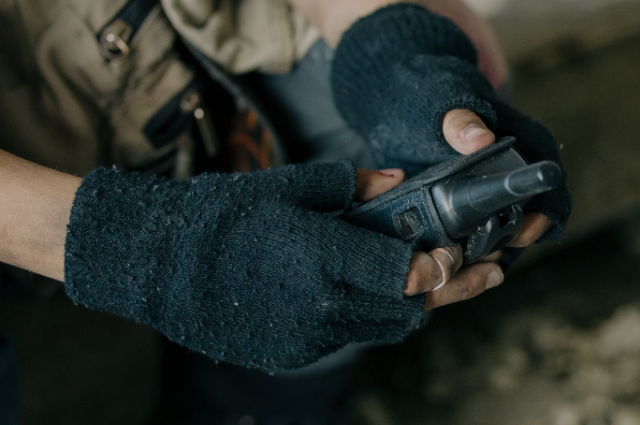
Kamlesh Kumari became the first martyr of the 2001 Parliament attack. Her story is remarkable not because she defeated terrorists with superior firepower. She did not. She faced automatic weapons with nothing more than a communication device and an unshakable sense of duty. There is something profoundly symbolic about that image.
An AK-47 represents destruction through force. A walkie-talkie represents protection through communication. One was designed to take lives. The other was used to save them. We often associate courage with dramatic acts performed in extraordinary moments. But courage is rarely born in the moment itself. It is built over years of discipline, responsibility, and commitment to a duty that most people never notice.
Kamlesh Kumari was not expecting to become a national hero when she reported for duty that morning. Like thousands of security personnel across India, she was simply doing her job.
Perhaps that is what makes her sacrifice so powerful. Heroism does not always announce itself. Sometimes, it wears a uniform, stands quietly at a gate, and makes one decision that changes history.
In 2002, she was posthumously awarded the Ashoka Chakra, India's highest peacetime gallantry award. It was a fitting tribute, but medals alone cannot capture the value of what she protected that day. She protected more than a building. She protected the institution that represents the voice of over a billion people.
More than two decades have passed since the Parliament attack, yet Kamlesh Kumari's story remains deeply relevant. At a time when public attention often focuses on those who stand in the spotlight, her life reminds us that the strength of a nation also depends on those who quietly stand guard beyond it.
Many heroes are remembered because they won battles. Kamlesh Kumari is remembered because she gave others the chance to fight one. The terrorists arrived carrying AK-47s. She carried a walkie-talkie. History remembers which one proved more powerful.
References:
- Central Reserve Police Force (CRPF) – Official account of Constable Kamlesh Kumari Yadav and her Ashoka Chakra citation.
- Gallantry Awards, Government of India – Ashoka Chakra citation for Constable Kamlesh Kumari Yadav.
- Press Information Bureau (PIB), Government of India – Official records and commemorations of the 13 December 2001 Parliament attack.