
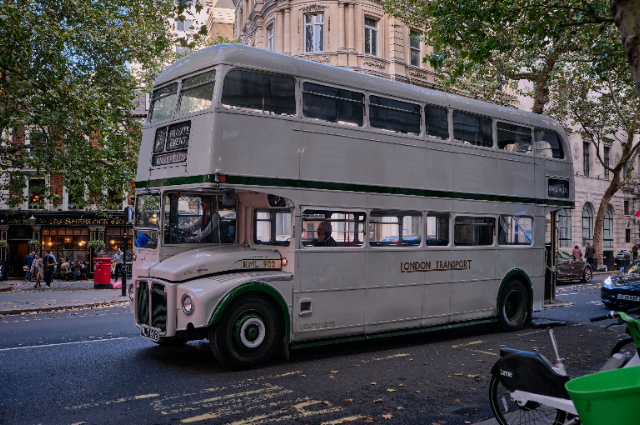
Can you imagine sitting on a bus one morning and not knowing this would be your longest ride ever? Well, from 1957 to 1976, this was the living reality of many people in the United Kingdom and India. For decades, this bus ran from London, England, to Calcutta, India – about 20,000 km, 50 days, through several different countries.
This bus service was officially the world’s longest-distance international bus service, which operated through a route that passed by countries such as Belgium, Yugoslavia, and parts of Northwest India. This service slowly became famously associated with the overland Hippie Trail of the 1960s and 1970s.
The journey on this bus expanded to approximately 10,000 miles one way and 20,000 miles round trip to return to where you ventured out from. In the year it launched, the service offered an inclusive fare for the ride, which covered several aspects of your travel, ranging from delicious and affordable food to extremely comfortable accommodation. In 1957, the one-way fare for the bus cost about £85 (equivalent to £1,780 in 2025), rising to £145 by 1973 (equivalent to £1,577 in 2025)
Though unfortunately, the bus service was discontinued in 1967 due to the growing tensions in the geopolitical state of the world, which made the route being taken and exptremely risky. However, it sparked the idea that a revival of this bus could happen; though sadly, it was repeatedly delayed as of 2021.
The adventurous history of the bus. The bus unfortunately had an accident in the coming years and became unreliable for the safety of passengers and operators. Later on, the bus was purchased by a man named Andy Stewart, who was a British traveller. On his behalf, he built this bus from the ground up and named it “Albert.” This “once in a blue moon” journey on the double-decker bus took place from Sydney to London via India on October 8th, 1968. It took the bus about a hundred and thirty-two days to reach its destination in London.
On the other end, the bus would reach India by taking routes through Iran and then venturing on towards Singapore through Burma, Malaysia, and Thailand. Going forward from Singapore, the bus would be transported to Perth in Australia via a ship, and from there it would continue its adventurous trail onto Sydney.
For a traveller in the late 50s to late 70s, this was a dream come true. The facilities on this bus were incredibly appealing to the eye, and to the comfort of a long journey; for instance, the lower deck on the bus had a reading and dining lounge while the upper half of the bus had an observation lounge.
The comfort of each passenger was met with 100%; the bus had separate sleeping bunks for each passenger, fan-operated heaters, and even a kitchen. Not to mention, entertainment was a blast for the passengers due to the availability of radios and taped music. The service also gave passengers time to spend at tourist destinations in India, including Banaras and the Taj Mahal on the banks of the Yamuna. The ultimate must was also allowed – Shopping in places like Salzburg, Vienna, or Istanbul.
Sightseeing!
Alongside the ultimate package that the Albert gave to its passengers, there was still more that came with it. Apart from witnessing the scenic beauties of the Taj Mahal, Albert showed its travellers the Afghan tribesmen, the Khyber Pass, and much more. The travellers visited places such as the coast of the Caspian Sea and the Golden Horn in Turkiye as well as the Blue Danube.
Ultimately, through the late 1950s and 70s, people loved and adored this bus for its great service over long distances, which would’ve, in theory, seemed impossible. And years later, the bus remains an amazing reminder of the extent humans can go to bring their wonderful ideas to life.
Resources: