
Tu Youyou was born and raised in Ningbo, Zhejiang, China, and studied at Peking University in Beijing. Her name was a unique one; her father had adapted her first name, Youyou, from a verse in the ancient Chinese Book of Odes.
Tu Youyou had always been an intelligent person; since 1956, she had worked at the China Academy of Traditional Chinese Medicine, where she is now Chief Scientist. As for her personal life, Tu Youyou is married and is a loving mother to two daughters.
Recently, in 2015, Tu Youyou once again showed the world how incredibly intelligent she is by winning the Nobel Prize in Physiology or Medicine. This award meant a great deal for Tu Youyou; she was the first female citizen of the People’s Republic of China to receive a Nobel Prize in any category. For her work, Tu also received the 2011 Lasker Award in clinical medicine and the 2015 Nobel Prize in Physiology or Medicine jointly with William C. Campbell and Satoshi Ōmura.
She was celebrated globally as the lone genius who saved millions of lives. However, behind her historic win lies a 30-year controversy that traces back to a secret military operation.
The award ignited a fierce cultural debate:
Does scientific triumph belong to the individual, or to the collective?
What was China’s Malaria Problem
Long before the disease owned its throne in the world and became a global scientific milestone, malaria was a devastating ordeal for the civilian population of China. In the 1940s, around 30 million cases of malaria were reported annually across the whole country – shifting the country's morale to a negative scale. It was a serious health crisis that had plagued China for much of its history, acting as a massive obstacle to China’s societal progress.
When Mao Zedong established the new China, he’d found a way to fight back against malaria, which became a crucial element of industrialising and modernising the nation. Especially if they wanted China to once again become the most powerful country in the world.
Despite continued domestic research efforts by scientists all over the country, the crisis unfortunately worsened. A new strain of the malaria parasite had evolved, becoming entirely resistant to Chloroquine, the world's most popular treatment at the time.
Then came the initiation of Project 523: The Secret Military Machine of China
When the 1960s came around, China’s domestic health crisis had escalated and collided with geopolitics during the Vietnam War. Troops in the army were marching down the Ho Chi Minh Trail, where a vast majority of them came down with the deadly, chloroquine-resistant form of malaria. Upon facing these catastrophic military losses, North Vietnamese President Ho Chi Minh turned to Chinese Premier Zhou Enlai with a plea for help – help in developing a new malaria treatment and saving his soldiers.
Zhou Enlai, in return, convinced the devastated Chairman Mao Zedong that a solution had to be found. Because malaria was simultaneously devastating China's southern provinces – eating China from the middle to the top – Mao authorised a secret, state-directed cure discovery operation. This was successfully launched on May 23, 1967; the military operation was named Project 523 after its starting date.
Slowly and gradually, Project 523 grew into a more massive and collaborative network, and eventually it gathered more than 500 scientists across many institutes. By the time 1969 came around, Tu Youyou was now 39 years old and was appointed as the head of the Project 523 research group at her institute – China Academy of Traditional Chinese Medicine. Initially, Tu was sent directly to Hainan Island to study patients who had been infected with the disease firsthand.
The “BREAKTHROUGH”: Extracting the Cure
When Tu Youyou joined the huge number of scientists, they had already screened over 240,000 compounds without a single ounce of success. Seeing this, Tu Youyou decided to pivot to an entirely different approach to this ordeal. She began using her expertise to screen a traditional Chinese handful of herbs. She investigated several Chinese medical herbs and travelled the country to visit the practitioners, compiling a personal history in a notebook named A Collection of Single Practical Prescriptions for Anti-Malaria, which summarised 640 distinct prescriptions.
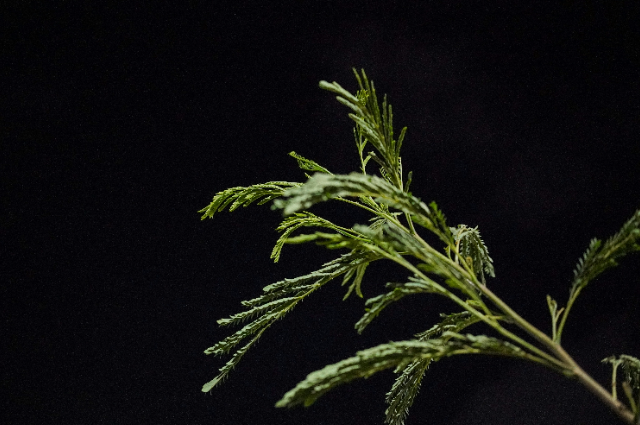
By 1971, Tu Youyou had screened over 2,000 traditional Chinese recipes and prepared about 380 herbal extracts, which were tested on mice. By the end of this journey, the answer to the struggles of China was a single plant that eventually broke the deadlock: sweet wormwood (Artemisia annua) or qinghao. This was far from a discovery. Fourth-century Chinese healers had long relied on qinghao teas to soothe haemorrhoids and break the brutal, fluctuating fevers characteristic of malaria. Yet, when subjected to modern laboratory testing, the plant repeatedly failed to perform. Though refusing to give up, Tu detailed these setbacks at a project seminar and retraced her steps through ancient medical literature, rejecting the idea of giving up.
The breakthrough lay hidden in a 1,600-year-old manual penned in 340 CE by the scholar Ge Hong, titled Emergency Prescriptions Kept Up One's Sleeve. The specific instructions went over the standard boiling altogether, advising practitioners to "soak a handful of qinghao in water, wring out the liquid, and drink it raw.”
The shift worked instantly!
Tu's laboratory isolated the pure, unadulterated chemical weapon, naming it qinghaosu (artemisinin).
Artemisinin?
Artemisinin is a sesquiterpene lactone, a compound made up of three isoprene units bound to cyclic organic esters and is distilled from the dried-out leaves of A. annua. It functions as a rapid and effective weapon against all malaria-causing organisms within the genus Plasmodium.
Dating back to when Ancient Chinese healers first documented the plant's “fever-fighting” abilities. Labelling it qinghao, the ancient Chinese had originally used the botanical recipe as a brewed herbal tea to treat haemorrhoids and malarial symptoms. This traditional practice endured for centuries until researchers finally isolated the plant's active medicinal component in the 1970s. Originally named qinghaosu, the compound earned global recognition under the name artemisinin. In modern medicine, physicians rely on various advanced artemisinin derivatives, such as artemether and artesunate, to anchor global malaria treatments.
The big debate? Should there have been a single triumph, where everyone was a contributor?
When the single plant that saved a dying China was discovered, it completely revolutionised 20th-century tropical medicine. While the life-threatening disease was cured, netizens suddenly went abruptly silent when Tu Youyou was awarded.
The public immediately went into a frenzy in the year 2011, when the Lasker Foundation presented Tu Youyou with the Lasker - DeBakey Clinical Medical Research Award, the first award to a Chinese scientist working on the mainland. This had initiated a fire in the woods, sparking a 30-year-long debate over whether a single individual should be recognised for a drug that was born out of a massive government military initiative.
However, this individualist narrative clashed directly with China's collectivist reality. Project 523 was a massive, highly synchronised state machine operating during the profound societal disruptions of the Cultural Revolution. While Tu Youyou was undeniably the catalyst who unlocked the low-temperature extraction method, critics of her singular awards emphasise that the ultimate deployment of the drug resulted from a scientific relay race that went through many stages.
This sentiment was echoed directly by Wu Yulin, a retired chemist at the Chinese Academy of Sciences' Institute of Organic Chemistry, who helped determine the chemical structure of artemisinin. Wu wrote in response to an inquiry from Science Insider that Tu "made contributions to the discovery of the compound" but did not make significant contributions after that. In comments on Web postings and in an independent newspaper, critics argue that because the development of the artemisinin-based combination therapy used today was a massive team effort, more than one person deserves to be cited for the achievement.
Conversely, Tu's proponents argue that her discovery stands out above the rest. Two supporters, Louis Miller, chief of Malaria Cell Biology at the National Institutes of Health (NIH) in Bethesda, Maryland, and his colleague Xinzhuan Su, described Tu's contributions in a Cell article, writing that they have "no doubt that the major credit must go to Youyou." Su notes that their conclusion was backed by classified documents shown to them by Tu and officials at her institute.
To many veterans of Project 523 and historians of Chinese science, isolating one person for a prize still felt like an erasure of history. It exposed a deep ideological divide: the West's insistence on a singular hero versus the Eastern reality of a massive, state-mobilised collective that pooled its sacrifices to save millions of lives.
What do you think? Should this have been a collective win or a single significance?
References: