
You have probably never heard of Sri Ganganagar. Most people haven't. It's a farming town in the north of Rajasthan. Right up against the Pakistan border. It’s the kind of place where the biggest news of the year is usually about the cotton or wheat harvest. In June 2026, something happened that changed overnight.
A 13-year-old girl from the town went missing. What the police gathered from her account afterwards was so difficult to process that even reading it once feels overwhelming. It also exposed something the whole district seemed to already know about, and had simply chosen not to touch.
What Happened
According to the FIR report, the girl went missing from home on June 18. Her mother didn't waste time; she went straight to the Sadar police station to report it. As police dug into the case. Police found she had crossed paths with an e-rickshaw driver. And he allegedly took her to a hotel near the Housing Board intersection in Sri Ganganagar. From there, the FIR says, she was sold to a hotel owner and moved between several properties in the district.
Over the next five days, roughly between June 18 and June 23, she was allegedly assaulted by more than 30 men across four different hotels. In her statement, she said her captors made her drink alcohol whenever she cried out from the pain. Investigators found that her photos had been passed around between the phones of several hotel managers. And that is actually how the case grew beyond the first few arrests.
The missing person report her family filed set the search in motion. And that is how she was finally found and rescued. The investigation that followed has only kept growing since.
The Response: Arrests, Bulldozers, and a Reckoning
Once the case came to light, Rajasthan Police moved fast, at least on paper. The FIR named several hotel owners and operators. More names kept getting added through late June and into July, and by then, over 20 people had been arrested. Police also picked up on something else: it looked like someone had tried hard to keep this whole thing from ever reaching them in the first place.
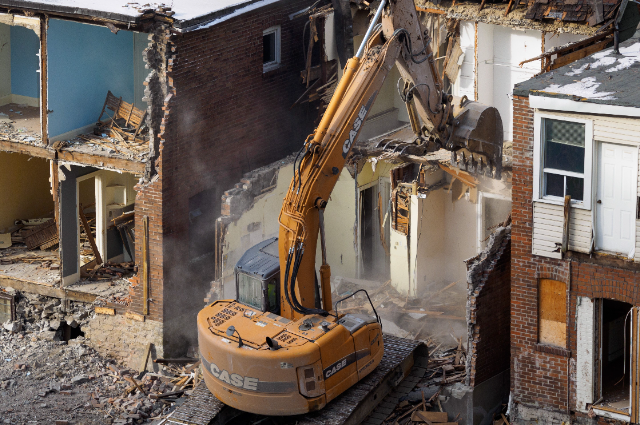
The district administration did not stop at arrests. Four hotels directly linked to the case were demolished with bulldozers, which has become a fairly common way for Indian states to respond to high-profile crimes lately.
But it is what the demolitions revealed about the town itself that turned this from a single, horrifying crime into a much bigger scandal.
150 Hotels That Were Never Supposed to Exist
Sri Ganganagar is not a tourist destination. There is no obvious reason for a district like this to have a thriving hotel business. And yet, local reporting puts the number of illegal, unlicensed hotels running here at more than 150.
Sit with that number for a second. That is not one shady place slipping through the cracks of local bureaucracy. That is an entire shadow economy, operating without licenses, without registration, without a single official checking who comes in and out or what happens behind closed doors. This was not a one-off crime in a dark alley. It was a coordinated, multi-day exploitation of a child, and it was only possible because an entire network of unregulated hotels made it possible.
That is really the part of this story that should bother you more than any single detail of the crime itself. A child was moved across four separate properties over five days, and at no point did that network of hotels raise a single red flag. Not because the system failed once. Because the system, as it existed, was never built to catch anything in the first place.
Outrage on the Streets
Once people learned the scale of what had happened, Sri Ganganagar erupted, and so did the rest of the state. Congress workers took to the streets. They demanded action against the men accused and also the police station that was supposed to be watching that area. Local MLA Rupinder Singh Kunnar joined the protesters himself. The opposition also demanded the suspension of officers at the local police station, calling the whole thing proof of a complete breakdown in local policing.
The anger didn't stop at the district border. On July 8, the National Commission for Women got involved. They pushed state authorities to move faster on the investigation, hold people accountable, and tighten child protection in the area. Public figures spoke up too. Actor Meerra Chopraa called it a symbol of how badly the system keeps failing children. She also said the men involved deserved nothing less than capital punishment. She put the point across that a 13-year-old should be worrying about school and friends. Here she has to fight for her life.
An Uncomfortable Echo
This case did not happen in isolation. Just weeks before this, Delhi had its own nightmare. A 10-year-old girl was sleeping on a pavement with her family in South Delhi's Mehrauli area. A cab driver allegedly took her, assaulted her, and killed her. Her body was later found near the Gurugram border. He had reportedly been driving for ride-hailing apps for almost ten years, even though he had a criminal record that included attempted murder.
People connected the two cases almost instantly, and it's not hard to see why. In both, the men got close to a child simply through their day job; one drove an e-rickshaw, the other a cab. And in both, it became painfully obvious how little checking actually happens in industries that millions of people use without a second thought. Both stories also pushed the same exhausting question back into the national conversation: how many systems have to fail at once before a child becomes this easy to hurt?
When Grief Becomes Content
Once the case hit social media, something else started happening too, and it's a tragedy in its own right. A rumour spread that the girl had died in the ICU. It wasn't true, and Rajasthan Police actually had to come out and say so publicly that she was alive and safe with her family.
Separately, videos that had nothing to do with this case got attached to it anyway. One viral clip claiming to show police parading the Sri Ganganagar accused through the streets actually came from an unrelated police action in Gujarat, months earlier. Another set of videos claimed to show the victim herself. Turns out, that was a completely different child, from a separate kidnapping and assault case in Hardoi, Uttar Pradesh.
Take a second to actually think about that. People wanted to feel something while reading a horrifying story, so they shared clips without checking if they were even real, tied them to a real child's suffering, and scrolled on. Meanwhile, fact checkers were left cleaning up the mess for days, all while the actual investigation was still going on. If nothing else, it's a reminder that outrage without facts can end up hurting people, too.
What This Case Really Exposes
Strip away the headlines, and what Sri Ganganagar's case leaves behind is not really a story about one girl, one e-rickshaw driver, or one hotel owner. It is an infrastructure story. About how easily illegal, unregulated spaces multiply in places nobody bothers to watch closely, until something so horrific happens that the world is finally forced to look.
Four hotels have been demolished. More than 20 people have been arrested. The National Commission for Women is watching. But 150 illegal hotels do not vanish just because four of them got bulldozed. The real question is whether anyone in Sri Ganganagar, or in any other district with the same kind of shadow economy, will actually do the slow, unglamorous work of shutting the rest of them down. Because if nobody does, some other child will end up paying for that silence too.
References:
- The Statesman; Rajasthan: 13-year-old girl sexually exploited by over 30 men, hotels in Sri Ganganagar face bulldozer action
- India Today: Sri Ganganagar gang rape case: bulldozer action on four Rajasthan hotels
- Republic World: Rajasthan Shocker: 13-Year-Old Girl Sold To Hotel Owner By Rickshaw Puller
- ETV Bharat: Digital Evidence Uncovers New Leads In Sri Ganganagar Gang-Rape Investigation
- News on Air (All India Radio): NCW Seeks Action Taken Report on Rajasthan Minor Rape Case
- IANS: Meerra Chopraa on Sri Ganganagar minor rape
- BW Police World: Cab driver rapes and murders a 10-year-old girl in South Delhi
- LatestLY: Has the Sri Ganganagar Rape Victim Died? Rajasthan Police Clarify Viral Rumours
- Factly: Unrelated video from Gujarat shared as Rajasthan Police parading Sri Ganganagar rape case accused.
- The Quint, WebQoof: Videos From Hardoi Falsely Shared as Ones of Minor In Sri Ganganagar Gang Rape Case