
A nine-year-old girl walks into her classroom. She waves at a friend. She joins a dance activity. For a few minutes, the CCTV footage shows a completely ordinary school morning.
Then a classmate brings out a digital slate. Something on the screen gets passed around, shown to her again and again. Her face changes. She looks embarrassed. Uncomfortable. She gets up and walks to her teacher. Once. Then again. The footage shows other children interrupting, talking over her, before she can finish. Minutes later, she leaves the classroom alone. Nobody follows her.
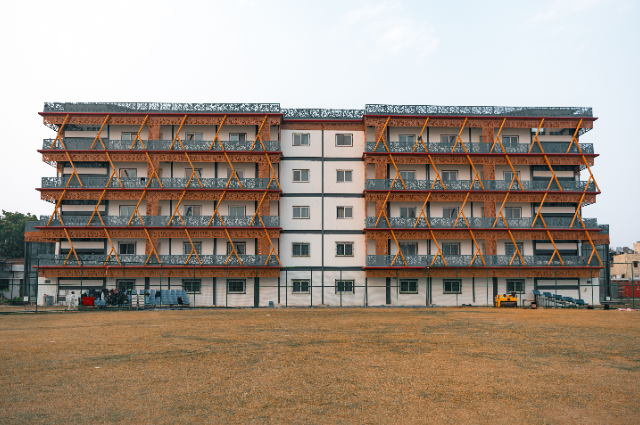
That child was Amaira Meena. A Class 4 student at Neerja Modi School in Jaipur. On November 1, 2025, she fell from the fourth floor of her school building. And she died. Her parents believe she was pushed to that moment. She was bullied for eighteen months, and nobody in authority took her seriously.
Her family released the classroom footage publicly, eight months later, in July 2026. And the country is asking the same question all over again: how did nobody stop this?
A Mother's Recording, A Year Before
Here's the detail that's hardest to sit with. A year before Amaira died. Her mother, Shivani Meena, recorded her daughter on a voice note. In that voice note, a small girl cried and said she didn't want to go to school. Asked her mother not to send her. Shivani shared that recording with the class teacher. She hoped it would make someone pay attention.
By her own account, Shivani spoke to the class teacher and the class coordinator "not once, but several times" over the following year. She says she was brushed off, or simply ignored. Amaira's father, Vijay Meena, has described a parent-teacher meeting where he raised concerns about boys signalling at his daughter, making her hide behind him in embarrassment. He says the teacher responded that Neerja Modi is a co-ed school, and Amaira needed to learn to talk to all the other children, including boys.
That's the emotional core of this case. When a child asks, repeatedly, in words and in tears, not to be sent back into a place that frightened her. And the adults around her were treating it as something she needed to adjust to. They didn’t want to do something that needed fixing.
What the CCTV Actually Shows
The newly released footage doesn't have audio, despite CBSE norms requiring classroom surveillance systems to record sound. So nobody knows exactly what Amaira said in those final conversations with her teacher. But the visuals, according to the family and the investigators who reviewed them, are clear enough. She approached her class teacher, Puneeta Sharma, at least twice, maybe more, in the roughly 45 minutes before she died. Each time, other students spoke over her or interrupted before the conversation could happen properly.
Then she left the classroom. She walked through the corridors. Climbed several flights of stairs. She passed staff members along the way. Nobody stopped her. Or bothered to think to ask a nine-year-old why she was heading upstairs alone in the middle of a school day.
Two Inquiries, Two Very Different Pictures
This is where the story splits into two tracks, and where the "two official inquiries" of the headline really matter.
Track one: CBSE's inquiry. The Central Board of Secondary Education formed a fact-finding committee after Amaira's death. What it found was damning. The school's anti-bullying and POCSO committees, the ones every CBSE-affiliated school is required to maintain, existed only on paper. There was no functioning counselling system. Safety measures like protective railings and CCTV coverage were inadequate. The committee also noted that the spot where Amaira fell had reportedly been cleaned before it could be properly examined. Something CBSE flagged as a serious obstruction to a transparent investigation. Based on an eight-page order describing "grave, flagrant, and willful non-compliance" with child safety norms, CBSE revoked the school's senior secondary affiliation on December 30, 2025. When the school challenged this in the Rajasthan High Court, the court largely let the CBSE order stand, only pausing the physical transfer of students while the school's appeal was heard.
Track two: the police investigation. Jaipur Police eventually filed a chargesheet, naming the class teacher, the principal, and the school owner. But the charges are for criminal negligence and evidence tampering under the Bharatiya Nyaya Sanhita, not for anything close to child cruelty or abetment to suicide. Amaira's family, backed by a parents' collective called the Sanyukt Abhibhavak Sangh, has called this chargesheet "incomplete." They allege the police left out named accountability for the principal and founder in a way that shields the school's top management, and that outside influence shaped how weak the final charges turned out to be.
So you have one official body looking at the same set of facts and concluding the school's entire safety culture had collapsed. And another concluding, at least on paper, that this was closer to an oversight than a systemic failure. That gap is exactly why Amaira's family is now preparing to take the case to the Rajasthan High Court, pushing for stronger charges.
Why This Case Keeps Resurfacing
It would be easy to read this as a story that happened, got investigated, and closed. It hasn't. Every few months, it comes back into the news because a new piece of evidence surfaces, or a new legal document is filed, and each time, the same unresolved question returns with it: why does institutional accountability seem to move so much more slowly than institutional harm?
There's a pattern worth noticing that isn't unique to this one school. Committees exist because they're mandated. But no one really intends to use them. Complaints get logged as "will look into it". Then quietly shelved. A child's distress gets read as a personality trait, something to adjust to, rather than a signal to act on. None of this is new. What's different about Amaira's case is that her family had evidence: a recording, timestamps, CCTV footage, actual paperwork of complaints made. And even with all of that, the family is still fighting eight months later to have the severity of what happened formally recognised.
What This Case Is Really Asking Us
Underneath the legal language and the charge sheets, this story is asking something simpler. When a child tells you, in whatever way she can, that something is wrong. Do you listen the first time? Or does it take a tragedy, a CBSE order, and a public CCTV release? And then you treat her seriously?
Amaira tried at least twice in her final half hour alive. She'd tried, by her mother's account, for a year before that. The systems meant to protect her, the committees, the grievance channels, the surveillance mandated to keep children safe, existed mostly as names on paper. That's not a small administrative gap. That's the entire safety net for a child failing at every single point where it should have caught her.
Her case is still moving through the courts. Whatever the final legal outcome, the more lasting question belongs to every school, every teacher, every parent reading about this from a distance: are we actually listening to children, or just waiting for proof loud enough that we can't ignore it anymore?
Sources:
- Republic World, "Heartbreaking CCTV Footage Captures Jaipur Teacher Ignoring 9-Year-Old Bullying Victim Minutes Before Suicide" (July 2026): https://www.republicworld.com
- PTC News, "Jaipur school girl death: New CCTV footage raises fresh questions over alleged bullying and negligence" (July 9, 2026): https://www.ptcnews.tv
- India.com, "Changed body language, bullying, ignored by teacher: New CCTV footage reveals moments before Amaira's death" (July 2026): https://www.india.com
- Newsdrum, "Amaira Meena case: Why the Neerja Modi School chargesheet has triggered fresh outrage" (July 2026): https://www.newsdrum.in
- Free Press Journal, "CBSE Cancels Neerja Modi School's Senior Secondary Affiliation After Class IV Student's Death" (December 31, 2025): https://www.freepressjournal.in
- Dailyhunt/News Crab, "Rajasthan High Court refuses to interfere with Neerja Modi School's recognition" (January 2026): https://m.dailyhunt.in
- Newsgram, "Jaipur School Suicide: Parents Release Classroom CCTV Footage, Allege Amaira Faced Relentless Bullying" (July 2026): https://www.newsgram.com
- India.com, "' Please don't send me': Parents say 9-year-old student who jumped to death from school building was bullied, ignored by teachers" (November 2025): https://www.india.com