
War is a much-feared, much-revered topic. Viewed from different lenses, people's opinions on war run into different tracks, depending on what part of the divide they belong to - whether on-site or over the horizon. It is like living by the seaside. Everybody wants a house by the seaside, where they can watch the waves sing and make the sea breeze a part of their poetic existence. Everybody wants a house by the seaside until the water levels increase and the waves confiscate properties that used to belong to others.
War has always been a topic that garners attention, widely commented on by all and sundry because of the magnitude of its impact. However, while the devastation of war is often acknowledged, honour for the individual soldier on the battlefield and glory for the winning party had been the most popular theme of discussions outside the battleground for the longest of times. Literary works of prominent European artists did no small work in ferrying the populace to that juncture. Tales of chivalry, courage and glory made of the war field a theatre, and the sword, a magic wand that prophesies greatness to its wielder.
Much less had been done to hear from the other side of the divide. It was almost impossible to see beyond the theatre and magic wand. Press coverage of war was unacceptable for a long time. News came from military dispatches, government gazettes, and officers’ letters home, all carefully curated to control the narrative. Political commentators also wrote about wars, however, not eyewitnesses. This was true of the Belgian Revolution of 1830, the Revolutions of 1848, and the First Schleswig War that took place between 1848 and 1851. Journals like The Edinburgh Review and Blackwood’s Magazine also featured commentaries and debates, but only on issues like power balance and national honour.
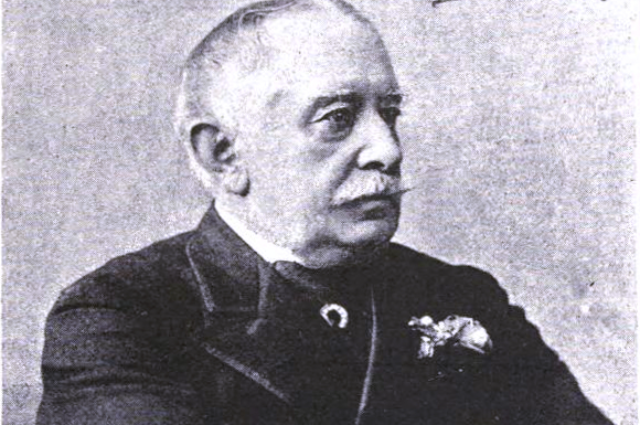
The conversation changed when one man stepped up to the task of witnessing the truth play out. With William Russell's landmark report on the Crimean War, a wave of change swept over the landscape of war correspondence in the 1850s. The war, which began due to power struggles in the Middle East, was the window that introduced real-time war journalism. William Howard Russell, a reporter with the Times, spent months at the battlefield, observing the waves of warfare and giving eyewitness accounts sent through telegraph.
During his months of reporting on the Crimean War, Russell uncovered so many anomalies. He found that, as opposed to what the public was often made to believe, there was no dignity accorded to the soldier at the war front. There was nothing dignifying about the living conditions, nothing honourable about the administrative lapses that saw the lives of countless soldiers put on the line needlessly, and nothing humanising about the medical care that followed. Russell reported that medical care in the army was subpar. The wounded were made to lie on stone floors without blankets, food, or medicine, leaving many susceptible to the cold grip of death.
During the winter that began in 1854 and continued well into 1855, while official statements whitewashed the state of living amongst soldiers at the war front, Russell reported that many of the soldiers were sick, scantily clad and hungry. Supplies had been cut off due to ships that were wrecked or damaged, horses were dying in their numbers with not enough fodder, there was inadequate transport to bring supplies where they were needed, and these led to numerous deaths.
Russell's popular report, The Charge of the Light Brigade, saw Russell take a stance on a ridge, watching the Light Brigade advance into a Russian crossfire on orders from Lord Raglan. He described that moment as “a torrent of shot and shell”, making the public recoil from the imaginative experience, feeling empathetic towards the “shattered remnants” that survived the open fire.
To the public, his dispatches brought an awakening. His uncensored report gave them insight into what had over time been whitewashed and dressed in fine, romantic phrases. This resulted in public outrage. People began to point fingers. To hold the army leadership accountable. Parliament inquired into the mismanagement of resources in the army. The Aberdeen government fell. The entire structure that supports soldiers on the battlefield was overhauled and restructured to improve the army supply service, medical care and officer promotion process.
Russell's report would inspire Lord Tennyson to write his poem of the same name, titled The Charge Of The Light Brigade. Florence Nightingale would also be inspired to join the rank and file of the battlefield as a nurse. These reforms swept across rapidly all because one man paid the sacrifice of being at the war front to witness the truth play out.
Russell would go on to observe the American Civil War of 1861, the Anglo-Prussian War of 1866, the Franco-Prussian War of 1870, the Indian Rebellion of 1858 and the Zulu War of 1879, notably. Every other time, though not like the first, would sharpen his efficiency and cement his style of reporting - raw, unfiltered, critical. During the American Civil War, Russell had arrived in the US with pro-Union sympathy, his stance against slavery unwavering. However, after witnessing a retreat he viewed as ungallant, he wrote, “the repulse of the Federalists, decided as it was, might have had no serious effects whatsoever beyond mere failure … but for the disgraceful conduct of the troops. The retreat on their lines at Centreville seems to have ended in a cowardly route [ sic ]—a miserable, causeless panic. Such scandalous behaviour on the part of soldiers I should not have considered possible, as with some experience of camps and armies. I have never even in alarms among camp followers seen the like of it.”
At the Austro-Prussian War, Russell wrote of Germany's excellent war machinery and efficient tactics, which had earned them a victory. His Franco-Prussian War report told a tale of acute famine behind the walls of France. His observation of the Indian Rebellion birthed a report that questioned indiscriminate executions by British officials in India. His report of the Zulu War, reservations about the British generalship underestimating the Zulu warriors armed with spears as against British rifles, and his descriptions of the gory images of British soldiers sacrificed to the war opened a discussion on imperial expansion in Britain.
His achievements did not come without setbacks, however. His personal safety was often on the line. At the Crimean War, he was at risk of contracting Cholera, was a victim of hostility within the army, and suffered through the hardships of the army. At the American Civil War, he was viewed with suspicion; his journalistic impartiality earned him disfavour and contempt, so much angst was directed at him both within the army and amongst the populace that he returned to Britain fearing for his safety. Every other time, he reported at great risk. His investigation, radical, uncensored dispatches were sent out at great personal cost of time, safety, physical wellness and sanity.
Regardless, his works brought to the fore the need for a war correspondent. Through his fearless pen, he held military leaders to account. His style of reporting shifted public gaze from the glory achieved by generals for the nation to the suffering of individual soldiers, whose lives are reduced to mere merchandise for trade at war. His reports ignited public angst and inspired change.
Not only did his critical commentaries expose dirty linen that had before time been painted the colour of ‘honour’, but they acupunctured the conscience of a people. He broke the romantic lie that had been peddled regarding war. His work as a war correspondent, though not the first of its kind, reached a zenith due to its distinctiveness, earning him a title as the first war journalist. William Howard Russell’s works brought radical change, promoted accountability and inspired generations of war correspondents.
References:
- Hankinson, Alan. Man of Wars: William Howard Russell of The Times. London: Heinemann, 1982.
- Knightley, Phillip. The First Casualty: The War Correspondent as Hero and Myth-Maker from the Crimea to Iraq. Baltimore: Johns Hopkins University Press, 2004 (3rd edition).
- Russell, William Howard. Russell’s Despatches from the Crimea, 1854–1856. Edited by Nicolas Bentley. London: Andre Deutsch, 1966.
- Russell, William Howard. My Diary North and South. London: Bradbury and Evans, 1863. (American Civil War)
- Russell, William Howard. My Diary in India, in the Year 1858–9. London: Routledge, 1860.
- Russell, William Howard. The Great War with Russia: The Invasion of the Crimea. London: Routledge, 1895.
- Daniels, Gordon. “The First War Correspondent: William Howard Russell and the Crimean War.” History Today, vol. 38, no. 7, 1988, pp. 31–37.
- Furneaux, Rupert. The First War Correspondent: William Howard Russell. London: Cassell, 1944.
- School History. (n.d.). William Howard Russell | Life, war reporting, legacy. https://schoolhistory.co.uk
- University of Kent. (2021, February 14). William Howard Russell (1820–1907). Picturing the News. https://research.kent.ac.uk
- The Past. (n.d.). War reporters: William Howard Russell. https://the-past.com