
For almost ten years, one individual lived two completely different lives.
For Pakistan, he was Nabi Ahmed Shakir, a respected army officer who climbed the ranks and married into the local family. For India, he was Ravindra Kaushik, one of RAW’s best covert agents.
His mission apparently contributed to strengthening India's military security. In exchange, he was rewarded with decades of solitary confinement, torture, illness, and ultimately, death in a foreign country. Today, in his homeland, Ravindra Kaushik is remembered as the Black Tiger, a brave but forgotten spy.
Ravindra Kaushik was born on 11 April 1952, in Sri Ganganagar, Rajasthan. He came from a middle-class family and spent his college days entertaining people on stage. His acting skill and voice modulation capacity caught the attention of RAW agents. The agency approached him soon after one of his performances.
According to his family members and former RAW officials, Kaushik accepted the offer in his early 20s. He was asked to take up a new identity and work undercover for India from the other side of the border. Kaushik was given months of training, during which he learned the basics of the Urdu language, Islam, Pakistani social etiquette, and military intelligence.
His knowledge about his former identity was limited to what was necessary for the job; he was given a new name Nabi Ahmed Shakir, a student from Karachi who studied Law.
After his training, RAW sent Kaushik to Pakistan. He reached its capital city, Karachi, in 1975. There, he continued to build his life from scratch. First, he enrolled himself at the University of Karachi, from where he graduated. Later, he joined the Pakistan Army.
What happened next became one of India’s most prominent intelligence success stories. As an officer in the Pakistan Army, Kaushik provided India with vital military intelligence. Between 1979 and 1983, he reportedly supplied India with sensitive military intelligence that significantly strengthened its understanding of Pakistan's defence planning.
While the exact nature of his intelligence mission remains classified, reports suggest that the information he passed on to his handlers in India was incredibly valuable. Several retired intelligence officials have suggested that the information he supplied proved strategically valuable to Indian defence planners, although the exact impact remains classified. According to several accounts by former intelligence officials, then Prime Minister Indira Gandhi was impressed by his work and is believed to have bestowed upon him the codename "Black Tiger." However, this has never been officially confirmed.
She is reported to have given him the nickname “Black Tiger” (the name later became his unofficial title). However, there is no official confirmation of whether the Prime Minister actually gave him that name.
Being in the Pakistani military as an outsider came with its challenges. For one, Kaushik could not take any chances regarding his personal life. To avoid suspicion, he married Amanat, the daughter of a tailor and a local Pakistani Army worker. The two had a son together.
Kaushik’s wife was not aware that her husband was an Indian spy. To her and everyone else, he was a Pakistani muslim named Nabi Ahmed Shakir. Even when the Pakistani investigators arrested him, he maintained this identity. It was the only identity he had, and he had to protect it at all costs.
In fact, he made the ultimate sacrifice for his country while living under the alias of Nabi Ahmed Shakir. He lost his identity and, eventually, his life.
The intelligence Black Tiger provided to India was invaluable. However, his mission had a sudden end in 1983 when RAW sent another officer, Inayat Masih, to Pakistan to establish contact with him. Inayat was caught by Pakistanis soon after arriving in Pakistan.
The Pakistanis managed to extract crucial information from him under harsh interrogation conditions. They eventually reached out to Kaushik, who was surprised and disappointed by his former colleague’s betrayal.
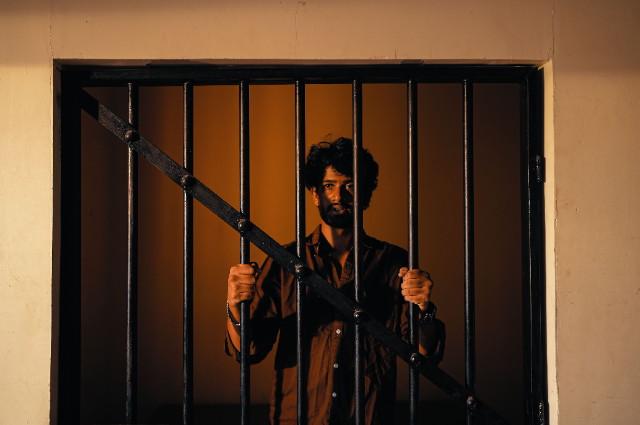
The interrogation session continued for months, during which Kaushik was allegedly tortured severely. The Pakistani authorities sentenced him to death, but the punishment was changed to life imprisonment. For the next sixteen years, he was imprisoned in various jails in Pakistan, including Sialkot, Kot Lakhpat, Mianwali, and Multan.
During his confinement, he was reportedly kept in solitary confinement and tortured. In one of his letters to his family, which was published in Pakistani newspapers, he wrote
“If I were an American, I would have been out of jail in three days.”
The authenticity of the letter has been debated because the original correspondence has never been publicly released and was never published in India despite the widespread circulation of the newspapers there. According to various sources, the letters were written by the man himself while in custody.
Kaushik suffered from tuberculosis and heart conditions while in prison. He also faced numerous health issues.
Perhaps the cruelest legacy of Kaushik’s spying activities was that, despite his contributions to India, he was not recognized or celebrated for his services to the country. In fact, he was not even acknowledged as RAW’s agent while in Pakistani custody. India kept his status as a covert agent secret to ensure national security and protect future intelligence operations.
Kaushik’s family members made multiple requests to the Government of India for his release. Unfortunately, their petitions went unanswered. On 21 November 2001, he died in a hospital in Multan after spending approximately sixteen years in captivity.
Kaushik was laid to rest in Pakistan, which is reported to have been the wish of his wife. Even as he made enormous sacrifices and served India, he never returned to his homeland. His legacy remained shrouded in mystery long after his death.
The Legacy of the Black Tiger: Summary
Much about the legendary Black Tiger’s life remains unclear. Some of his actions and decisions are difficult to understand. For example, we do not know exactly what transpired in the last 16 years of his life. We also do not know the precise nature of his intelligence work.
His military rank and other personal matters remain unclear. However, what we do know is that Kaushik made outstanding contributions to India’s national security. His mission was incredibly risky and full of challenges.
At the same time, his efforts went unrecognised, both in India and abroad. His sacrifices made him the unsung hero. The contributions of spies and intelligence agents are rarely celebrated publicly.
Sometimes, the ultimate price of espionage missions is loneliness and living in exile. In the case of Ravindra Kaushik, this price manifested in the fact that he could not return to his home country.
References:
- https://www.ijcrt.org
- https://homegrown.co.in
- https://www.hindustantimes.com
- https://www.deccanchronicle.com