
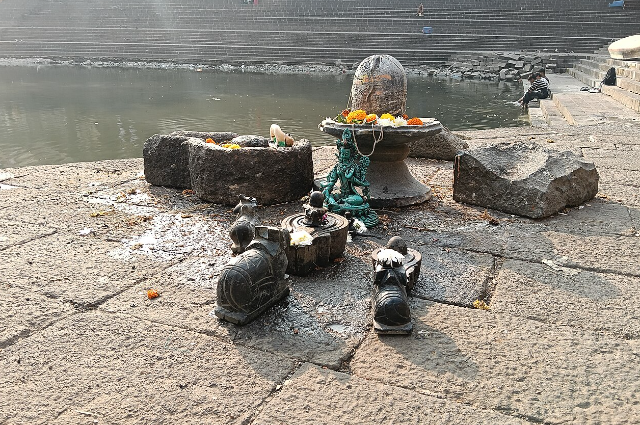
The news of hundreds of fish found dead in Mumbai’s historic Banganga Tank during the Pitru Paksha has once again raised concerns over the delicate state of the famed water body at Walkeshwar.
Pitru Paksha, a fortnight-long Hindu ritual dedicated to paying respects to ancestors, was observed between September 26 and October 10 this year. Devotees performed pind daan and offered food, milk, oil, and flowers at the Banganga tank during the period, according to the civic body. Civic officials believe this offering has reduced dissolved oxygen in the tank, causing the mass fish deaths.
While news reports have variously mentioned hundreds and thousands of dead fish, the BMC has reportedly sent water samples for laboratory tests, meaning the findings can be expected to differ from the BMC’s initial assessment.
Flour (from flour dumplings or sweets), oil (from cooking oil offered as part of ritual) or even floral offerings — all these items are biodegradable and can add to the organic load of the water, depleting the oxygen content of the water in the process. Milk, meanwhile, can add to the organic content of the water, while the presence of oil can disturb the oxygen exchange at the surface of the water. The issue, then, is not with the presence of offerings per se, but with the possibility that the cumulative amount of offerings may exceed the self-cleansing capacity of the tank and the ability of oxygen in the water to replenish itself. BMC blames ritual offerings; it must be noted that the immersion of these items is neither necessary for the rituals nor is it unique to this religious observance. There are other occasions when devotees offer items to the tank, and these offerings could also contribute to fish deaths.
The recent incident is not an isolated one. Fish deaths have been reported at the Banganga tank during the Pitru Paksha period in 2021, 2023 and 2025 as well. In fact, in the latter year, the civic body had to spend three days cleaning up the tank of 10,000 kg of dead fish, floral waste and other offerings. The civic body had deployed aerators and dewatering pumps to address the issue. It also requested that devotees dispose of their offerings in designated bins rather than in the water tank. Moreover, rather than responding with prophylactic measures, the BMC appears to be reacting to the crisis at hand.
The repetition of the issue raises a question about the preparedness of the BMC. The previous incidents of fish deaths should have served as a warning that something needed to be done.
Aeration pumps have been installed to increase the oxygen levels in the water. The civic body is also considering using methods like ‘pumping out and back in’ to improve water quality.
A meeting was held with priests and residents in an attempt to find a solution to the problem. Meanwhile, the civic body is also considering using more artificial ponds, so that the offerings can be immersed in them rather than the Banganga tank. Following a meeting held on October 5, reports suggest that the number of temporary artificial ponds would be increased from five to ten, while the number of aeration pumps would rise from four to eight. Priests have been requested to advise devotees against making offerings in the tank. The effectiveness of these measures will depend on the accessibility of the artificial ponds, public compliance and the timely operation of aeration pumps.
A Banganga tank is not just any water body. It is a heritage site, located in Walkeshwar. The origins of the religious complex date back to the 12th century, which means that it has considerable cultural and religious significance to the residents and the city as a whole.
Some have even raised the example of the Ganesh Chaturthi immersion ban as a potential model for stricter restrictions. The civic officials, however, have pointed out that such restrictions are unviable, as the tank is used for bathing purposes.
Beyond this, the very status of the Banganga tank as a heritage site complicates certain conservation measures; for instance, there are restrictions on interference with the tank by the Archaeological Survey of India.
Ensuring the continued existence of religious practices while protecting the aquatic life in the tank is not an impossible task — it simply requires greater co-operation between the various stakeholders. The introduction of new facilities (artificial ponds) and stronger regulations (collection of offerings in bins) would go a long way in achieving this objective.
The recurring fish deaths at Banganga Tank point to a failure of preventive planning. With similar incidents reported during Pitru Paksha in 2021, 2023 and 2025, the BMC has had ample warning that the annual influx of ritual offerings could affect water quality. Yet, its response has largely centred on cleaning up after the deaths occur, rather than putting measures in place to minimise the risk beforehand.
The focus must therefore shift from discouraging offerings to managing their impact on the water. This requires advanced deployment of aeration pumps, accessible facilities for the disposal of offerings, and regular monitoring of water quality before and during Pitru Paksha. Such measures would allow the civic body to anticipate deteriorating conditions and intervene before they threaten aquatic life. Preventing further fish deaths will depend not merely on emergency clean-ups, but on a coordinated, preventive plan developed well before the ritual period begins.
The recurring fish deaths at Banganga Tank are a reminder that heritage conservation requires more than emergency interventions. The BMC must move from reactive clean-ups to preventive planning, with timely aeration, regular water-quality monitoring and accessible alternatives for the disposal of ritual offerings. The Archaeological Survey of India, civic authorities, priests and residents must work together to ensure that these measures are implemented effectively. The objective should not be to discourage religious practices, but to ensure that they can continue without compromising the health of the water body. With Pitru Paksha returning every year, the risk is foreseeable, and the response must be planned. Protecting Banganga Tank’s religious significance and preserving its aquatic life are not competing goals; both are essential to safeguarding this historic heritage site for future generations.
References: