
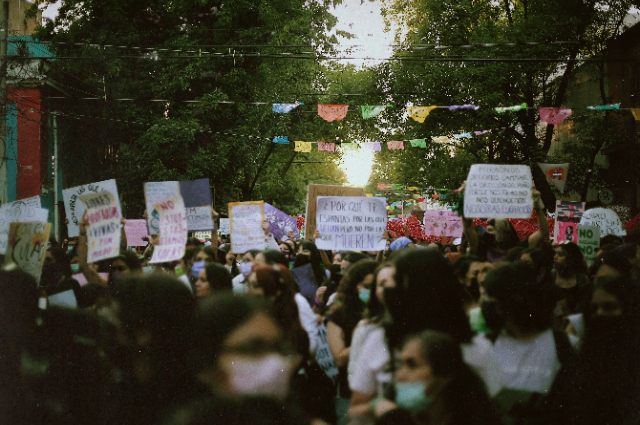
Young protesters demanding the resignation of Chief Election Commissioner (CEC) Gyanesh Kumar and an end to the Special Intensive Revision (SIR) of electoral rolls gathered in Shivaji Park on Gandhi Jayanti, despite the Mumbai police refusing permission for the demonstration.
Naseeruddin Shah, Vishal Dadlani and Shabana Azmi were among those who attended the gathering, bringing wider public attention to the campaign questioning the Election Commission’s voter verification process.
The controversy followed an investigation by The Indian Express, which reported that Election Commissioners Sukhbir Singh Sandhu and Vivek Joshi had raised objections more than 14 times over the preceding 10 months regarding decisions related to the SIR, voter registration and the Election Commission's digital systems. The report also stated that the Commission had not responded to their concerns.
At the time of the protest, the organisation announced that it would be extending its campaign to other cities. The poll body has defended the SIR process, with the CEC stating that the exercise was meant to detect duplicate, ineligible and deceased voters, and that differing opinions were bound to occur when taking such decisions.
Abhijeet Dipke, founder of the CJP, had announced what was set to be a nationwide mobilisation starting from Mumbai on October 2. After being refused permission for the protest, Dipke announced that the organisation would conduct a Jail Bharo Andolan (protest for filling jails) if the authorities attempted to stop them.
The Mumbai police had denied permission for the protest on the grounds that the Shivaji Park area had a 2013 Bombay High Court order prohibiting the use of the ground for any purpose other than sports, and that the organisers had not produced the necessary permission from the municipal corporation. The police had also stated that the ground was surrounded by residences and hospitals and that a large-scale protest would cause inconvenience due to traffic and noise.
The CJP and Dipke alleged that the police had denied permission because of the campaign’s demands concerning the CEC. In a letter to the home minister, Dipke described the decision as an attempt to silence public dissent. The organisation proceeded with the protest despite the denial of permission.
Protesters used placards, the Indian flag, slogans, memes and film dialogues to communicate their demands. According to The Times of India, an estimated 9,000–10,000 people had gathered by around 4 pm on October 2, while The Indian Express reported an estimate of approximately 4,000 by evening.
Along with this, the police had deployed approximately 300 policemen to the site; additional personnel were stationed outside to help control the crowd that gathered during the afternoon. Despite a lack of permission, the protest continued for several hours without many protesters being escorted away.
Dipke praised the Mumbai police's handling of the gathering, contrasting it with the reported police response to student protesters in Delhi who had called for the CEC's resignation.
Vishal Dadlani addressed the gathering and performed a rendition of Mera Rang De Basanti Chola, adapting it to reflect the campaign's demands. Actor Prakash Raj also expressed his support through a video message. CJP volunteer Sheikh Abdul Hafiz also addressed the gathering, raising concerns about school conditions and alleging that his father had died following an assault in West Bengal’s Bankura district.
While the CJP was holding its protest in Mumbai, student protesters and political activists gathered in Delhi to voice similar concerns. Congress leader Rahul Gandhi expressed support for the protesters and criticised the authorities over allegations of electoral malpractice. The CJP has also announced that it intends to extend its campaign beyond Mumbai. According to a statement issued by the organisation, the next protests will take place in Goa, Kolkata and Bengaluru, among other places.
Some residents reportedly objected to the noise and disruption caused by the gathering. Siddhi Deolekar, a resident and advocate, reportedly filed a complaint against Dipke and other CJP leaders. On October 3, Shivaji Park police registered an FIR against CJP leaders and supporters in connection with allegations of unlawful assembly, sloganeering and traffic obstruction. The FIR reportedly named several individuals and also referred to approximately 400–500 unidentified protesters. A counter protest by individuals identifying themselves as Gen Next Mumbai was also held near the Dr B.R. Ambedkar statue in Churchgate.
The CJP and its supporters have called for Kumar’s resignation over allegations of improper voter deletions. The Election Commission, meanwhile, maintains that the SIR is intended to identify duplicate, ineligible and deceased voters as part of its voter verification process.
The protest in Mumbai has brought renewed attention to concerns over the Special Intensive Revision of electoral rolls, the Election Commission’s voter verification process and demands for accountability from the poll body. While the CJP and its supporters are calling for Chief Election Commissioner Gyanesh Kumar’s resignation, the Election Commission maintains that the exercise is intended to ensure the accuracy of electoral rolls. The controversy highlights the need for transparency in the revision process, clear responses to concerns raised by election officials, and public confidence in the integrity of India’s electoral system.
References:
- https://indianexpress.com
- https://indianexpress.com
- https://indianexpress.com
- https://www.reuters.com
- https://timesofindia.indiatimes.com
- https://timesofindia.indiatimes.com