
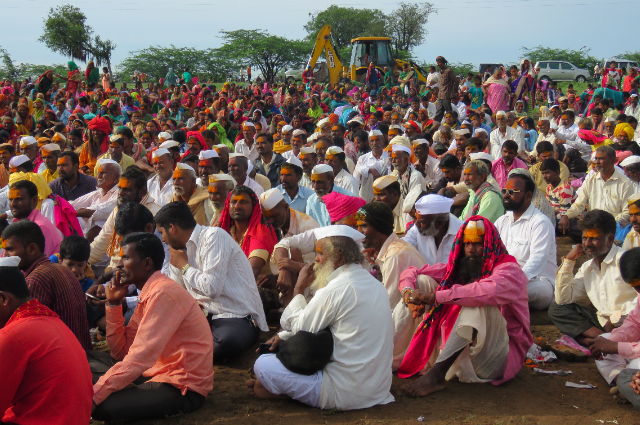
Thousands of farmers from Punjab, Haryana, Uttar Pradesh, Rajasthan, and several other states marched towards Delhi this week under the banner of the Desh Bachao Morcha, or the "Save the Nation Front," protesting against the proposed India-US trade deal. Even before the protests could begin, one protest leader was detained by Haryana Police, and dozens of farmers and supporters were stopped at the state borders. Police enforced strict security measures, including roadblocks, patrols, and heavy police presence, to prevent large gatherings of protesters from reaching the capital.
The long series of demonstrations about farm policies in India. Although the India-US trade negotiations are ongoing, and no official agreement has been reached, farmer unions are concerned that any deal facilitating greater access for US farm products into India would negatively impact Indian farmers.
The primary issue driving the farmers into the streets is the potential agreement between India and the US to reduce trade barriers on agricultural products.
US farmers receive significant subsidies, allowing them to sell their products at lower prices than many Indian farmers could hope to match. Products such as maize, soyabeans, dairy products, cotton, almonds, apples, poultry, and ethanol figure to be major areas of contention in the trade negotiations.
India's farmer unions are concerned that by lowering import duties on these goods, Indian farmers will not be able to compete with American agricultural producers, who benefit from cheap and readily available credit. Over 85% of all Indian farmers own or cultivate less than two hectares of land, making them highly vulnerable to fluctuations in produce prices and difficulties in accessing credit. Many small and marginal farmers continue to rely heavily on manual labour and family members due to limited access to mechanised equipment. Farmer unions argued that many Indian farmers face financial and familial challenges far beyond those experienced by large-scale commercial farms in the US. Many unions have called for agricultural products to be delinked from a comprehensive India-US trade deal, and are advocating for transparency and legal accountability in the negotiations. In addition to economic factors, farmer unions cited national food security as a major concern when it came to agricultural imports.
Even before the protest began, Haryana Police took extensive measures to prevent the rally from reaching Delhi. At the state's Shambhu border, police have erected barricades and concrete blocks, as well as mounted iron fencing and checkpoints, to stop a large number of protesting farmers from gathering at the capital. Haryana Police arrested one protest leader before the rally could begin and prevented several farmer groups from marching forward. Authorities argued that the preemptive detentions of protest leaders and massive deployment of security personnel were necessary to maintain law and order, and prevent disruptions to transport or commercial activity.
Police also stationed security personnel at sensitive places in Delhi, and issued advisories to drivers about possible traffic congestion near the capital.
Farmers’ leaders protested against the preventive detention of protesters, saying that the right to protest and free assembly was absolute. In addition to condemning police detentions, protest leaders alleged that the government was restricting freedom of speech and assembly.
India and the US have been engaged in bilateral trade negotiations to reach a comprehensive trade agreement between the two nations for some time, and negotiations touch upon a number of sectors, including agriculture, manufacturing, digital commerce, pharmaceuticals, investment, and energy. The US has been pushing for India to open its agricultural markets to greater competition, arguing that India's protections for its domestic farmers hurt trade opportunities for America's agricultural producers.
India has repeatedly expressed its position that agriculture is a sensitive issue, given the importance of the sector to India's food security and millions of farm workers.
Trade analysts say that although closer ties with the United States would benefit many industries, trade negotiations are likely to be “challenging,” particularly on politically sensitive issues such as agriculture.
Farmers have warned that trade negotiations between India and the U.S. could “end up being like the farm bills,” just as the controversial farm laws did in 2020 and 2021.
The protests sparked by the new protests are similar to those of 2020 and 2021, which ultimately led to the repeal of the farm bills. Many of the same unions that participated in the 2020-21 large farmers’ protest are once again demonstrating. The issues raised by them are similar to those raised by farmers in 2020 and 21. These include concerns about food security and farming, as well as calls for agricultural reforms.
Today's protesters argue that agricultural policy and international trade agreements must prioritise food security and farmers' livelihoods, echoing many of the concerns raised during the 2020–21 movement.
The protests come at a politically significant time as the government continues negotiations over a major trade agreement while attempting to balance economic growth with the interests of India's agricultural sector. The agriculture sector will continue to play a role in both domestic and international affairs for years to come. Economists are divided on the potential benefits of an India-US trade deal, noting that improved trade relations would provide significant business opportunities but also arguing that negotiations need to take into account the concerns of India's farmers. Farmer unions have warned that the opening of India's markets to cheaper agricultural imports would undermine the livelihoods of millions.
Economic analysts have also noted that agricultural reform in India is an exceptionally delicate matter, as over 47% of India's workforce relies on farming for their livelihoods, compared to the sector's 15% contribution to India's GDP.
The government has maintained that negotiations with the US are ongoing, but that no agreement has been made, have repeatedly stated that negotiations are still underway and that no final agreement has been signed. They have also maintained that India's agricultural interests will remain protected during the negotiations.
Particularly sensitive sectors, the government has pointed out, will receive extra scrutiny, and officials will make sure that no unilateral moves are made without first analysing the potential impact.
After prolonged deliberations with government authorities, the rally organisers called off their march after they were assured that the concerns of the protesting farmers would be brought to the Union Agriculture Minister's attention. However, farmer unions have made it clear that if agricultural interests are not carefully considered in India-US trade negotiations, protests will continue.
The wave of protests in Delhi comes on the heels of another major protest, and police have taken extensive measures to ensure that security is not compromised. Police are on alert at Delhi's borders and other security measures are being put on high alert at other sensitive areas, while traffic is being regulated ahead of further protests to be held in the coming days.
The chaos is a reminder that the concerns of India's farmers can erupt at any time. In addition to the farmers' protests, numerous other groups have mobilised in recent weeks, reflecting the power of public dissent in India.
Expect India-U.S. trade negotiations to dominate the headlines in the months ahead, as both governments move to finalise negotiations. Farmers, business groups, government officials, and analysts will be watching these developments closely. While the government has stated that it is pursuing policies that would serve the national interests and ensure the prosperity of India's farmers, unions are demanding that agricultural interests be given due consideration. Whether the ongoing protests influence the final shape of the trade agreement remains uncertain. However, they have once again highlighted the political importance of agriculture and the challenge of balancing international trade ambitions with the livelihoods of millions of Indian farmers.
References
- https://www.indiatoday.in
- https://www.downtoearth.org.in
- https://www.reuters.com
- https://indianexpress.com
- https://www.hindustantimes.com