
For centuries, Hindu temples have been regarded as sacred places where people unite in devotion; everyone is equal before the deity, but for the past few years, VIP darshan has come into existence. In many temples across India, those who can afford to pay can bypass long queues, while ordinary devotees often have to wait in long queues for hours under the scorching sun for just a few seconds before the deity. What was meant to be a spiritual experience has, for many, become a system where money provides access.
This paid access has become part of a culture and is being normalised, raising questions about inequalities among devotees and the commercialisation of faith. Critics ask: Does God prioritise their devotees just because they are paying more, skipping long queues just to see them more closely, where ordinary devotees are standing, waiting for their number just to see the deity for a few seconds?
But what if this privilege can no longer be bought with money, but instead earned by donating blood to someone in need? What if skipping the queue meant an act of saving one's life instead of spending money?
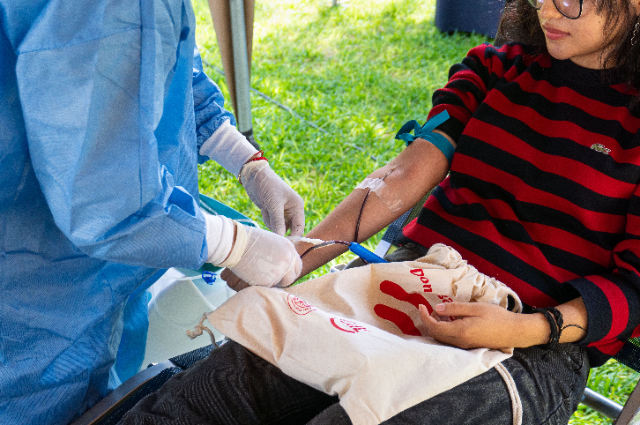
This blend of faith and social responsibility has helped to collect more than 500 units of blood. At the famous Omkareshwar Jyotirlinga temple in Khandwa district, Madhya Pradesh, devotees are being offered VIP darshan in exchange for donating blood. This programme has changed the financial privilege with a social contribution; the programme has transformed a controversial system into a public health campaign, collecting hundreds of units of blood while encouraging voluntary donation.
This initiative was launched in February 2026 under the leadership of Khandwa collector Rishabh Gupta, in collaboration with the health department, to tackle the recurring shortage of blood in the district. For the convenience of the pilgrims, a blood donation camp was set up near the temple. Volunteers received refreshments, a certificate, a photo of Lord Omkareshwar along with prasad and, in some cases, their families also received VIP access. The process itself takes approximately 20 minutes, which is much shorter than standing in a long queue for 2-4 hours.
Why was this scheme introduced?
India experiences blood shortage particularly during festival time and emergencies, when the demand for blood often exceeds the available supply. Hospitals sometimes are unable to maintain the stock,k especially for the rare blood groups, putting patients requiring surgeries, accident care, cancer treatment, and childbirth-related transfusions at risk.
The Khandwa district administration recognised this problem and saw an opportunity. Omkareshwar attracts thousands of pilgrims every day, creating an opportunity to encourage voluntary blood donation on a large scale. Rather than conducting awareness campaigns alone, officials decided to offer a meaningful incentive, priority darshan, that could motivate healthy individuals to donate blood while preserving the voluntary nature of the programme. According to Rishabh Gupta, a similar incentive-based model already exists in major pilgrimage centres such as Kashi Vishvanath, Tirupati Balaji and Shirdi, making this initiative culturally acceptable.
The objective is to encourage acts of charity instead of commercialising darshan, which benefits society.
Impact
This initiative has exceeded expectations. Within a few months of this launch, it has helped the district by collecting hundred units of blood. As participation continues to grow, the local blood bank reported that it has led to significant improvement in blood availability, helping not only Khandwa but also its neighbouring districts like Betul, Barwani, Dhar, and Burhanpur during the time of need.
Officials have noted an increase in rare blood groups including AB-negative, O-negative, A-negative and B-negative, which are often difficult to procure during emergencies.
In the first half of June, it has collected more donations than other monthly averages. By June 14, Omkareshwar camp generated 497 units of blood, a huge rise from 168 units that was seen back in February, when the initiative was launched. The huge success of this initiative of the Omkareshwar pilot project, it has encouraged more programmes to be introduced at other prominent temples across the state, including the Mahakaleshwar temple in Ujjain. Health officials believe that voluntary donation of the pilgrimage in blood donation camps like this could help improve blood availability across states while promoting the spirit of social service in India.
Despite its success, the initiative has posed ethical discussions. The World Health Organisation suggests that donation should remain unpaid and voluntary; no one can compel you to donate to ensure both safety and ethical practice. While the Omkareshwar temple does not provide monetary compensation, some people questioned if this VIP darshan could still be considered an incentive that can influence people. Others argue that the programme does not force anyone to donate blood. Those who are ineligible or unwilling to donate can still enter the temple through a general queue. This initiative simply replaces the financial privilege of VIP darshan with an act of public service.
The Omkareshwar initiative reflects how religious institutes can contribute to solving public health challenges. It has changed the way we look at VIP darshan; financial privilege is not the only way to receive priority access. By replacing money with voluntary blood donation, the programme has changed the perception that is often criticised for creating inequalities into encouraging compassion towards social services.
References:
- https://shriomkareshwar.org/
- https://timesofindia.indiatimes.com
- https://timesofindia.indiatimes.com
- https://economictimes.indiatimes.com
- https://www.who.int