
For almost three decades, the temple town of Dharmasthala has been known as one of the most holy places in Karnataka, a state in India. Every year, millions of pilgrims visit this place of worship, making it one of the most revered temples in South India.
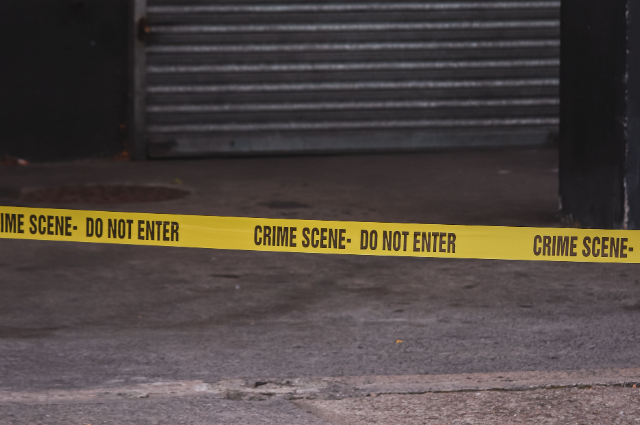
Today, this temple town is at the centre of one of India's most sensational criminal investigations. The reason for this is that a whistleblower has accused it of grave atrocities, prompting the Karnataka government to form a Special Investigation Team (SIT) to investigate these allegations.
A former sanitation worker accused that, during his 13 years of work, he had been secretly burying and burning raped and murdered women and girls who were killed between 1995 and 2014. According to the plaintiff, most of the victims suffered from sexual violence accompanied by suffocation or severe injuries. The worker alleged that he had been under the constant pressure of influential people from the temple committee, who forced him to participate in the cover-up, threatening to kill his family in case of refusal. The allegations stayed under the radar for a long time; however, once the sanitation worker contacted the police and gave the official statement to the magistrate, they launched a comprehensive investigation and registered an FIR. Moreover, the government of Karnataka established a Special Investigation Team (SIT) that is currently probing the accusations of mass rape and murder. It is supposed to shed light on the details of the alleged killings, burial sites, and clandestine burial grounds.
This scandal appeared to be a manifestation of the extreme power dynamics, as the accused killer was not one of the temple’s high-ranking officials, politicians, or bureaucrats. In fact, he was a lowly sanitation worker who was forced to participate in the cover-up at the very end of the crime course. His position and status are arguably the most minuscule layer within the temple hierarchy, which makes the potential involvement in the atrocities even more astonishing.
It must be noted that these are only allegations made by the whistleblower and that these accusations have not been proven in court. The investigation by the SIT into these allegations is the current legal process.
If these allegations are proven to be true, then they will show that the lowest-paid worker can sometimes know the most crucial information about a powerful entity.
Why the allegations matter
Dharmasthala is not just another temple. The temple complex is one of the most socially responsible organisations in India, running many educational institutions, hospitals, and welfare organisations. It is this stature and reputation that make these allegations so shocking.
When allegations are made against an organisation that enjoys immense public trust, such accusations can trigger a much broader debate than just one criminal case.
At the same time, one must remember that allegations are not evidence. Thus, an impartial and independent investigation into these allegations is essential, especially considering the gravity of these accusations.
Soon after the whistleblower came out with these allegations, Karnataka Police registered a case against the temple complex. Subsequently, the state government formed a Special Investigation Team (SIT) in July 2025 to probe these allegations. The SIT was tasked with visiting the locations mentioned by the whistleblower and collecting evidence.
The investigation team visited many of the places mentioned by the whistleblower. It is reported that the teams searched forests, riverbanks, and other remote areas to find any evidence of the alleged murders. It is in these areas that the teams found some human skeletal remains.
However, it must be noted that these remains must be tested to determine whether they belong to the people the whistleblower mentioned or not. Thus, the discovery of these remains does not confirm the allegations of rape and murder made by the whistleblower.
Investigating alleged crimes that occurred almost three decades ago is not an easy task. Much of the evidence may have disappeared or become unusable, and many witnesses may have forgotten crucial details.
Moreover, if human skeletal remains were found in some of the remote areas mentioned by the whistleblower, then it will take much time to determine who these people were and how they died. These challenges in the investigation explain why the allegations made by the whistleblower have become so fascinating. They are so interesting because they show how difficult it can be to investigate old crimes. At the same time, these allegations also show how much the truth can sometimes depend on one person's words.
If the SIT investigators find no evidence to support the whistleblower's allegations, then it will be even more challenging to determine whether these allegations are true or not.
Thus, the investigation into these allegations is a fascinating one, as it demonstrates the limitations of criminal investigations.
The temple's response
The temple authorities have denied these allegations and said that they are committed to a fair and transparent investigation into these allegations. The authorities have asked the whistleblower to provide evidence to support his allegations. It is also reported that some legal action has been taken against the whistleblower for spreading false information about the temple complex.
As in all criminal cases, it must be remembered that a person is innocent until proven guilty. Thus, in this case too, merely registering the FIR or forming an SIT does not indicate that a person or an institution is guilty.
Whether or not these allegations are proven to be true, this case reveals one essential truth about power and accountability.
In many ways, the most powerful people and institutions derive their power from the fact that many people do not question them because they are empowered. These people make it extremely hard to hold them accountable because these institutions can remain in positions of power for extended periods. Hence, the most shocking revelations often come from the most unexpected places. These can be people who are employed to serve these powerful entities, such as drivers, cleaners, security personnel, or sanitation workers.
When such revelations occur, those in power can sometimes silence these people to prevent further scrutiny. If the allegations made by the whistleblower turn out to be true, then this case will demonstrate the cost of challenging the powerful for those who have significantly less influence and protection.
On the other hand, if these allegations turn out to be false, then this case will show that even the most damaging allegations need to be independently investigated before concluding that a person or an institution is guilty.
Ultimately, this case is not just about one whistleblower or one temple complex. It is about one of the most crucial tests of India's democratic institutions. At this time, the most important thing is that this case is investigated thoroughly and transparently. At this stage, these are only allegations made by one person, and no court has determined that these allegations are true or that any person or institution is guilty.
However, one thing is clear: one sanitation worker, who was perhaps one of the most powerless people in this temple complex, has become the most visible person in one of India's most sensitive investigations.
References:
- https://indianexpress.com
- https://www.financialexpress.com
- https://www.financialexpress.com
- https://www.onmanorama.com
- https://www.indiatoday.in
- https://www.indiatoday.in