
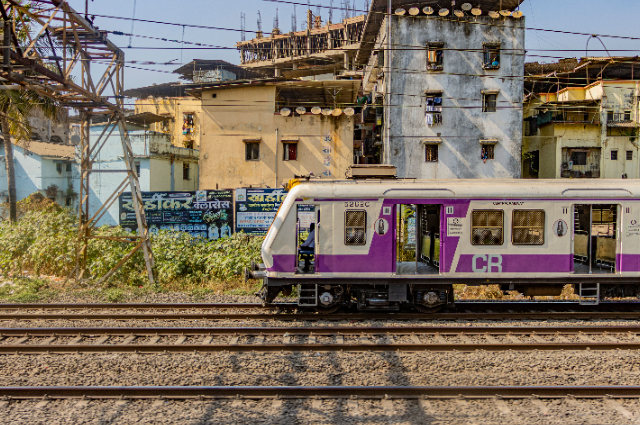
Mumbai, known for its suburban railway network, is also known as the city's lifeline, carrying millions of commuters every day through one of the busiest railway networks in the world. Every day,y countless office workers, students, and daily wage earners use Mumbai railways as their mode of transportation; for them, it has become a part of their daily life. Arguments over seats, space, and open train doors are very common in overcrowded trains. However, a tragic incident involving Mayank Lohar, aged 21, has raised a serious concern over how safe passengers are across the Mumbai railway network.
On the night of June 23, what began as an ordinary train journey turned into a terrifying act of violence. According to the GRP, the victim, Mayank Lohar, a 21-year-old salesman, was returning home after completing his shift at a Westside store in Andheri West. He was travelling in a first-class compartment of a Churchgate-Nalasopara fast local train (Train No. 90663) at 10:43 PM. An argument broke out between him and another passenger over whether the compartment door should be closed during heavy monsoon rain.
According to the police investigation, minutes after boarding, Mayank requested another passenger to close the door because of heavy rain and to prevent the rain from coming inside. Within moments, this disagreement turned into a heated argument between them.
What actually happened from the perspective of an eyewitness?
Both the alleged accused Suvarna and the victim Mayank were standing near the compartment door. Suvarna wanted to keep the door open, but the rainwater was coming inside, so Mayank shut the door. This led to a heated argument among them, and Suvarna struck Mayank, to which he retaliated in self-defence. Shortly, other passengers tried to manhandle Suvarna; according to the eyewitness, he appeared humiliated after other passengers intervened, he took out a knife, commonly known as suri and. He stabbed Mayank on his abdomen and chest. At the Borivali station, he took his belongings, jumped off the train and ran away. The whole compartment was covered in blood; the passengers called the team of GRP and RPF personnel from the platform. The stretcher was brought in, and Lohar was taken to the casualty emergency room of Borivali, later shifted to Shatabdi Hospital in Kandiwali.
Soon after this incident, Borivali Government Railway Police (GRP) started the investigation; officers examined around 400 CCTV camera footage from Andheri, Mira Road and Nallasopara railway stations, as well as surveillance cameras at nearby entry and exit points. They questioned the passengers who witnessed the incident and traced the movements of the accused after he escaped Borivali station.
Later that night, after the incident, Survarna reached home and told his father about his involvement in the altercation but didn't give much information about it. Scared of getting caught, he left his house and attempted to flee Mumbai for Karnataka before being tracked down by the police. Within a day, police arrested Roshan Suvarna, a30-year-oldd cargo worker, from Panvel. The police registered a murder case against him, and further investigation is underway with the weapon that is yet to be recovered.
This incident leaves a question for commuters: how can such a small disagreement over a train door lead to someone's death?
More than 7 million people are dependent on Mumbai local trains for their commute to home and work. Every day they face overcrowding, disputes, and train delays, yet after facing these challenges, they still share mutual support, sharing seats, helping fellow passengers during emergencies, for which Mumbai locals are known.
This incident not only raises the question of passengers' security and safety, especially during the night, but also raises a question of whether stronger security is needed inside local trains, including deployment of RPF personnel, expanded CCTV surveillance, and faster emergency responses.
We are not only talking about this case. This incident became the second deadly stabbing on the Mumbai suburban railway network. Earlier this year, there was another incident that happened in February; a 31-year-old college lecturer, Alok Singh, was sta; bed 31-year-oldaltercation, while trying to alight at Malad station. Police arrested the accused in that case as well.
Both the cases had different circumstances, but they reflect the social concern that everyday disagreements among passengers are getting more volatile. Whether triggered perhaps by overcrowding, stress, long working hours, or waiting for the train, even small arguments are escalating into physical fights. Public spaces where people share the same space every day become vulnerable to such confrontations.
The death of Mayank Lohar is more than just an isolated case; it raises the question about the safety of millions of passengers who rely on the Mumbai suburban railway network. Can they truly feel secure if even a minor disagreement over something as ordinary as a train door can turn into a fatal murder incident? Are CCTV alone sufficient to protect passengers from such incidents, or do we need more cases like this before increasing the deployment of GRP personnel to prevent such incidents? While the arrest may bring legal accountability, but they can’t undo the life of the victim or erase the fear such incidents create among millions of daily commuters.
References:
- https://www.hindustantimes.com
- https://timesofindia.indiatimes.com
- https://www.indiatoday.in
- https://www.hindustantimes.com