
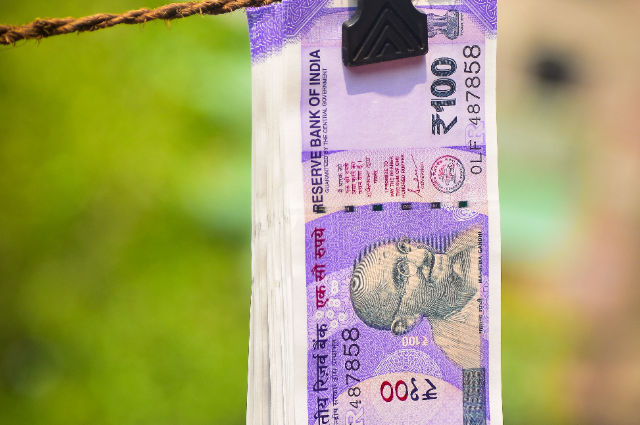
The weakness of the Indian rupee in 2026 has proven difficult to explain in purely dollar terms. The rupee hit a record low of around ₹96 per U.S. dollar in May and remained near that level in September. On September 24, it closed at ₹95.955, as higher oil prices, global bond yields and geopolitical uncertainty added pressure.
The tariff story looms large in the background. In 2025, the United States imposed tariffs of as much as 50% on Indian goods, making India one of the countries most exposed to Washington's new trade regime. By December 2025, Reuters described the rupee as the currency hit hardest by U.S. tariffs, with the currency already down about 6% against the dollar that year and foreign investors pulling billions of dollars out of Indian equities. In February 2026, the United States announced an agreement reducing the tariff on Indian goods from 50% to 18%, while India agreed to stop purchasing Russian oil and reduce trade barriers.
Why did the rupee remain under pressure even after the headline tariff rate was reduced?
The United States is one of India's most important export markets. When Washington raised tariffs on Indian products, the immediate concern was that Indian goods would become more expensive for American buyers. The sectors most exposed were textiles, apparel, gems and jewellery, seafood, leather and other labour-intensive export industries. Analysts warned in 2025 that higher tariffs could reduce export volumes and put pressure on employment and economic growth in some of these sectors.
For the currency market, however, the effect is more complex than simply saying "fewer exports" equals a weaker rupee. India earns dollars when it exports goods and services. Those dollars eventually enter the country's foreign-exchange ecosystem. If exporters receive fewer dollars because American demand falls, or if investors expect export earnings to weaken, the supply-demand balance in the currency market can shift.
At the same time, Indian companies still need dollars to pay for imports. That creates a basic pressure point: less confidence in future dollar earnings combined with persistent demand for dollars can weaken the rupee. The tariff shock also affected investor sentiment. Foreign investors do not look only at India's domestic growth rate; they also consider whether companies can maintain profits when their access to important export markets becomes more expensive.
In 2025, foreign portfolio investors withdrew substantial amounts from Indian equities as tariff uncertainty intensified. Reuters reported in December that equity outflows had reached about $18 billion while investors waited for clarity on a U.S.-India trade agreement. The United States reduced the headline tariff from 50% to 18% in February 2026. Yet the rupee later hit a new record low near ₹96 per dollar. By May, Reuters identified two particularly important pressures: high oil prices and persistent portfolio outflows. The rupee fell to a record low of ₹95.9575 on May 14, with the deterioration in India's external balances adding to the pressure.
Oil is particularly important because India imports a large share of the crude it consumes. When crude prices rise, Indian refiners need more dollars to buy the same quantity of oil. That increases demand for dollars in the foreign-exchange market. The effect can become particularly powerful when geopolitical tensions simultaneously increase oil prices and make investors more cautious about emerging markets.
On September 24, rising oil prices and limited progress in the U.S. Iran negotiations pushed the rupee to a one-week low. Higher global bond yields added another layer of pressure as investors increased expectations of further interest-rate increases in the United States. A higher oil bill can widen the trade deficit, increase demand for dollars and place pressure on inflation and government finances. If oil prices rise sharply enough, the currency can weaken even when other parts of the economy remain relatively strong. On September 21, Reuters reported that lower oil prices and portfolio inflows provided some support to the rupee. But dollar demand from importers, particularly oil refiners, limited its recovery.
Capital flows matter almost as much as trade flows for a modern emerging-market currency. India has spent decades becoming increasingly integrated with global capital markets. The Reserve Bank of India describes the post-1991 period as one in which India progressively liberalised its external sector, moved toward a market-based exchange-rate system and encouraged foreign investment. When foreign investors buy Indian shares or bonds, they bring foreign currency into the country and convert it into rupees.
This distinction matters in India's case because the country's growth story and currency story are not necessarily moving in the same direction. The rupee has followed a long-term depreciating trend against the dollar, although the pace has varied sharply across periods.
The important question is, therefore, not simply why the rupee depreciated, but why the pace and persistence of depreciation became unusually pronounced. Then there is Pakistan; the more unusual part of the story emerges when the rupee is compared not with the dollar, but with Pakistan's currency. The Pakistani rupee went through a severe crisis in 2023, when shortages of foreign currency and macroeconomic instability pushed the currency sharply lower. Since then, Pakistan has stabilised its exchange rate considerably.
In September 2026, the Pakistani rupee was trading around 277 per U.S. dollar, with market reports linking its stability partly to balanced dollar demand and supply and the ongoing International Monetary Fund programme.
In late May 2025, ₹1 was worth roughly 3.29 Pakistani rupees. By September 2026, it was around 2.89–2.90 PKR. That means the Indian rupee has lost roughly 12% of its value against the Pakistani rupee over that period. That does not mean the Pakistani economy has suddenly overtaken India's, nor does the exchange rate by itself provide such a conclusion. It does, however, demonstrate something important: the rupee's weakness is not solely a story about the U.S. dollar.
Its currency crisis forced a severe adjustment in the country's external accounts. The IMF programme has involved fiscal reforms, monetary discipline and measures aimed at rebuilding external stability.
By September 2026, Pakistan's rupee was trading in a relatively narrow range around 277 per dollar, while an IMF review was under way. Pakistani officials and market participants were looking toward successful completion of the review as a source of further external financing and macroeconomic stability.
India, by contrast, has not been operating under an IMF stabilisation programme. Its currency weakness is occurring alongside a much larger and more diversified economy, substantial foreign-exchange reserves, a flexible exchange-rate framework and continued access to international capital. India's merchandise exports rose 26.1% year-on-year to $43.8 billion in August 2026, while the merchandise trade deficit narrowed to $26.9 billion from $32 billion in July.
Exports to the United States rose 21.8% year-on-year in August to around $8.3 billion. Part of the explanation is that the tariff burden faced by Indian goods was substantially lower in 2026 than during the 50% phase of 2025. The weaker rupee also makes Indian goods cheaper in foreign-currency terms, which can partially offset tariff costs for exporters.
A weaker currency helps exporters only if foreign demand remains strong enough to absorb their products. And for an economy that imports large quantities of crude oil, machinery, electronics and other goods, currency depreciation simultaneously raises the rupee cost of imports. The same exchange-rate movement can therefore help one side of the economy while hurting another.
The Reserve Bank of India has also been trying to prevent excessive volatility. Rather, intervention can be used to smooth disorderly movements and provide liquidity when demand for dollars becomes unusually strong. In May, state-run banks were reported to have sold dollars, likely on behalf of the RBI, helping keep the rupee from falling below the ₹96 level.
The central bank has also taken steps to attract foreign-currency flows. By July, RBI measures introduced earlier in the year had reportedly attracted around $41 billion through various channels, while government measures designed to encourage foreign investment in Indian debt had attracted approximately $7 billion, according to Reuters.
India wants sufficient foreign capital to support investment and the balance of payments, but it also has to manage the consequences when global investors become more cautious. The 50% tariff shock mattered because it changed expectations. Currency markets respond not only to what is happening today, but also to expectations about future trade, investment and foreign-exchange earnings.
The tariff dispute created uncertainty around India's access to its largest export market. That uncertainty contributed to investor outflows and concerns about India's external balances in 2025. Reuters explicitly linked the rupee's 2025 weakness to the combination of the 50% tariff, a widening trade deficit and foreign investment outflows. The rupee was under pressure even as India's merchandise exports were growing strongly. At the same time, oil prices and global interest-rate expectations were putting pressure on currencies across emerging markets. That means the rupee's performance is better understood as the result of multiple overlapping external and domestic pressures, rather than one policy decision.
The Indian rupee has always been vulnerable to India's external financing needs. That vulnerability does not automatically indicate an economic crisis.
For a rapidly growing economy with substantial imports, a large energy bill and increasingly open financial markets, some depreciation can be part of the normal adjustment process.
But persistent depreciation becomes more consequential when it combines with rising import costs and capital outflows. The key distinction is therefore between orderly depreciation and destabilising depreciation. A gradual decline can help maintain export competitiveness and accommodate differences in inflation between India and its trading partners. A sharper decline, particularly when driven by capital flight or a sudden deterioration in external financing conditions, can feed into inflation, raise the cost of servicing foreign-currency obligations and undermine investor confidence.
The rupee's movement toward ₹96 per dollar therefore deserves attention not because ₹96 is a magical economic threshold, but because the currency has remained near that level despite measures intended to support dollar inflows.
India's challenge in 2026 is therefore not simply to defend a particular exchange-rate number. It is to maintain confidence in the country's ability to generate sufficient foreign-currency earnings and attract stable capital while managing its dependence on imported energy. The 50% U.S. tariff exposed one part of that vulnerability. The subsequent fall of the rupee, even after the tariff was reduced, has exposed the rest.
The rupee's problem in 2026 is not that one tariff pushed it down. It is that a tariff shock collided with an economy already exposed to oil prices, global capital flows and the relentless demand for dollars.
References:
- https://www.reuters.com
- https://www.reuters.com
- https://www.reuters.com
- https://m.economictimes.com
- https://www.business-standard.com
- https://m.rbi.org.in//scripts/bs_viewcontent.aspx?Id=2253
- https://www.reuters.com