
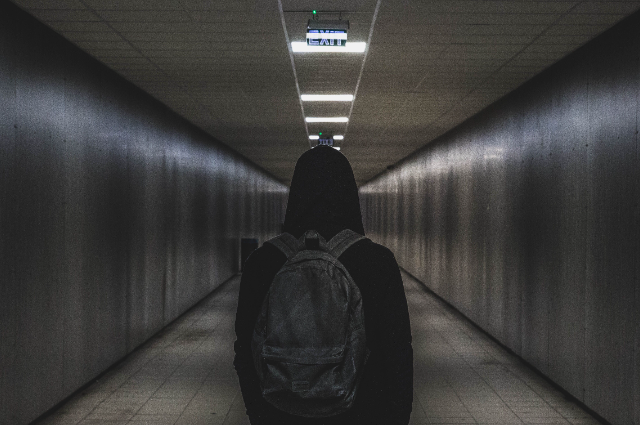
There are times we wonder how something so new feels so familiar. The same place, the same face, the same conversation—familiarity consumes the entirety, yet feeling lost remains its identity. There are moments when people wander through thoughts they have never been introduced to before, only to be met with a strange sense of recognition that nobody can quite explain. It feels like taking a trip down memory lane, yet no archives of the past were ever recorded. This peculiar experience is known as deja vu, the unsettling sensation of reliving a moment that has never truly been lived before.
Fragmented patterns emerge, resembling the false familiarity of a place your mind somehow remembers despite having never been there, stirring emotions you can't quite understand, for yearning awakens in a place that has never seen the light. We keep tracing the phantom of memories that never really happened, and maybe that’s why our souls cry when we learn that it’s just the wind howling the illusion of having lived twice beneath the same sky. Perhaps the mind is not searching for a forgotten life but assembling bits and pieces of the one already lived. A passing scent, a reverie of sunlight through the windows, the cadence of a stranger's voice become puzzle pieces stitched in an unfamiliar moment. Maybe the mind mistakes resemblance for remembrance, convincing itself that the present belongs to the past.
Countless minds have fallen into this rabbit hole, chasing certainty only to discover that every answer is merely an apparition wearing a mask of familiarity. It is like grieving a loss that can not be reclaimed, not because it was taken away, but because it was never there to begin with. Perchance that is the paradox of deja vu: the heart reaches for the memory the mind never possessed. While no single explanation has unravelled the mystery, psychology suggests that deja vu may arise from a fleeting mismatch in the brain’s processing of memory, where the present is momentarily mistaken for the past, allowing familiarity to arrive before remembrance ever has.
One might wonder whether déjà vu is not meant to be unravelled but experienced, reminding us that the mind is capable of painting familiarity where none exists. It leaves us chasing echoes, mourning memories that were never ours, and searching for meaning within moments that refuse to explain themselves. So when a foreign place greets you as an old friend, or a fleeting moment hugs you as though it has missed you all along, ask yourself: Do you get déjà vu?
References:
- Clinic, C. (2025, June 17). That strange feeling of déjà vu — explained. Cleveland Clinic. https://health.clevelandclinic.org
- Manning, A., & Manning, A. (2026, March 2). Déjà vu and feelings of prediction: They’re just feelings. College of Natural Sciences. https://natsci.source.colostate.edu
- Neurominded. (2023, August 29). Déjà Vu: The neuroscience behind the mysterious phenomenon. Inspire The Mind. https://www.inspirethemind.org
- Raypole, C. (2020, March 30). What Causes Déjà vu? Healthline. https://www.healthline.com
- Therapist.com. (2026, January 23). Déjà vu: What it is and why it happens. https://therapist.com