
Many of us love to travel, to discover new places, and embark on long journeys, whether by bus, ship or simply by road. But nowadays the very idea of travelling has become intensely complicated. Be it geopolitical tensions, border restrictions, or the ever-evolving visa regulations, a simple journey seems quite impossible.
The very simple idea of travelling to a new destination, the art of waiting to see what unfolds next, the culture that is unknown to us, and the sheer beauty of nature have been minimised now.
And this brings us to one of the most remarkable and historic bus journeys that ever happened: the legendary bus service from London to Calcutta.
A Road Trip Like No Other
Imagine a bus journey spanning thousands of kilometres, connecting two countries that are separated by continents, oceans and miles of land, and that too in the 1950s, at a time when travelling from one place to another was more difficult with limited technological innovation, slower international communication, and travelling being pretty expensive, especially for ordinary people; such a service seemed almost impossible.
And yet it existed, and that is what makes the story so fascinating.
The bus, named “Albert”, operated between London and Calcutta and ran for almost 20,000 kilometres, es taking 110 days to complete the entire journey. It crossed several major regions of the Indian subcontinent, from Pakistan, Afghanistan, and Iran to European regions like Bulgaria, Yugoslavia, West Germany and Belgium, eventually leading up to our final destination, London. The bus passes through the country’s most iconic cities like Delhi, Agra and Benaras.
The first trip took place from Victoria Albert Station in London. In 1957, a one-way ticket price was around £,85 which later rose to £145 by 1973 and was inclusive of food and lodging.
Accommodation Facilities
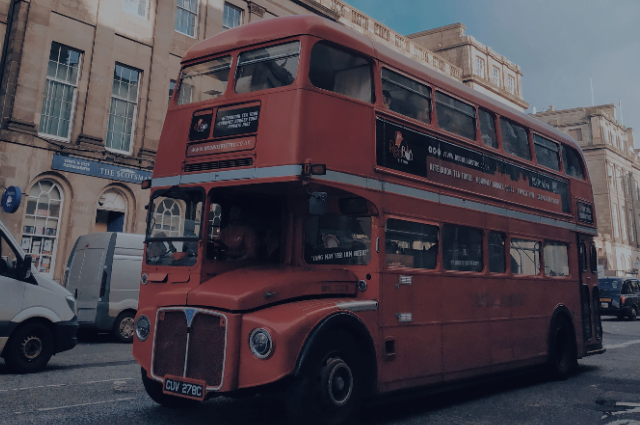
Albert was a double-decker bus and quite spacious in itself. The lower deck consisted of a reading room and a dining lounge. The upper deck housed an observation room which gave a glimpse into the outside beauty. There was a huge kitchen space for the passengers to enjoy their meals.
Special arrangements were made to ensure that the passengers enjoyed the journey. From playing music over the radio to on-board parties, all was organised to keep them entertained. The bus halted at various locations to show the passengers the popular spots and informed them about the history and significance of those sites.
The Hippie Trail On Wheels
The journey took passengers through some of the wonderful sites such as the iconic Taj Mahal, Rajpath, the mesmerising and tranquil ghats of Benaras, and the tribal communities of Afghanistan, the Golden Horn situated in Turkey, and beautiful places in Bulgaria. It crossed the Caspian Sea, the Danube River, and even the magnificent Rhine Valley.
This route came to be called the Hippie Trail as it offered an adventurous and unique experience. It attracted free-spirited people who wanted to see every corner of the world. It covered 11 countries and provided the opportunity to experience diverse cultures, taste a variety of cuisines, and visit landmark sites. It reflected the lifestyle of a hippie who was known for their enthusiasm and freedom.
It was earlier known as ‘Indiaman’ before it was renamed to ‘Albert’. The Indiaman suffered from a grave accident after which it became inoperable. It was Andy Stewart, a British traveller w, who later on bought the bus and took over the job of fixing it so that it once again became functional. He was the one to name it ‘Albert’.
The Albert, which began its journey in 195,7 soon came to a stop in 1976. The reasons behind its discontinuance can be attributed to the Middle East conflict, especially the Iranian Revolution of 1979.
Will this iconic journey make a comeback?
A revival of this iconic journey was announced by Adventurous Overland, a Gurugram-based travel company, in 202,0 and they formulated a plan to commence this journey from Delhi to London through a route that would run along Southeast Asia and Central Asia, leading up to London. However, post-pandemic, such plans came to a halt, raising concerns over global travel restrictions. Till now, no further discussions have taken place regarding this, but we can hope for its reintroduction.
References: