
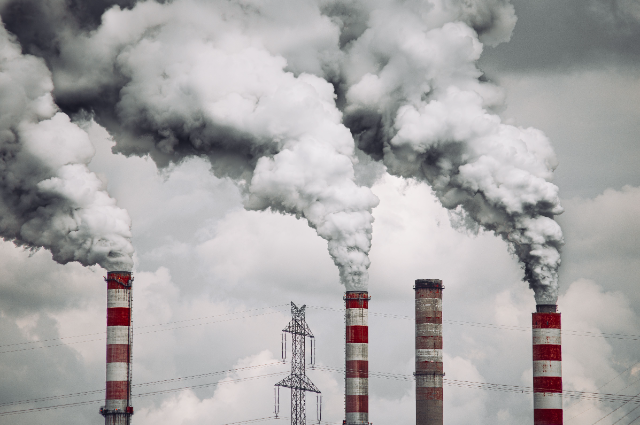
Environmental Performance is one of the persistent challenges that the world faces today. The biennial index presented by the Environmental Performance Index (EPI) helps countries to assess their global carbon consumption, air quality, pollution and several other factors that are linked to environmental sustainability.
India’s EPI Report of 2026
Environmental Performance Index (EPI) for the year 2026 is finally out, and India’s results are dangerously concerning.
India’s EPI has drastically reduced since 2016, with its rank of 141th to the worst-performing country at 180th in 2022. This year’s rank has improved since 2022, but it is concerning in a different light, as the reports of both EPI 2024 and EPI 2026 indicate stagnant environmental improvement.
India’s 2026 rank stands at 176th among 177 countries, making it the second lowest-performing country after Laos, which occupies the lowest row in the list. India has consecutively ranked 176th in 2024 and 2026. While India’s score was 22.46%, Estonia peaked with a score of 74.79%.
It’s distressing and shameful at the same time,e as this year’s EPI report exposed India’s position as the 7th nation among Southeast Asian Countries.
Concerning Areas exposed in 2024 and 2026 EPI Report
Reports indicate that India has performed significantly well in the categories of climate change, holding the 130th position, and waste management and sanitation. The concerning factor is the air quality and the maintenance of biodiversity. Forest cover, fishery and pesticide pollution are also some of the factors to which India should provide more attention.
As per 2024’s EPI reports, India held 174th position in environmental health, 171st in ecosystem vitality,d and 178th in Biodiversity.
This statistic poses a serious threat to India, which has always been home to numerous biodiversity sites. Protecting these sites should be a vital objective on our list.
Air quality has been deteriorating considerably, with soaring AQI across major cities in India like Delhi, Noida, Gurugram and other parts of Haryana and Bihar, with high concentrations of particulate matter reaching up to a level of PM2.5. Thus, EPI’s indicators do point towards serious issues which require stricter measures.
Reasons behind India’s Environmental Degradation
India has been developing over the last few years, and rapid growth and urbanisation in India have been pointing towards a more developed country, but at the same time serious environmental consequences have troubled the state and its people.
Chronic urban air pollution has accompanied development simultaneously, which has led to a sharp rise in per capita greenhouse gas emissions. Moreover, consumption of huge amounts of coal for generating electricity still persists today.
“Research conducted unscientifically”, says Union Ministry
The Union Ministry of Environment, Forest and Climate Change has raised questions on whether such reports have been published following proper scientific methods and surveys. Despite this, uncertainty about the future persists with the declining rank of environmental sustainability in India.
In a statement made by Anjal Prakash, author of the UN special report on climate change and cities, he claims that the report has not been conducted systematically and objectively and has ruled India as the lowest-performing country by comparing it on a surface level with the richer Western countries ranked as having better alowest-performingt methods of controlling pollution.
However, this report is a signal for us to wake up and consider sustainability more seriously and work up strict regulations to manage it. It has also missed out on several factors while considering this report, like population density, the lack of access to resources and infrastructural constraints coupled with economic problems.
Climate Activist Harjeet Singh has pointed out that one serious problem with the Indian population is that they are viewing this as inevitable as a result of development, and by this they are oversimplifying the risk factor. It needs to focus more on combating environmental degradation.
Initiatives introduced by Government to preserve environmental health
Several Initiatives have been taken up by the Government of India as listed below, but enforcement of these missions is also a challenge.
- National Clean Air Programme launched in 2019
- Mission LiFE (Lifestyle for Environment) launched in 2022
- Ek Ped Maa Ke Naam launched in 2024
EPI’s Journey and Objectives
EPI stands for Environmental Performance Index; initially known as Environmental Sustainability Index (ESI) was started in 2002 by the World Economic Forum to conduct a survey on environmental sustainability globally every 2 years.
This report is a product of the survey conducted jointly by the Yale Centre for Environmental Law and Policy and the Centre for International Earth Science Information Network, Columbia University. This year’s report was executed on the basis of 47 indicators across 12 categories. Major indicators of EPI are climate change performance, environmental health and ecosystem vitality.
Thus, several schemes and projects should be undertaken for the environmental well-being of the country and its citizens, not just to improve its rank on the globalabout athe ctually preserwell-being Natural Diversity.
References: