
In every dream of life, travelling across the world, from one end to the other, has sounded impossible, but it was once done, in the early days of 1957. Man has been able to create and engineer moving machinery for day to day transporting.
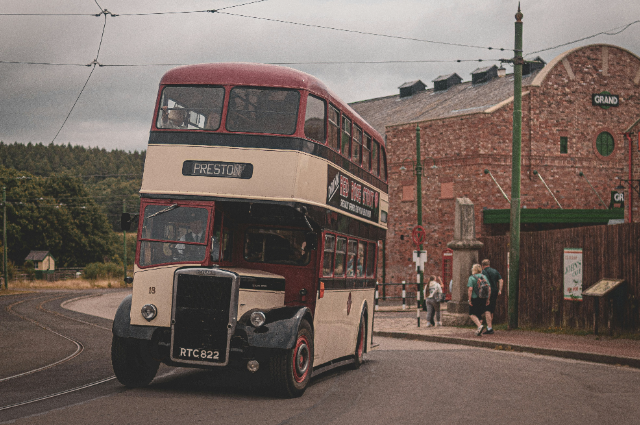
One of which is the Albert: The double-decker bus which explores Europe and Asia.
Albert, the bus service, also known as the Indiaman or Albert Travel, journeyed from London through Belgium to Calcutta (now known as Kolkata) in India through the Hippie route. (East India Story)
The Hippie route was an overland journey derived by members of that lifestyle in the 50s and 70s, travelling through Europe to West Asia via other countries in between. Its sole purpose was to create a form of alternative tourism which was cheap. This journey was anything but cheap, costing £145 for the journey. (Secret London)
The hippie trail ended in the late 70s primarily due to both the Iranian Revolution resulting in an anti-Western government, and the Soviet invasion of Afghanistan, closing the route to Western travellers.
The bus journey from London to Calcutta was considered to be the longest route in the world, with 20,000 miles and 12 countries in just 50 days, passing through European countries, Belgium, then India through Germany, Austria, Yugoslavia, Turkey, Pakistan, Iran, Afghanistan, and North Western India.
On April 15, 1957, the bus was driven by a man named Oswald-Joseph Garrow-Fisher. The bus was built as a double-decker, to include sleeping compartments, a kitchen, reading facilities, etc. This made it more than just a bus, and more like a mini apartment on the road.
The passengers were a couple of different races, who were explorers from Europe, North America, and Australia searching for cheaper means of travel. The journey felt more like a tour as the passengers travelled across countries, sightseeing places like the Taj Mahal, Caspian Sea Coast, Khyber Pass, and so much more. (Secret London).
The Journey came to an end on June 5th 1957, 50 days later, in Calcutta, India. The Indiaman took on several journeys afterwards, with 30 operators passing through the route, crossing 150 borders without any security hassle.
Unfortunately, the service came to its untimely end when it got involved in an accident, causing it to be unstable to operate.
The Transformation
Andy Stewart, a British traveller, obtained the Indiaman and transformed it into a double-decker mobile home, which embarked on its journey on October 8, 1968 and lasted 132 days. This time, the journey took its start from Sydney, Australia, to London, but still passing through India. (Get Bengal).
Albert Travel continued the journey from London to Calcutta, and included other routes: Burma, Thailand, and Malaysia before reaching Singapore. From there, the bus was transported by ship to Perth, Australia and continued on the road to Sydney.
But once more, it met its untimely end this time; as stated earlier, due to the overland difficulties and political unrest in the Middle East during the 1970s that ended with the 1979 Iranian Revolution and Soviet–Afghan War. (Indian Yug)
The bus was then tossed around different owners for 33 years before it returned to Andy in 2009. He refurbished it alongside his friends and took the bus on one more trip. Their route started from Glasgow through East Asia, but was cut short in France, where Andy sold the bus for the last time. (Messy Nessy)
In a report, Andy said they were always welcomed wherever they went, and this was because people were excited to see the green and cream double decker passing through. Albert broke barriers and boundaries, gaining interest and attention from people across these countries.
The journey encountered several challenges, including torrential rain, dust, and sandstorms. There were also times when the bus would sink into the desert sands, and plans had to be made to avoid that happening.
Present Day
The journey was discontinued after the one-way trip Andy and his friends took in 2012, but decades later, a new company, Adventures Overland, founded by Sanjay Madan and Tushar Agarwal, would try to resurrect the idea.
The company was founded in 2012, after a question was asked, “Can we drive from New Delhi to London?” They had their answer in 90 days, and earned a Guinness World Record. This would then lead to two other records and the replication of the Hippie Trail. (Adventures Overland).
In 2020, they announced a new route: Bus to London, which was sold as a trip from New Delhi to London via Myanmar and China, aiming to replicate the Hippie Trail that Albert Travel followed, but the pandemic delayed it until August 2023 due to entry restrictions and health conditions worldwide. It has still not reopened because the land borders of Myanmar and China remain closed to visitors (Bus to London).
As the exact route is now indefinitely postponed (as it is stated on the official Bus to London website), Adventures Overland found two different workarounds, one from Istanbul to London, eliminating the Indian connection and another which traded the bus for a self-drive convoy, rerouting the 65-day journey covering 20 countries from Gorakhpur, India through Nepal, Central Asia to Europe. Hence, keeping the Indian connection alive. (Adventures Overland).
The idea started with Albert, and despite its challenges over the decades, it did not kill the concept that it was possible to travel from one part of the world to another.
References:
- 22. Bus to London (official site)
https://bustolondon.in - Messy Nessy Chic – "All Aboard the Giant Hippie Bus from London to Calcutta"
https://www.messynessychic.com - Secret London – "The Bus Service From London To India Was Once The Longest Bus Route In the World"
https://secretldn.com - GetBengal – "The bus route between Calcutta and England that crossed 150 borders!"
https://www.getbengal.com - East India Story – "London to Calcutta by Bus"
https://eastindiastory.com - IndianYug – "London to Calcutta Bus Service, the Longest Bus Route in the World"
https://indianyug.com - Adventures Overland – "India to London by Road" (Road to London product page)
https://www.adventuresoverland.com. . .