
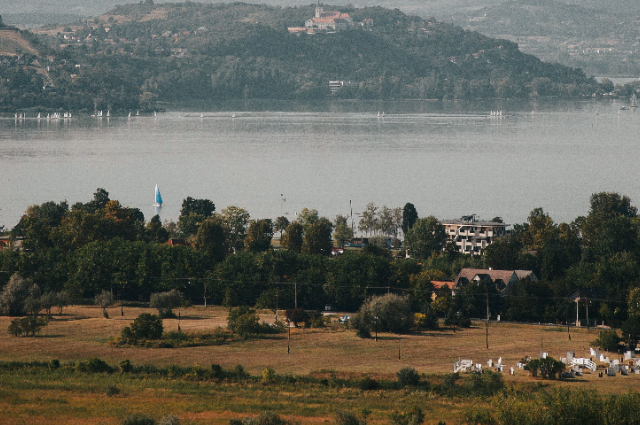
If you walk through villages from one point to another, in each village you encounter, the languages sound exactly like the one you just came from. There’s a slight difference as you walk through, though; in vowels, pronunciation and sometimes one or two words change. But by the end of your journey, the language changes significantly in the last village, making it difficult for someone from the first village to understand.
There is no single point where a language starts or ends. Linguists have described this phenomenon as the dialect continuum. A chain of non-standard dialects A B C D E spreading over a geographical area, such that neighbouring dialects (e.g. B & C) will be quite similar but non-neighbouring ones (e.g. A & D).
Language is a system of conventional, spoken, manual or written symbols by means of which human beings, as members of a social group and participants in its culture, express themselves. Henry Sweet, an English phonetician and language scholar, stated that “Language is the expression of ideas by means of speech-sounds combined into words. Words are combined into sentences, this combination answering that of ideas into thoughts.”
Heeringa and Nerbonne’s article on dialect areas and dialect continua addressed this by comparing 27 Dutch towns, discovering a variation range of 65% - 81% with the introduction of a technique called a dialectometric technique, which helped view dialectal differences and provided an additive measure of pronunciation difference (Heeringa and Nerbonne, 2001).
They used the Chambers-Trudgill puzzle, which states that when a traveller walks in a straight line from village to village, he notices successive smaller changes, but seldom observes large differences. It is another justification of the continuum, but it raises a question: might the traveller be misled by the perspective of most recent memory?
The introduction of mountains and rivers as language barriers is a measure of distance. Geographic barriers make communication harder, so when one side changes, it may not affect the other, and soon there is a drift in understanding. The Regional Variation article gives a real-world example using the United States; the boundary between Upper South and Lower South dialects runs along the Appalachian Mountains.
To understand this further, Dialectologists use isoglosses in map variation, which are lines on maps for showing boundaries where a particular feature is being used. When many isoglosses are used, they form a bundle, and that signals a strong dialect boundary. McIntyre stated that these bundles often coincide with physical barriers such as rivers and mountains.
Heeringa and Nerbonne, in their research, found that the borders of well-established dialects show larger variations from what an actual continuum would have. Their result suggests that the dialect landscape could be either a continuum with a varying slope or a continuum with unsharp borders between dialect areas, which also answers the question they derived when using the Chambers-Trudgill puzzle: the traveller may have been misled by the perspective of a recent memory.
While geography’s role is essential, it isn’t the only contributing factor to language differences. Social barriers also impede the spread of features between sociolects. There are social analogues of dialect continua. E.g. in Jamaica there is a cline between Jamaican Creole and more standard English, with various intermediate varieties making it hard to say where English stops and Creole starts, which correlates with social class (McIntyre). Political and religious boundaries can also serve as the basis of dialect boundaries. For instance, the big division between northern and southern dialects in the US corresponds roughly to the Mason–Dixon line.
In Europe, Romance languages descend from regional dialects of Latin and, over a period of time, they formed a single dialect continuum in which two adjacent communities could understand the dialect even though communities at the far end could not. This briefly explains the fact that neighbours understand each other while the ones at a distance don’t.
What does this mean for the world?
Dialects are the natural indications that people exist in a particular place. When two people journey through those villages, they would notice that people understand those closer to them better than when separated by a geographical barrier that changes the dialect enough for two communities to grow apart.
References:
- Heeringa, W., & Nerbonne, J. (2001). Dialect areas and dialect continua. Language Variation and Change, 13(3), 375–400. https://doi.org/10.1017/S0954394501133041
- McIntyre, [initials]. (n.d.). Dialect geography [Lecture notes]. Humboldt University of Berlin. https://www.angl.hu-berlin.de
- Pentangelo, J. (2021, February 26). Regional dialects [Lecture slides]. Sociology of Language, College of Staten Island, City University of New York.
https://soclang2021.commons.gc.cuny.edu - Regional variation. (n.d.). [Teaching material]. University of Szeged. https://eta.bibl.u-szeged.hu
- Robins, R. H. (2026, September 26). Language. In Encyclopaedia Britannica. https://www.britannica.com/topic/language