
World governments operate under three branches: the Executive, Legislative, and Judiciary. Each has its own constitution that protects the people in its territory. Journalism is different: it has no legal backing, but for centuries, it has earned a reputation as a fourth pillar of democracy. It keeps the other arms accountable to the people (Model Diplomat, 2026; Pressbooks, 2026).
Journalism is the collection, preparation, and distribution of news and information to the public. Its purpose is to inform the public and hold those in power accountable through print, video, or the internet. It depends on public trust and press freedom, making it vulnerable to intimidation from those in power, censorship, or public indifference (Grant, 2026).
The World Media Group reported in its journal that more than half of 180 countries and territories face press freedom issues. The World Press Freedom Index reveals the list of countries from most to least that accommodate press freedom (World Media Group, 2026).
The indexes used to assess this indicator cover political, legal, economic, social, and security environments. Journalists are being silenced and threatened all around the world (World Media Group, 2026).
Some cases include: 48 journalists locked up in Russia as of April, 2026, deploying anti-terrorism and extremism laws to restrict press freedom. Another journalist in Hong Kong has recently been sentenced to 20 years in prison under national security legislation, and the United States of America, which ranks 64th on the list, has its fair share in detaining and deporting Journalists (World Media Group, 2026).
Journalists are losing their will to investigate freely and publish without any threats or arrests, and with no legal backing, the art of news telling to the masses could go extinct. This is where the smartphone comes into play.
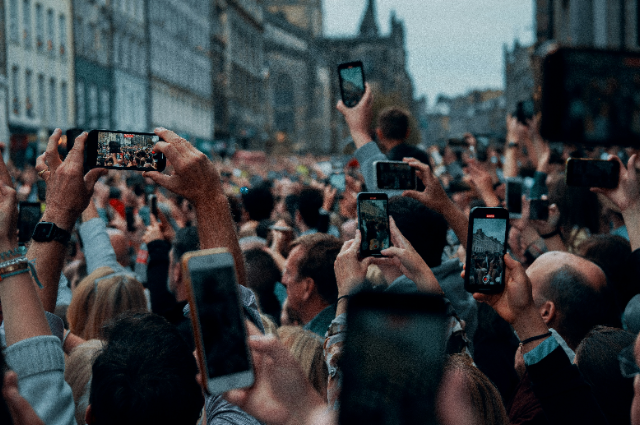
Since the invention of the Internet, smartphones, and social media platforms, every individual has become exposed to the realities of the harsh world they live in. In simple terms, it is called Citizen Journalism, where ordinary people use their phones and social media platforms to capture and share news.
This is shown in blogs, videos, and articles, and is easily becoming the fastest means for communicating news (News Literacy Initiative. (n.d.). In the 2013 Oklahoma tornado disaster, the majority of the news provided was by citizens who acted as eyewitnesses to the scene.
The videos were posted on YouTube, and a Pew Research Centre study examined that the 10 most viewed videos on YouTube combined to 1.8 million views. The most popular video got about 600k views within the first 24 hours and was taken with a smartphone (Pew Research Centre, 2013).
In modern-day times, blogs report on events happening in the world and give citizens f information before they get news from the government. These media outlets run by citizens have also provided information for most, and by researching and investigating properly, they in turn provide journalism-level news to their fellow people.
This gives citizens the power to provide information at a journalism level, and those in power have to be more careful because even those working with them could expose their heinous acts, especially for a government that tries to suppress a story when a couple of tens to hundreds of bystanders witness a scene and take pictures or videos for evidence. Citizen Journalism has its risks.
Some of the cases reported do not go through editors to filter out what seems to be wrong, needs to be fact-checked, or needs more context to portray a full story, as journalists do.
A viral news story spreads fast like wildfire, and if not controlled, it could consume everyone within reach, even the person who started it. Using the smartphone to get the news hidden from the public is great, but what happens when all the news is clickbait, and authenticity is lost?
Journalism matters in the world today; it is built on the trust of the people for the people and sustained by the people by doing the job of keeping those in power accountable. So, whether it is by a newsroom or a citizen passing by with their phone, the news must be brought to the people.
References:
- Grant, T. (2026, September 16). Journalism. In Encyclopedia Britannica. https://www.britannica.com
- Model Diplomat. (2026, June 22). Fourth Estate. https://modeldiplomat.com
- News Literacy Initiative. (n.d.). Citizen journalism. Pennsylvania State University. Retrieved September 28, 2026, from https://newsliteracy.psu.edu
- Pew Research Centre. (2013, May 22). Citizen eyewitnesses provide majority of top online news videos in Oklahoma tornado disaster. https://www.pewresearch.org
- Pressbooks. (2026). The journalist's role in democracy. In Introduction to journalism and news writing. Retrieved September 28, 2026, from https://cwi.pressbooks.pub
- World Media Group. (2026, April 30). 2026 RSF World Press Freedom Index: Press freedom at its lowest point in 25 years. https://world-media-group.com