
As Humans depend on trees for survival, we also depend on them for carbon dioxide exchange. But many factors restrict the cycle, as trees are cut down for different industries, and carbon capture is limited.
Scientists have discovered a more sustainable way to capture carbon, and it has proven even more effective.
The population of Whales, Blue Whales to be precise.
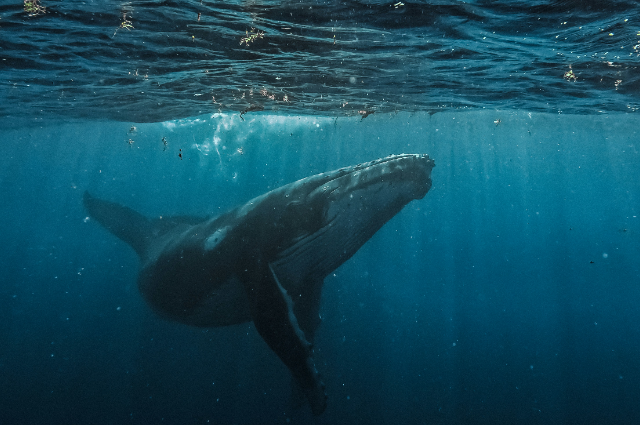
The Blue Whale is the largest mammal in the world, up to 100 feet long and 200 tons, with a heart that's the size of a car. This mammal stores carbon in its body and, in doing so, transports nutrients that support marine food chains.
Carbon is one of the greenhouse gases that are prominent in the atmosphere, with Carbon dioxide ruling as one of its constituents. The introduction of carbon dioxide is due to the burning of fossil fuels, vehicle exhaust, volcanic eruptions, decaying matter and so on.
The disadvantages of carbon dioxide on the Earth are diverse, as the extreme amount of it traps heat in the atmosphere, causing climate change. This can lead to skin diseases, cancer, fatigue and so on.
Carbon capturing is the collection of technologies that can help address climate change by reducing carbon dioxide emissions (Herzog, 2025). And one way to capture carbon is to increase global whale populations.
It is known that trees accumulate carbon in their respiratory cycle, and this helps to balance the carbon cycle in the atmosphere. Whales accumulate carbon in their bodies during their lifetime, and when they die, they sink to the bottom of the ocean. A whale sequesters 33 tons of CO2, taking that amount of carbon out of the atmosphere for centuries.
A tree itself only absorbs about 48 pounds of CO2 a year. The contrast between both organisms is stark, yet one, which is effective, is far more expensive to contain.
Since it has been established that Whales add significantly to the capture of carbon, their protection should be a priority. In the F&D Magazine, it states that biologists have estimated the overall whale population to be now one-fourth of what they once was, and this is as a result of decades of industrialised whaling. The Blue Whale especially has been reduced to only three per cent of their previous abundance.
In order to eradicate carbon dioxide from the ecosystem, whale survival is paramount. But that's just half of the story.
Whales might be large enough to accumulate carbon on their bodies, but the reverse is true for phytoplankton.
They are small, microscopic, plant-like organisms that drift in water and make their energy from sunlight. They are usually found on the surface of water bodies and also where whales live.
They contribute to about 50% of all the oxygen in the atmosphere by capturing about 37 billion tons of CO2, which is an estimated 40% of all carbon dioxide produced.
Small but mighty, you might say. These creatures increase abundantly whenever whales are around, and this is because the waste products from whales are essentially nutritious to phytoplankton. It consists of iron and nitrogen, which are great for their growth.
The largest and one of the smallest creatures in the world are connected to each other through what is called the Whale pump (Yong, 2010). It is a vertical movement through which whales bring minerals up to the ocean surface and, by migrating from one ocean to another, create what is called the Whale conveyor belt.
Even with the abundance of nutrients these phytoplankton get, there are limited amounts in certain regions of the ocean, with one nutrient overshadowing the other.
This is why the whales are needed to keep the balance. They play not just an important, but a crucial role in carbon capture and marine life nutrient cycling, and while the process for sustaining whales is expensive, if whale populations could go back to the way they were before ( 4-5 million, rather than 1.3 million today), there would be a drastic change to carbon dioxide in the ecosystem, and reducing their death rate could be possible.
This includes reducing toxic waste disposal, sewage disposal, plastic waste, oil spillage and so on.
References:
- Chami, R., Cosimano, T., Fullenkamp, C., & Oztosun, S. (2019, December). Nature's solution to climate change. Finance & Development, IMF.
https://www.imf.org - CIWEM. (2025, August 1). How fertilising the oceans with iron could help fight the climate crisis.
https://www.ciwem.org - Herzog, H. (2025, August 8). Carbon capture. MIT Climate Portal.
https://climate.mit.edu - NOAA Fisheries. (2024, February 13). Whales and carbon sequestration: Can whales store carbon?
https://www.fisheries.noaa.gov - Yong, E. (2010, June 16). Sperm whale poo offsets carbon by fertilising the oceans with iron. National Geographic.
https://www.nationalgeographic.com. . .